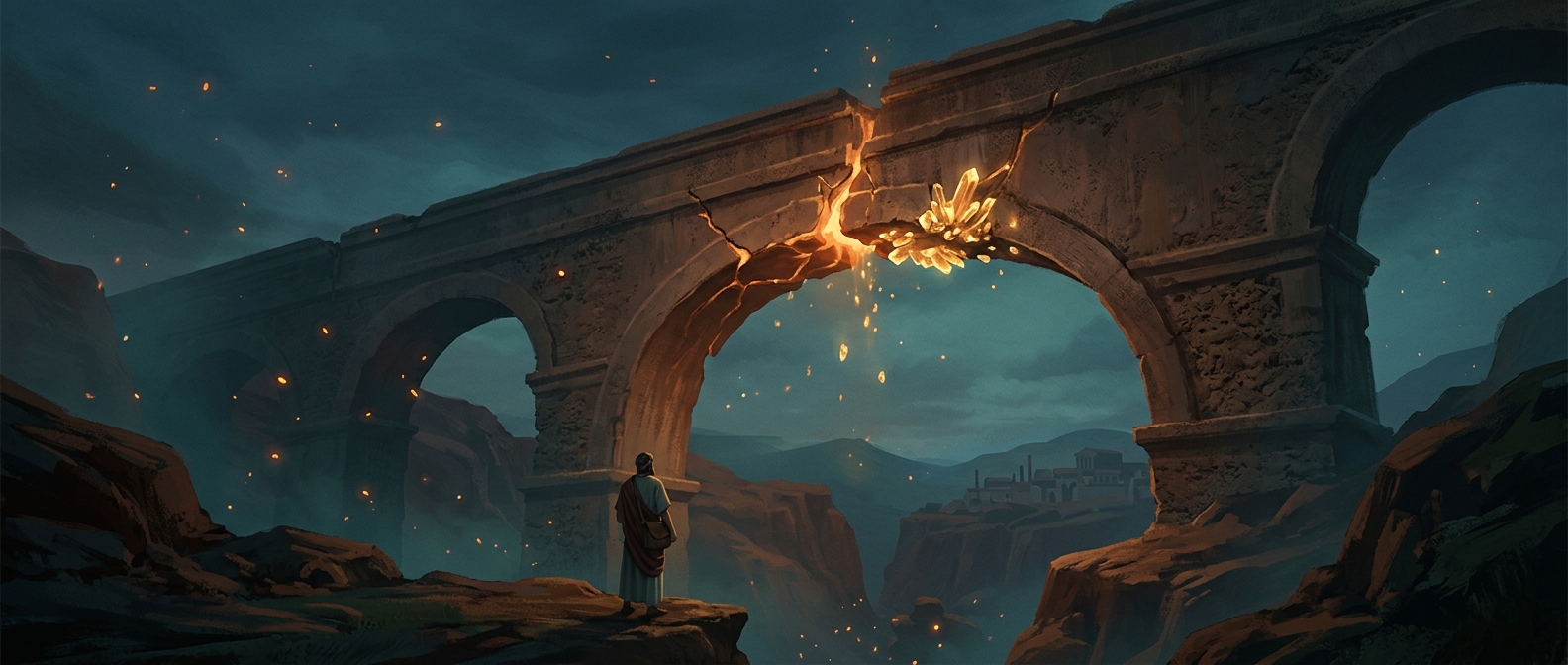
How Roman Concrete Could Close a Crack
A crack gives water a route into the concrete. There, water can dissolve calcium-rich material left in the mix. As the dissolved calcium moves through the crack and meets carbon dioxide or other ingredients in the concrete, it can form solid minerals that accumulate along the gap. Volcanic ash also reacts with lime in the presence of water, producing durable binding material.
The result is a limited kind of self-repair: mineral deposits can narrow or seal small cracks, reducing the paths water can follow. The concrete is not restored to its original condition, and a large break still needs repair.
The Recipe Left Clues Behind
Roman builders made concrete by combining lime, water, volcanic ash and aggregate such as stone. Some surviving Roman concrete contains small, pale lime-rich lumps, often called lime clasts. Their presence suggests that at least some builders mixed quicklime—a reactive form of lime—directly with the other ingredients rather than first turning it into a wet lime paste.
That mixing method can create intense heat and leave calcium-rich material distributed through the concrete. If a crack later admits water, some of that material can dissolve and help supply the minerals that plug the opening. The precise ingredients and mixing methods varied, so not every Roman structure would heal in the same way.
A Slow Repair, Not a Maintenance-Free Building
This process depends on water reaching a small crack and on suitable reactive material being nearby. It takes place within the concrete, without a worker applying a patch, but it cannot bridge missing chunks or prevent every kind of deterioration.
Its practical importance is that a tiny opening need not remain an open channel forever: minerals may gradually fill it, making it harder for more water to penetrate. In a material exposed to weather for centuries, that modest, repeated sealing could help limit damage over time.