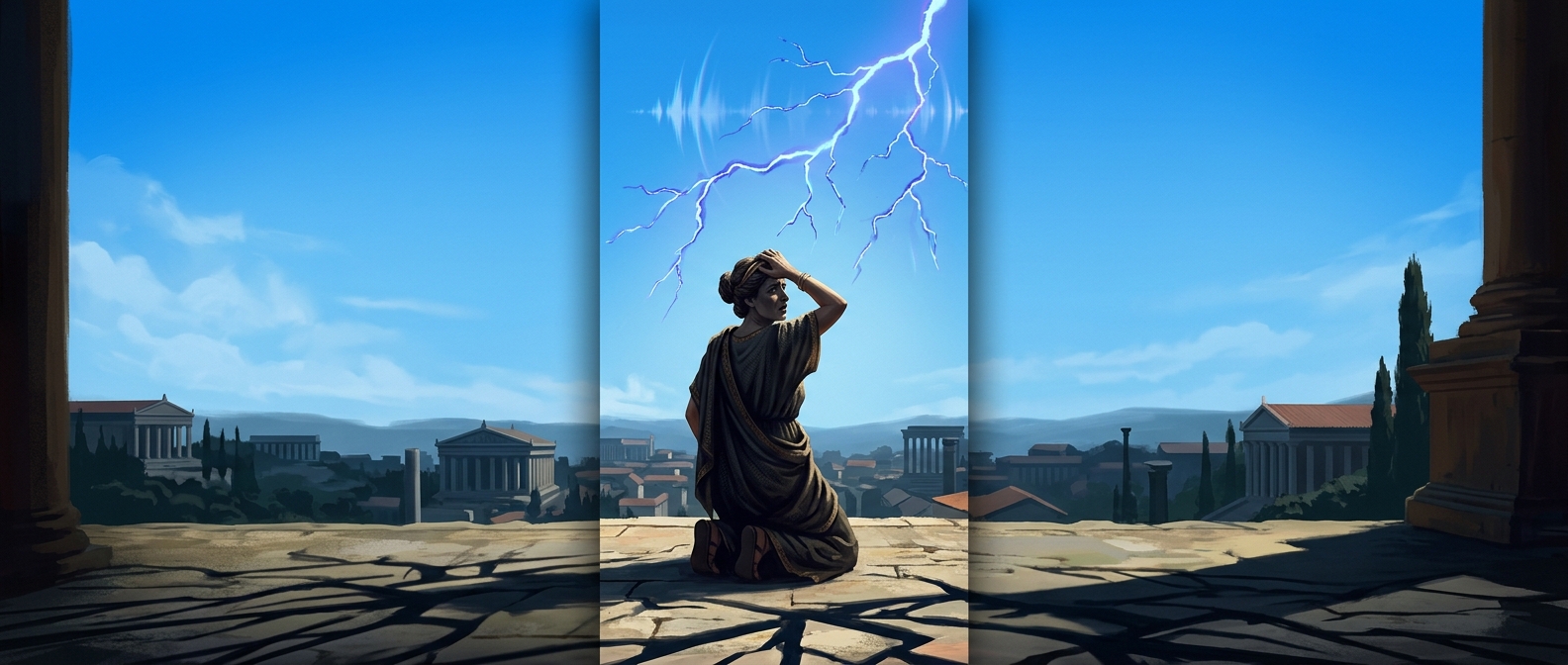
When Thunder Came from a Clear Sky
A storm made thunder understandable: clouds gathered, rain followed, and the noise belonged to a visible change in the weather. Thunder under a clear sky was harder to fit into that pattern. Romans could treat such an event as a prodigy—an unusual occurrence understood as a sign that the gods’ relationship with the community needed attention.
Jupiter, chief of the Roman gods, was closely associated with the sky and its thunder. So an unexplained crash could be read not simply as strange weather but as a warning from a powerful divine authority. The concern was not only what the sound meant for one person. Romans believed the gods’ favor mattered to the safety and fortunes of the whole state.
A Sign Called for a Response
Roman religion placed weight on maintaining pax deorum, a phrase meaning “peace with the gods.” When an alarming sign disrupted that balance, officials and religious specialists could determine what rites were needed. The response might include sacrifices or other acts of expiation—rituals meant to make amends and restore proper relations with the divine.
That did not mean every unexpected rumble produced the same ceremony, or that Romans had no natural explanations for weather. It meant that an event judged significant could carry a public religious meaning alongside its physical one. The ritual response gave the community a way to address the perceived warning rather than leave it unanswered.
Why the Clear Sky Mattered
The startling contrast was part of the omen’s force: thunder arrived without the storm that normally explained it. In a society where public decisions and religious observances were closely connected, interpreting such a sound was more than private superstition. A sacrifice could turn an unsettling sign into a specific communal duty: acknowledge the warning and seek to restore the gods’ favor.