Why a Few Grains Could Feel Like a Loss
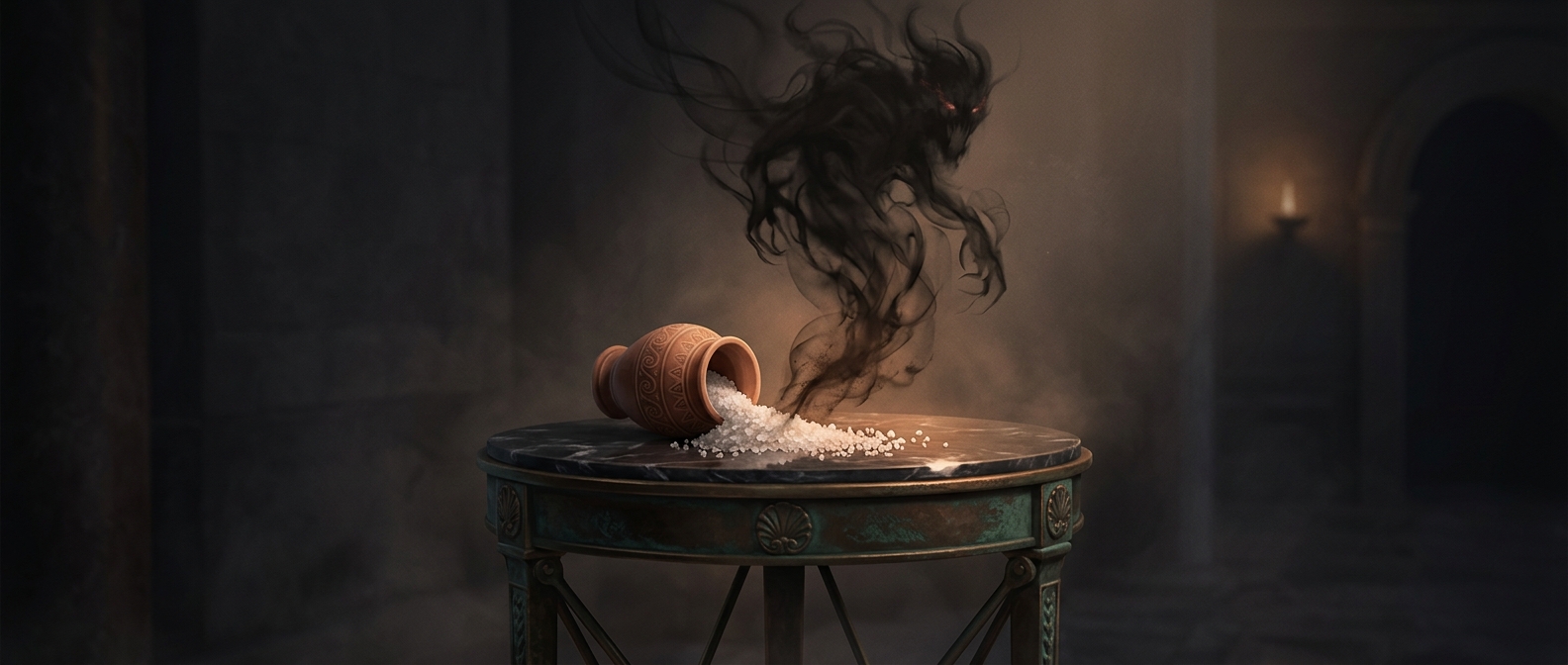
Salt mattered in Roman kitchens for more than seasoning. It helped preserve foods, making supplies last longer, and it was useful enough that wasting it could feel like squandering something hard to replace. A spill therefore had an ordinary meaning—carelessness or loss—and could acquire a supernatural one as well. In a world where misfortune was often read as a sign, an accident could seem like a warning rather than mere clumsiness.
Turning an Accident Into a Protective Act
The shoulder gesture offered a quick way to answer that warning. Instead of leaving the spill as an unsettling sign, a person could take a pinch and throw it behind them, toward the danger imagined at their back. In the belief described here, the salt was meant to distract or blind the devil, stopping harm before it could follow the person.
The act also made the remedy tangible: a small amount of the very substance just wasted became protection. That did not recover the spilled salt, but it changed the moment from passive bad luck into something the person could act on. The superstition’s staying power lies in that compact logic: a costly mistake invites a threat, and a pinch tossed over the shoulder turns the mistake into a defense.