A midnight ritual for sending the dead away
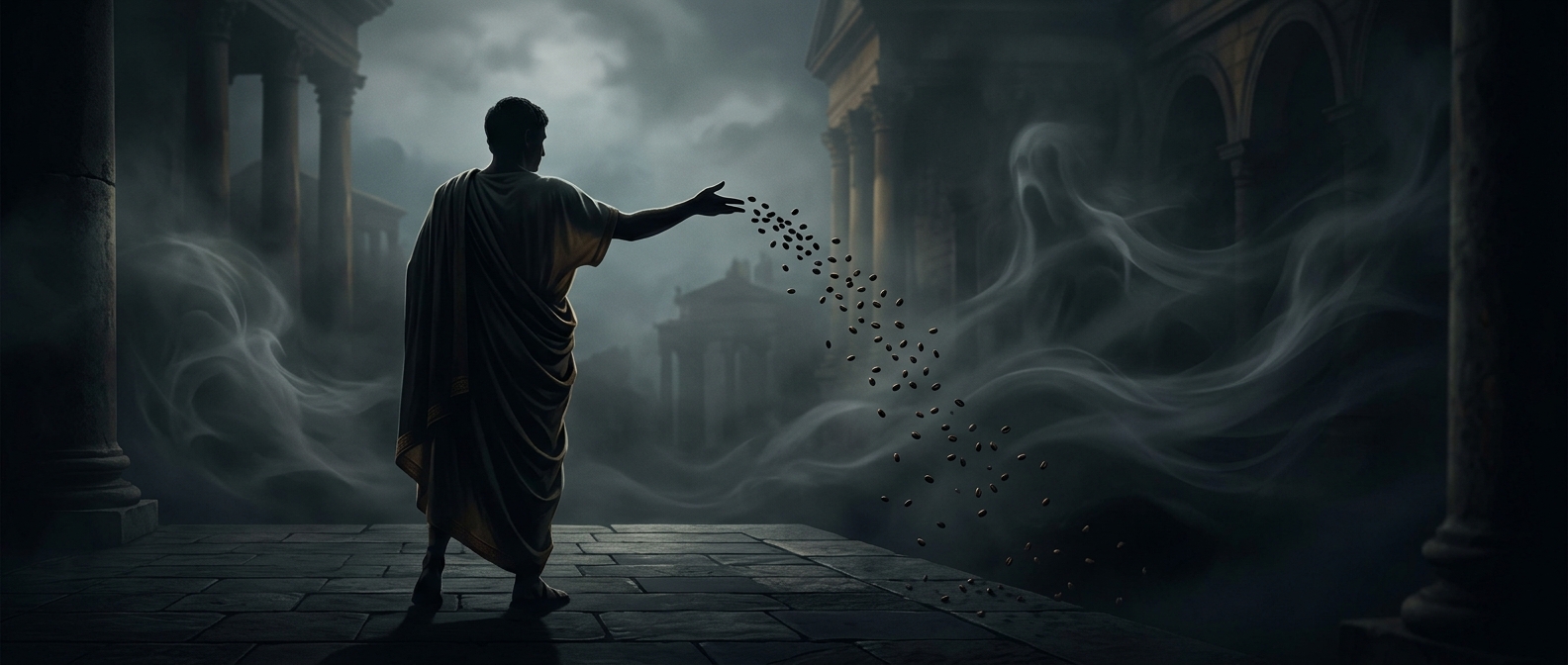
The bean ritual belonged to the Roman festival of Lemuria, held on three nights in May. In the account of the poet Ovid, the head of a household rose at midnight, washed his hands, and walked barefoot through the house. He spat black beans behind him, repeating a formula as he did so, while the rest of the household made noise by striking bronze objects.
The ritual treated the dead not as enemies to defeat but as spirits who could be diverted and then sent off. The beans gave them something to collect; the clanging marked the household’s demand that they leave. In Roman religious thinking, careful actions and words could manage relations between the living and the dead, much as offerings could honor or placate them.
Why the household performed it together
The rite focused on the home, where an unsettled spirit was imagined as a direct disturbance to family life. Its leader performed the sequence on behalf of everyone inside, while the noise made the dismissal communal rather than private. Repetition mattered: the beans were cast nine times, turning a handful of food into a prescribed act rather than an improvised snack.
The detail worth remembering is the ritual’s practical logic. The household did not try to overpower a ghost; it gave the spirit a task, made its departure explicit, and used a repeated ceremony to restore the boundary between the living home and the dead.