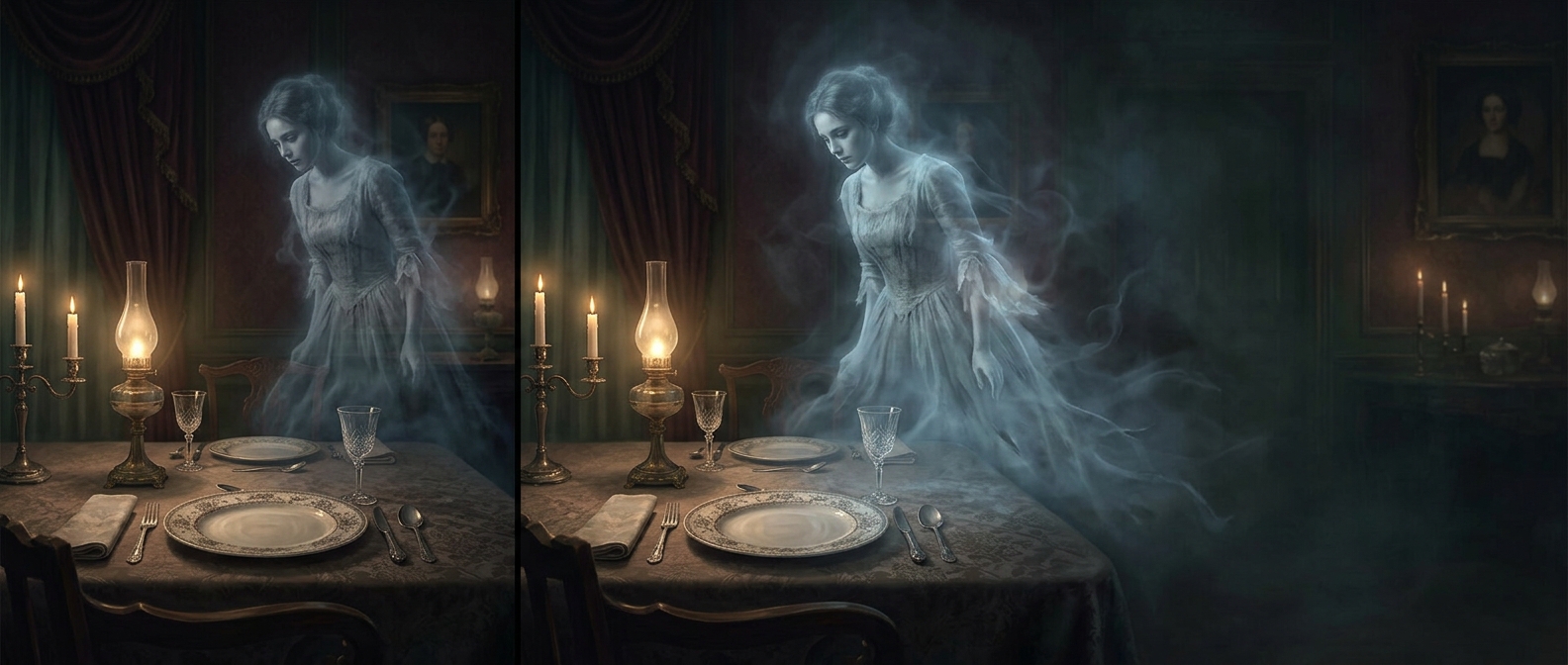
A place at the table for someone gone
In some Victorian households, a holiday meal included a setting for a family member who had died. The gesture made absence visible: the empty chair and unused plate gave grief a place within a gathering organized around family and remembrance.
Ritual, not a universal custom
Victorian mourning practices were varied, shaped by family, religion, wealth, and local custom. A place set for the dead was one way some families kept a deceased relative symbolically present, rather than treating death as a reason to leave that person out of family life. Serving hot food made the gesture part of the meal itself—not merely a display of mourning.
The ritual also gave the living something concrete to do. Holiday gatherings can sharpen the sense that someone is missing; maintaining a place for that person turned remembrance into an action shared by everyone at the table. The meal could continue, but the empty setting made clear that the family’s story still included the person who was gone.