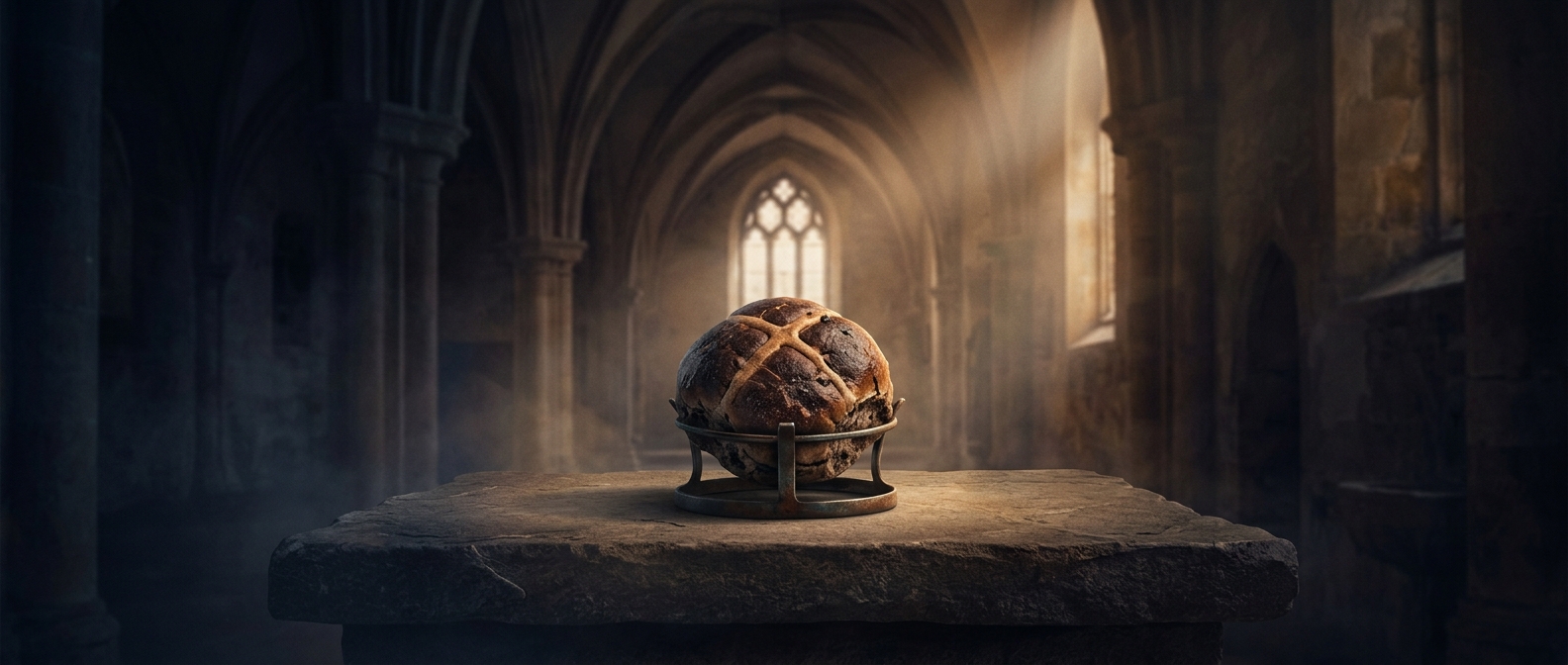
A Good Friday loaf became a household charm
For some Victorian households, a loaf baked on Good Friday was more than food. The day’s religious importance gave the bread a special status, and folk belief credited it with powers ordinary loaves did not have: it would resist mold and help guard the home from fire. Hanging it from the ceiling kept the charm visible and set apart from everyday use.
The loaf’s supposed protection rested on belief, not on a special baking or storage method. A suspended loaf could still spoil; the ceiling did not make bread immune to moisture or decay. Its value lay in what the household thought it represented: a sacred day’s protection carried into the home.
Protection had an awkward side effect
Suspending food might seem like a way to keep it away from pests, but a hanging loaf could also advertise itself to mice. The charm therefore sat at the intersection of two practical concerns: people wanted to preserve food and protect the house, while the bread itself could draw unwanted visitors.
That tension is what makes the custom memorable. A loaf meant to defend the household could become a tempting target for the very creatures living overhead.