How a Bull’s Carcass Became a Source of Bees
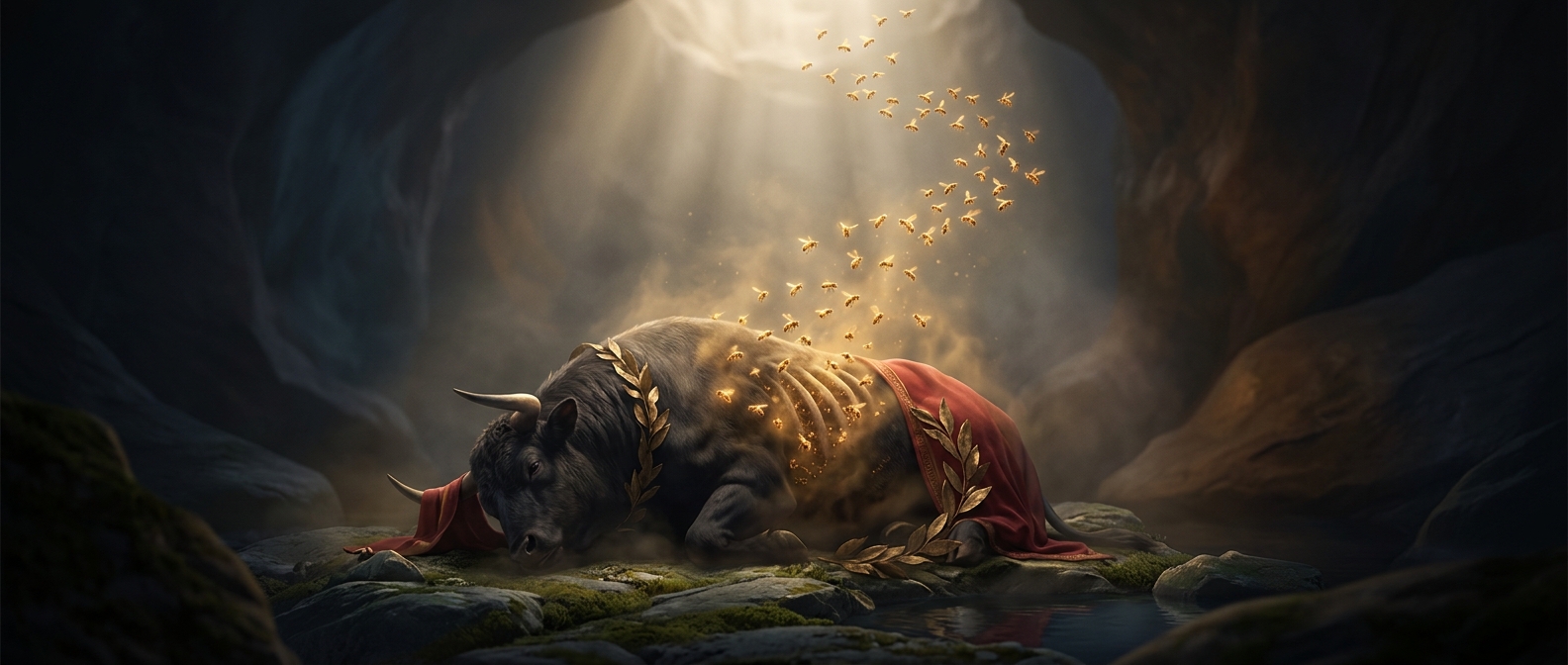
Bugonia—the supposed birth of bees from a decomposing bull—made sense within an ancient view of nature in which living creatures could arise directly from decaying matter. Without a modern account of eggs, larvae, and reproduction, a body teeming with new life could look like a source of it.
The recipe described in Roman tradition placed a dead bull in a dark, enclosed shed and left it to decay. The setting mattered: it kept the process out of sight while the carcass changed, making the appearance of insects seem tied to the animal’s death.
A Beekeeper’s Answer to a Difficult Problem
Bees were valuable for honey and wax, but a colony could disappear or fail. Bugonia offered a striking explanation for how bees might be replaced without finding a swarm or understanding how a queen and brood sustained a hive. It treated decay not as an ending but as a kind of natural production.
The belief also belonged to a broader ancient effort to explain life by watching what appeared in places where organisms died or rotted. In reality, a bull’s carcass cannot produce bees. But the idea reveals how closely ancient people connected visible change in nature with the origins of life: in their account, the shed’s darkness concealed a transformation from death into a new colony.