Why modern fire stations can do without the pole
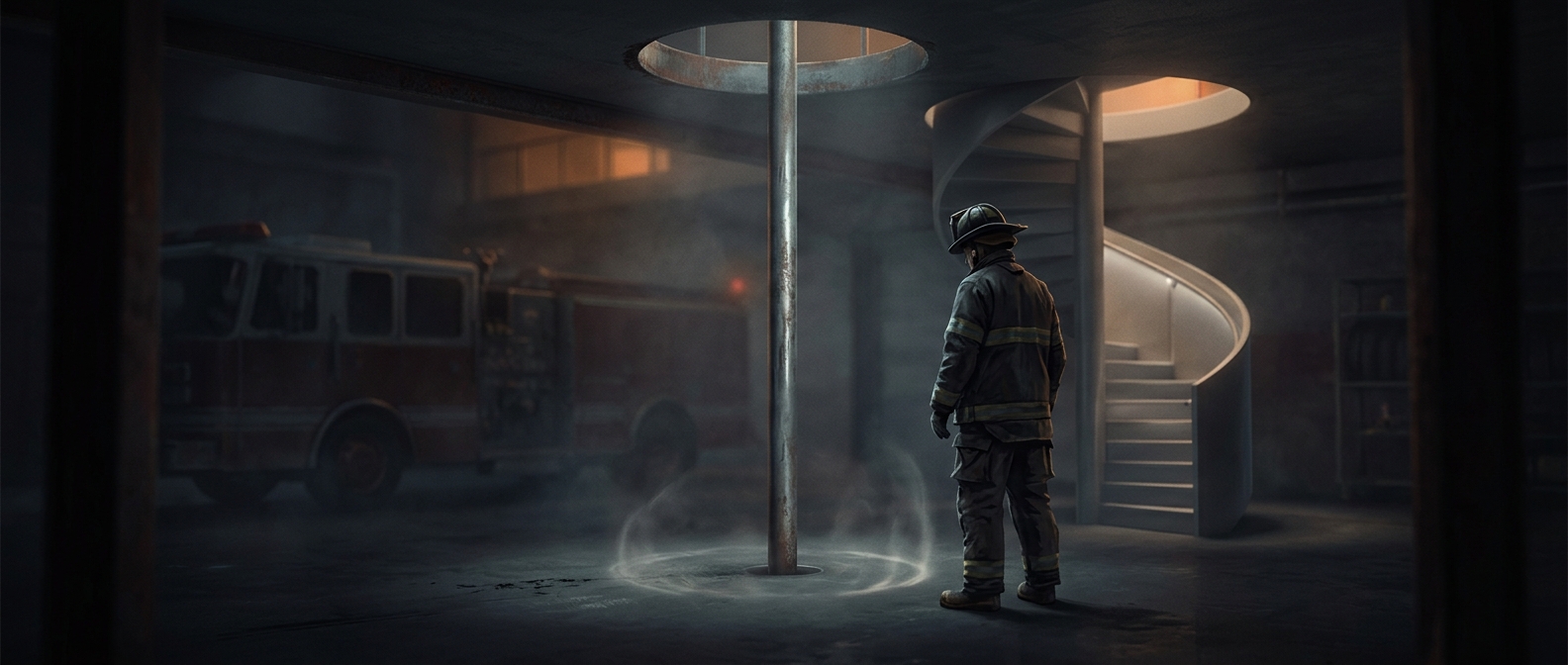
The fire pole made sense when firefighters slept on an upper floor and the engines waited below. A stairway takes time because each step must be negotiated; a pole lets gravity carry someone down in a nearly direct line. But the shortcut also turns a rushed descent into a controlled-fall problem. Fire boots can catch, protective gear can shift, and a firefighter must arrive at the bottom ready to move—not stumble into the apparatus bay.
The safer shortcut is a shorter route
Newer station layouts reduce the distance between the sleeping area and the trucks instead of asking firefighters to descend faster. Put the quarters close to the engine floor, and a responding crew can get to its equipment through an ordinary, level route. That removes the pole’s main advantage: bypassing stairs between two floors.
The change is a transport-design tradeoff. The pole saves vertical travel in a building organized around stacked floors, but it introduces a high-speed transition that is awkward to manage in bulky clothing and during an alarm. A station designed around quick access can preserve the response-time benefit without requiring that maneuver.
A station’s shape changes its signature
The pole became an emblem of the firehouse because it made an urgent, visible shortcut. As station plans put sleeping quarters nearer the engines, the building itself took over that job. The practical test is not whether firefighters can slide down quickly; it is whether they can reach the trucks promptly and safely. In a modern station, the shortest route may simply be the floor between the beds and the bay.