Why the rear legs need help
A standard walker has rubber tips on its legs to grip the floor and keep the frame from slipping. That grip is useful when the walker is planted, but it also creates drag when someone pushes the frame forward. On hard floors, the rear legs can catch and scrape rather than move smoothly.
A rolling surface without wheels
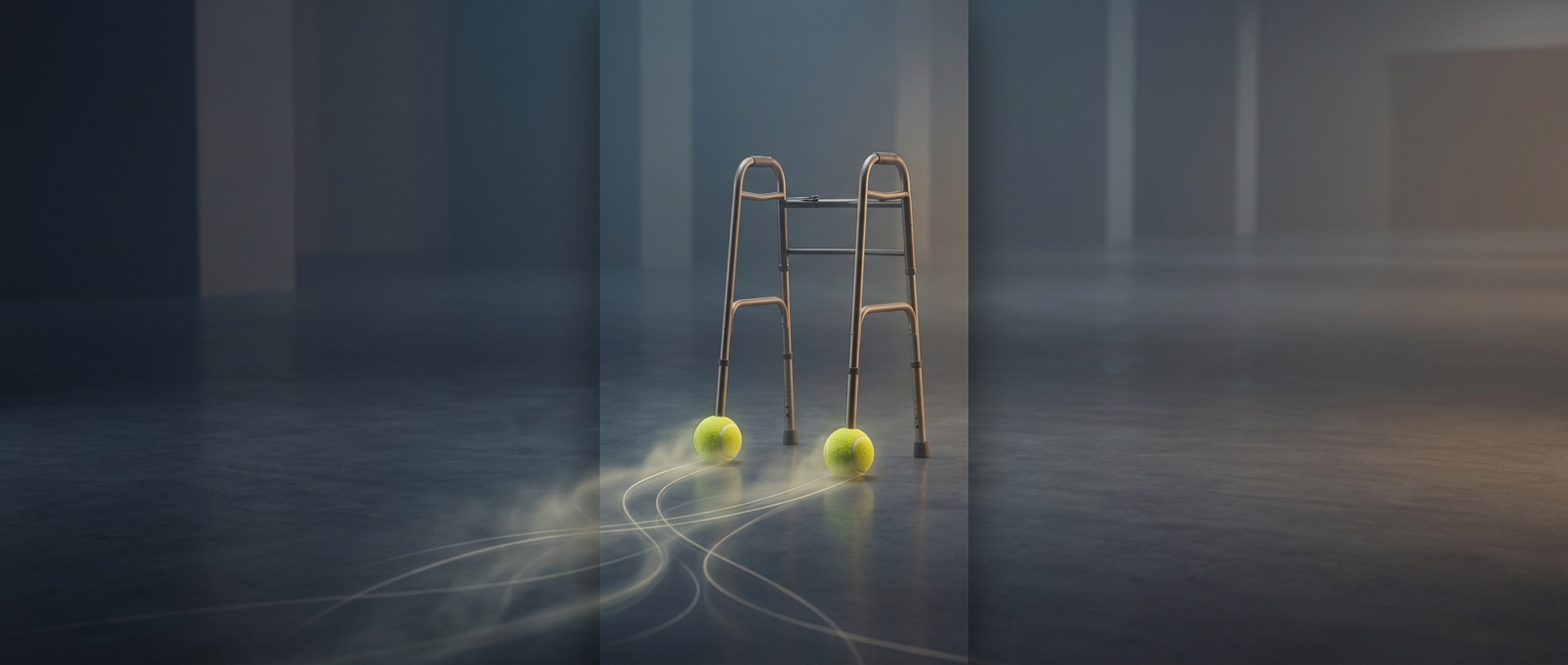
A tennis ball acts as a sliding foot for each rear leg. Its felt covering spreads contact over a wider, softer surface, reducing the abrupt friction between a rubber tip and the floor. The ball can glide as the walker moves, so the user needs less force to advance the frame and hears less scraping.
The balls don’t turn the walker into a wheeled device: they still slide, and the front legs remain planted or are lifted as the user steps. The arrangement is a simple tradeoff—less resistance while moving, while the walker’s other contact points continue to help steady it.
Why tennis balls are a practical fit
A ball is easy to find, light, and large enough to fit over many walker legs after a slit is cut into it. Its bright color also makes the rear feet easier to see. The familiar sports equipment works here not because it is designed for mobility aids, but because its soft felt happens to provide a durable, low-cost surface that moves more quietly across indoor floors.