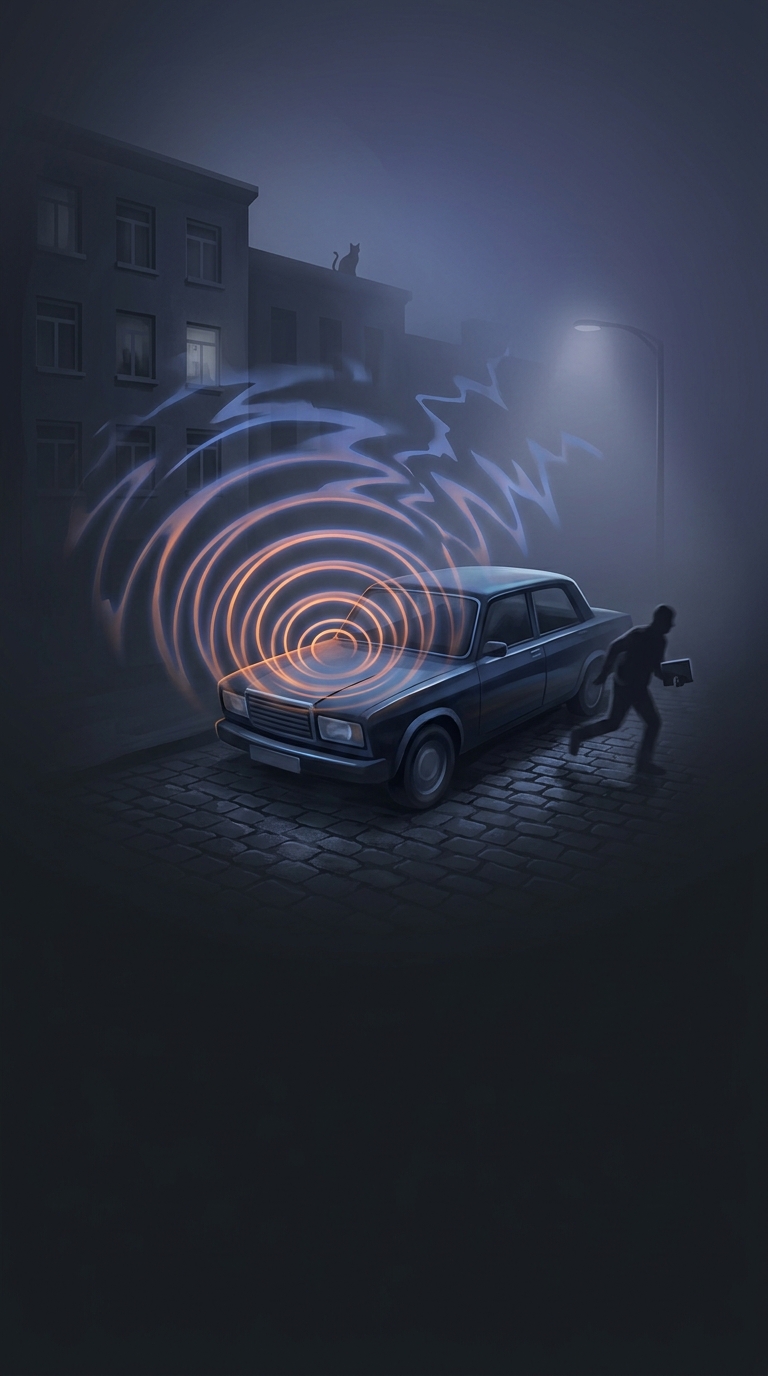
Why Many Car Horns Sound Near F
A horn has to do more than make noise: its sound must stand out against engines, tires, and other traffic. Much of that steady road rumble is low in pitch. A horn sounding around F or F-sharp—roughly 350 to 370 vibrations per second—lands above that rumble, making its warning easier to pick out in a busy soundscape.
Pitch is only part of the effect. A horn also needs enough volume and a sharp attack to be noticed quickly. But choosing a consistent pitch gives manufacturers a reliable starting point: the warning is less likely to disappear into the lower-frequency wash of traffic.
From Squeezed Bulbs to Tuned Warnings
Early bulb horns relied on a person squeezing air through a vibrating reed. Small differences in the bulb, reed, and force of the squeeze could change the sound, so one horn might produce a higher or rougher toot than another.
Electric horns made a more controlled tone practical. An electrical current drives a vibrating part inside the horn, producing a repeatable sound that can be tuned during manufacture. That consistency matters on the road: a warning should be recognizable as a horn, not merely another passing vehicle’s noise. The familiar note is, in effect, an engineering choice aimed at making a brief sound cut through the rumble.