A Small Light Becomes a Waypoint
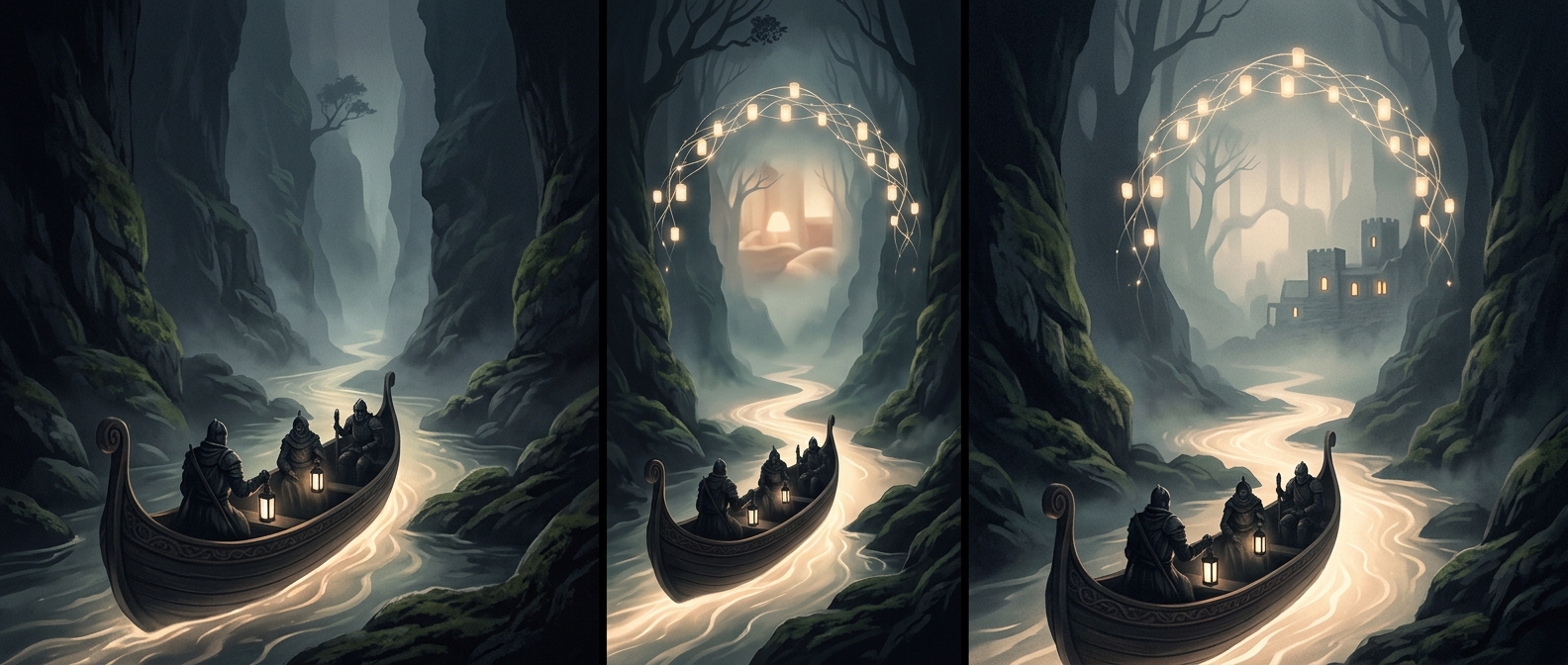
In darkness, familiar terrain can lose its shape: a path, clearing, or tree line may be hard to distinguish from the ground beside it. A lantern restores one clear visual reference. Instead of trying to read the whole landscape, a hunter can orient toward a point of light and use it to keep the return direction in view.
Turning One Beacon Into a Route
When lights are visible in sequence, each can serve as a waypoint—a recognizable point that helps mark the next part of a journey. The traveler follows one light, then uses the next to continue. That breaks a dark return into shorter, easier-to-track segments rather than one long stretch without a visible guide.
The method depends on the lights remaining visible from one point to the next. A rise, trees, or a bend can block a lantern, so the chain works best when its markers preserve a clear line of sight. What matters is not how far a light shines, but whether it gives the traveler a dependable next point to follow.