A closer look
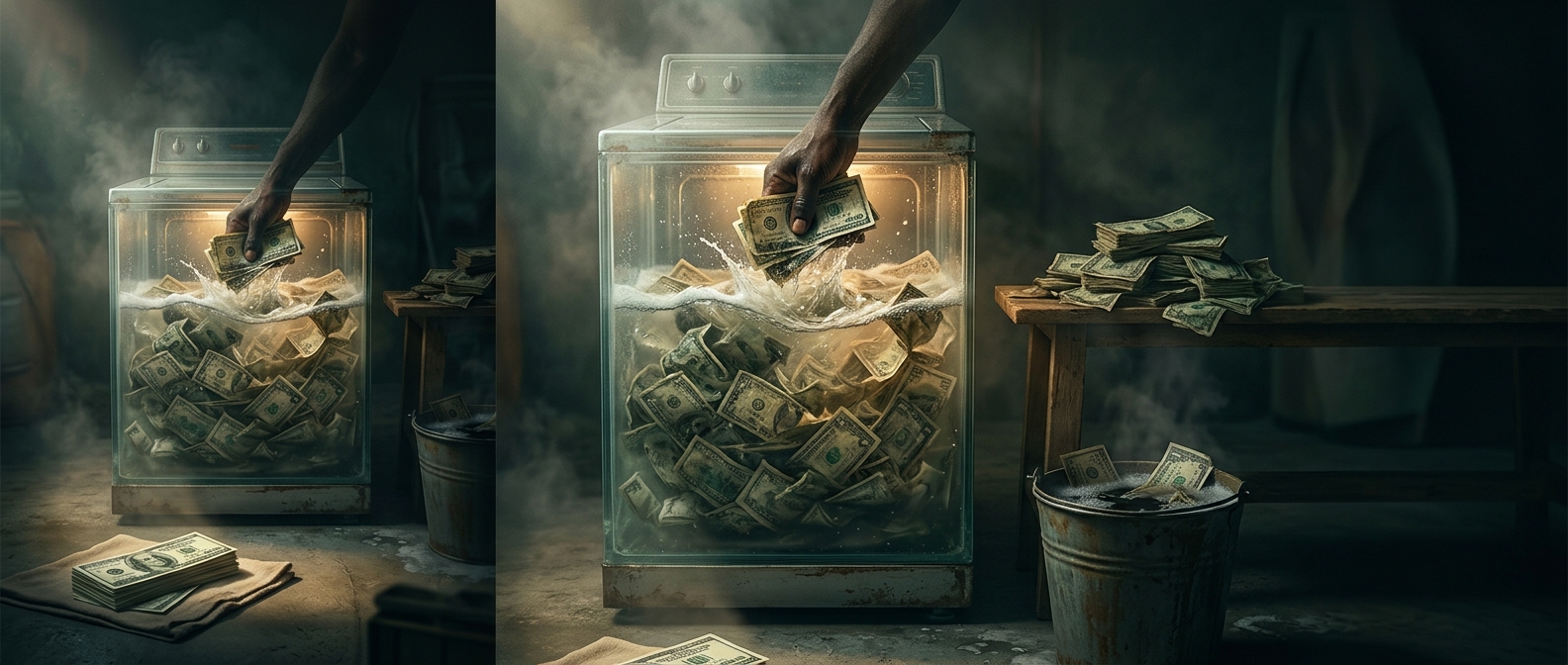
Literal money laundering takes on a profoundly different meaning when your national economy violently evaporates. Following the utter collapse of the Zimbabwean dollar, citizens almost exclusively pivoted to trading physical US currency. Because they desperately lacked a functioning central bank to replace ancient, heavily soiled bills with fresh ones, the circulating physical dollars became disgustingly filthy over several years. Locals famously began tossing their fragile one-dollar bills into actual soapy washing machines and aggressively line-drying them just to keep the economy remotely hygienic.