Why an offline nuclear network kept its floppy disks
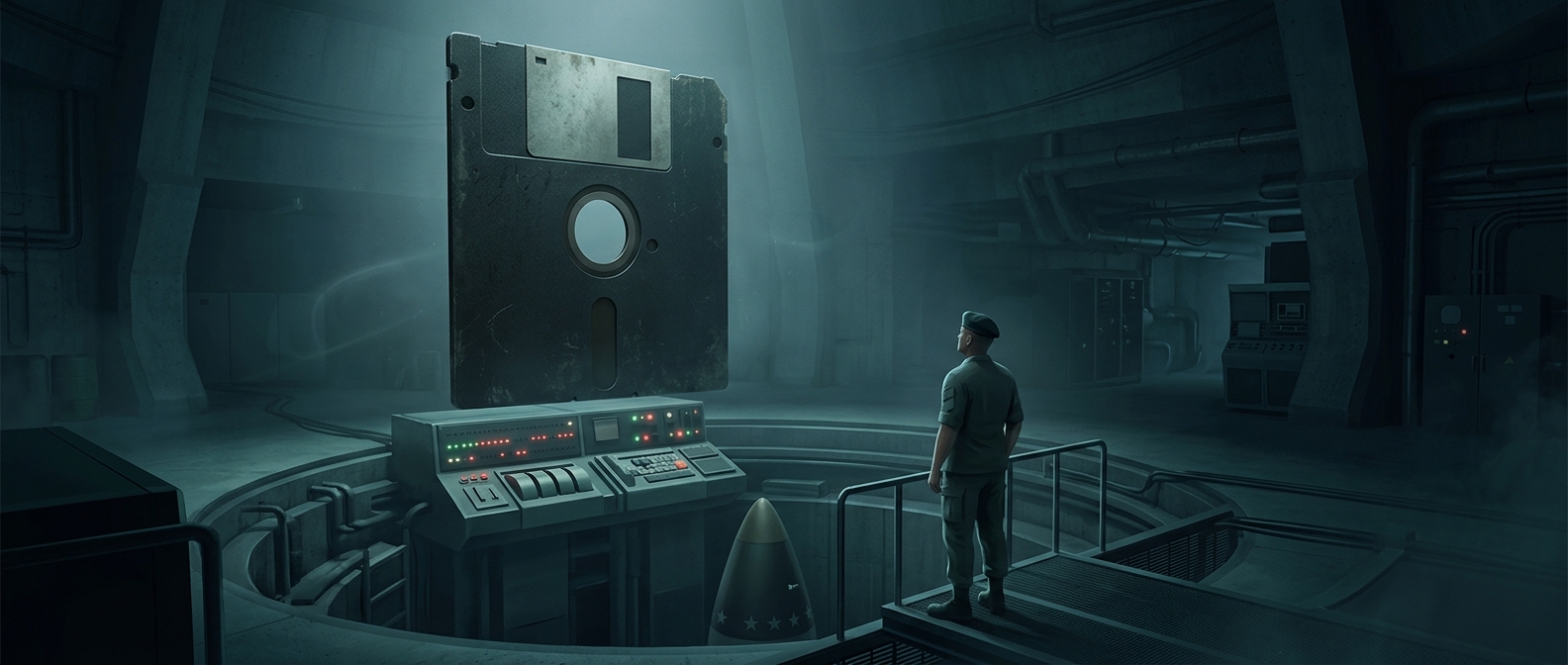
The Strategic Automated Command and Control System, or SACCS, was part of the communications chain used to send messages to U.S. nuclear forces. Its IBM Series/1 computers dated to the 1970s, and the system still used floppy disks decades later. That longevity was less about nostalgia than about keeping a specialized network isolated from the public internet and other outside connections.
A computer that is not connected to a broader network has fewer routes an attacker can use to reach it remotely. In that sense, SACCS’s age and isolation offered a security advantage: it was built before internet connectivity became routine, and it did not depend on being online. But a floppy disk is not secure simply because it is old. Security came from controlling access to the system and limiting its connections, not from the storage medium itself.
The tradeoff behind the old hardware
Isolation also made routine updates and maintenance harder. Software and data had to be introduced through controlled processes rather than downloaded over a network. And old equipment can become difficult to repair as parts and expertise grow scarce. The military therefore faced a familiar engineering tradeoff: preserve a proven, tightly controlled system, or replace it with newer equipment that would need its own security safeguards and procedures.
The Air Force said in 2019 that it had replaced the floppy-disk system with a secure digital storage solution. That change did not mean the old disks had been the source of the system’s security; it meant the storage technology could be modernized while the requirement for tightly controlled communications remained. The striking lesson is that in a high-consequence system, being disconnected can be a deliberate defense—but it does not make aging hardware cost-free or permanently safe.