What a tuning number actually sets
A tuning standard gives musicians a shared reference pitch. The familiar figure of 440 Hz means that the note A above middle C vibrates 440 times per second. Other notes are then tuned in relation to that reference, so an orchestra or recording can agree on what “in tune” means.
Changing the reference to 432 Hz shifts the overall pitch lower. It does not, by itself, change the pattern of intervals—the relationships between notes that make a melody recognizable. A piece played at either reference can keep the same musical structure, though it will sound in a different register.
Why there was room for modern claims
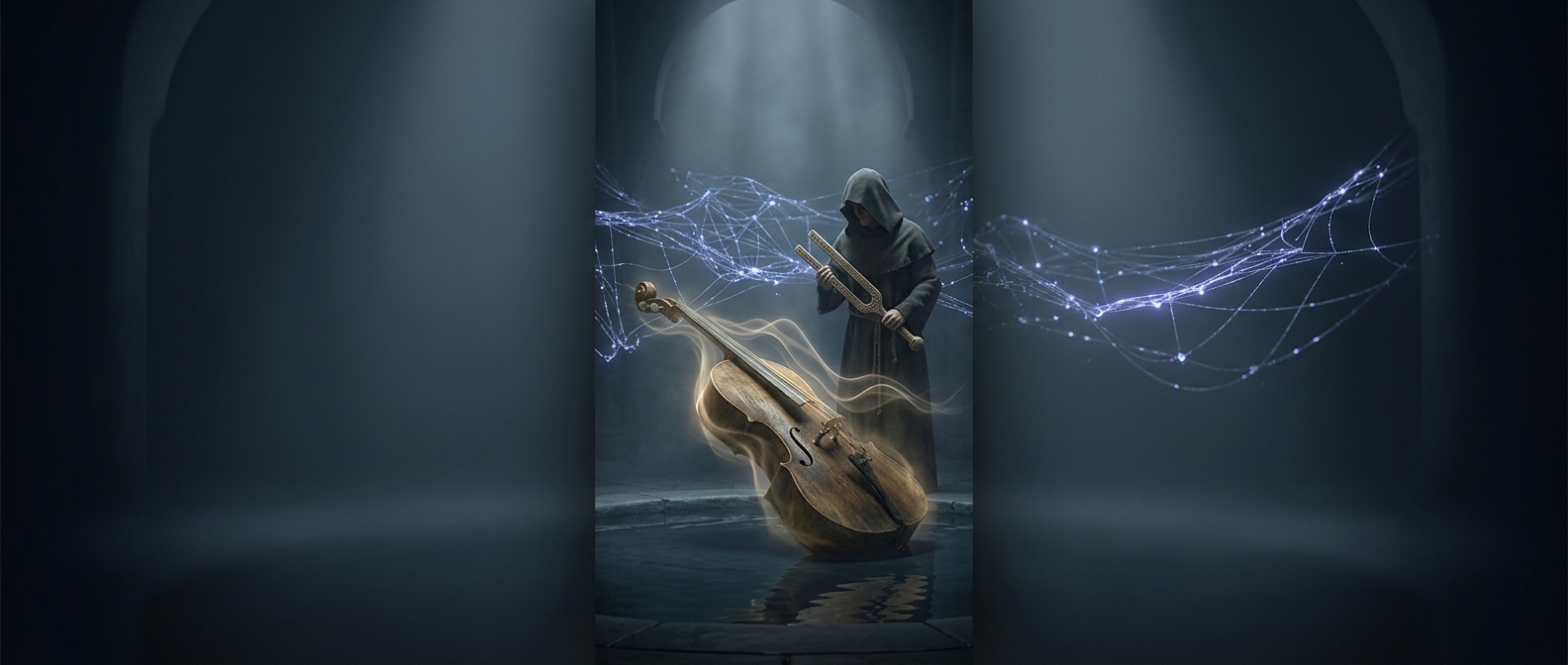
Before tuning became widely standardized, the pitch musicians used could differ by place, ensemble, instrument, and period. A tuning fork—a metal tool that rings at a set pitch—could help a group coordinate, but one fork did not dictate a universal standard for everyone. That variety makes historical tuning an easy backdrop for later stories that present one particular pitch as ancient or uniquely natural.
Online claims often add a larger promise: that 432 Hz reflects cosmic geometry or produces a special effect on the listener. Those claims attach a spiritual interpretation to a measurable musical choice; the number alone does not explain or establish the interpretation. Likewise, lowering a piece’s pitch is not the same thing as showing that a different reference pitch causes aggression or calm.
A modern choice, not a hidden musical law
Musicians can choose a reference pitch for practical or aesthetic reasons, and listeners may prefer one sound to another. But preference is different from a universal rule about how music must be tuned. The useful distinction is simple: 432 Hz is a possible tuning reference, while claims that it carries an inherent cosmic or behavioral power are modern meanings layered onto that choice.