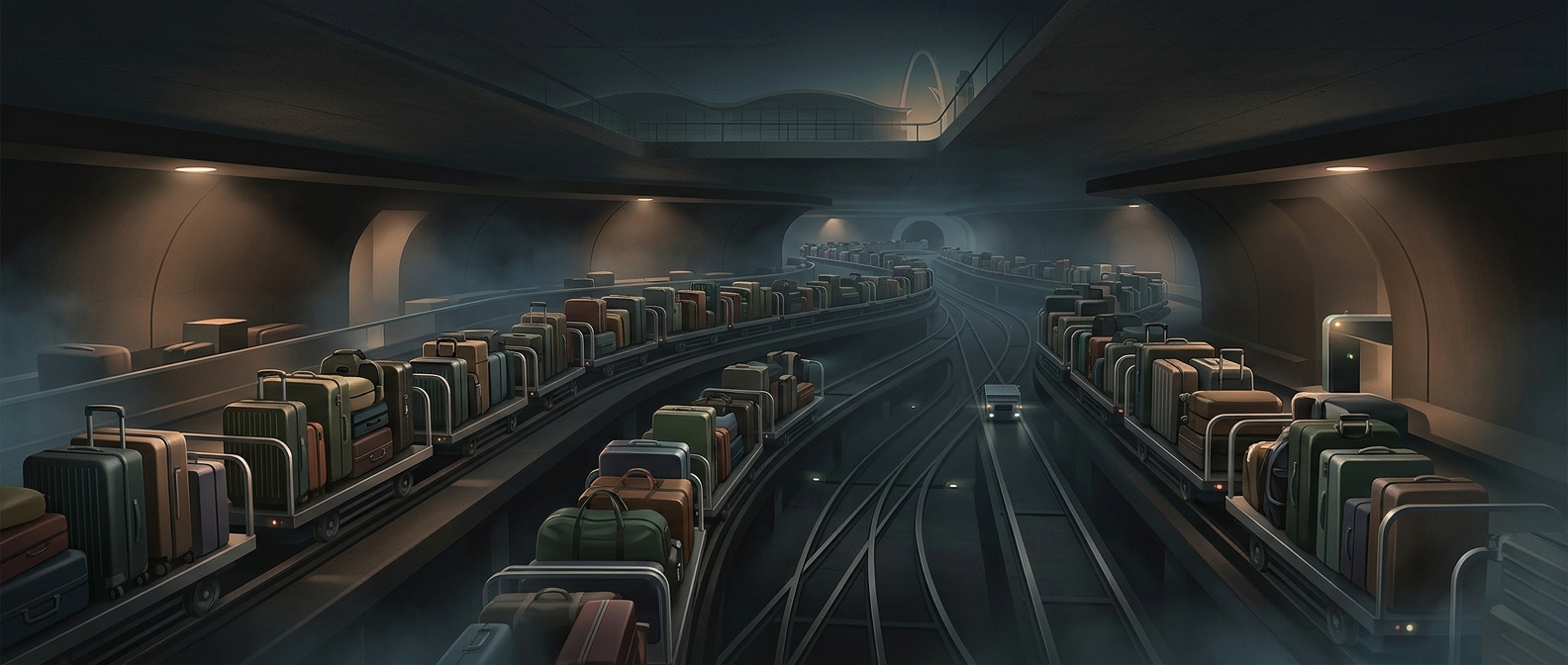
A hidden route from check-in to the aircraft
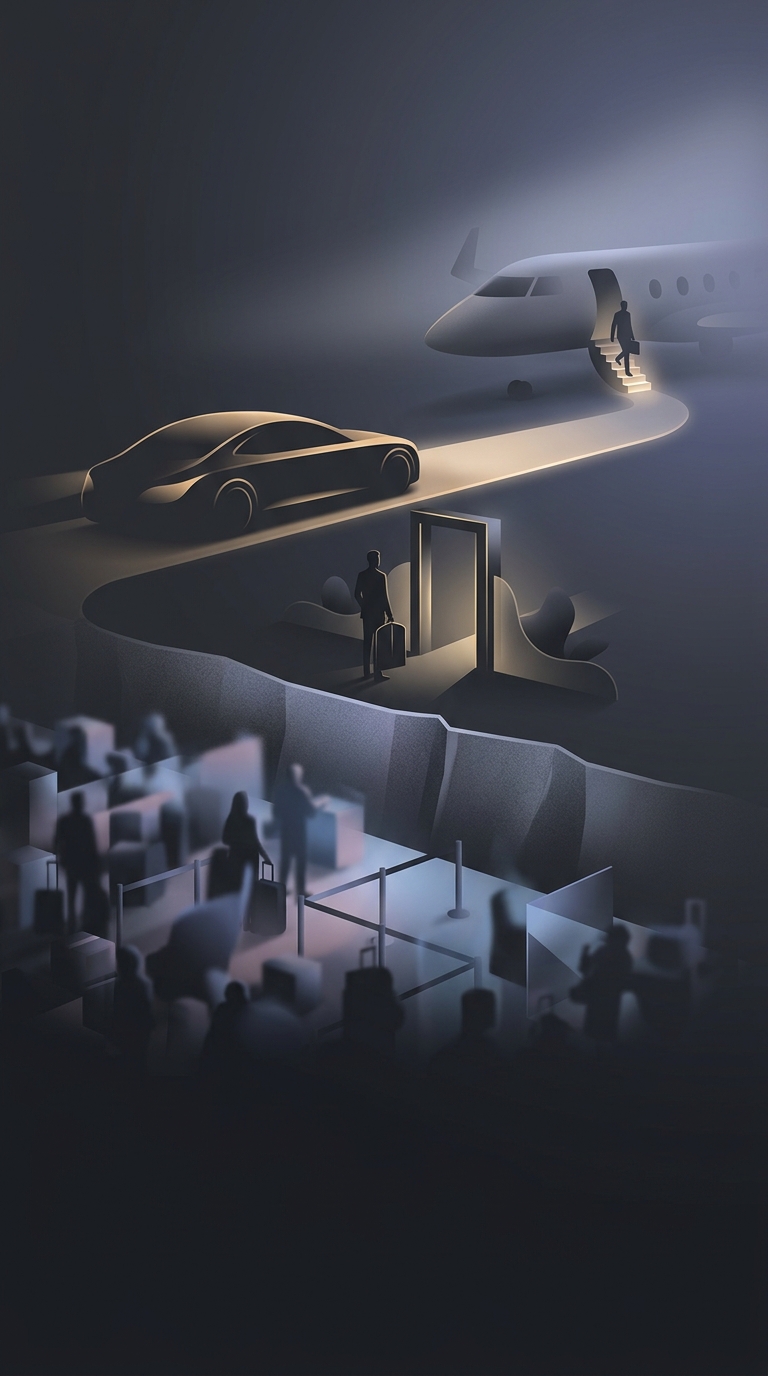
A bag at Terminal 5 does not simply ride one long conveyor belt. Heathrow’s underground network lets automated carts carry luggage through a series of routes, connecting busy parts of the terminal without sending bags through public spaces or across the airport surface.
That separation matters at an airport: passengers and aircraft move on visible schedules, while bags must be sorted and delivered behind the scenes. Tunnels give the baggage system room to move luggage between processing areas and onward toward flights, even when the terminal above is crowded.
Why automation helps
Each bag has to reach the right destination, not merely the next point on a belt. Automated equipment can direct carts along different paths as the system sorts luggage for its next step. The network’s length provides those connections; the carts’ speed helps move bags through them quickly.
The design also makes the baggage operation part of the terminal’s infrastructure rather than an afterthought. A large airport must coordinate a constant flow of luggage with check-in, screening, sorting and flight departure. Keeping that flow underground frees surface space for passengers and airport operations.
The striking detail is that the terminal has a second, largely unseen transport network beneath it: while travelers follow signs above ground, their bags are routed through kilometers of tunnels toward the next handoff.