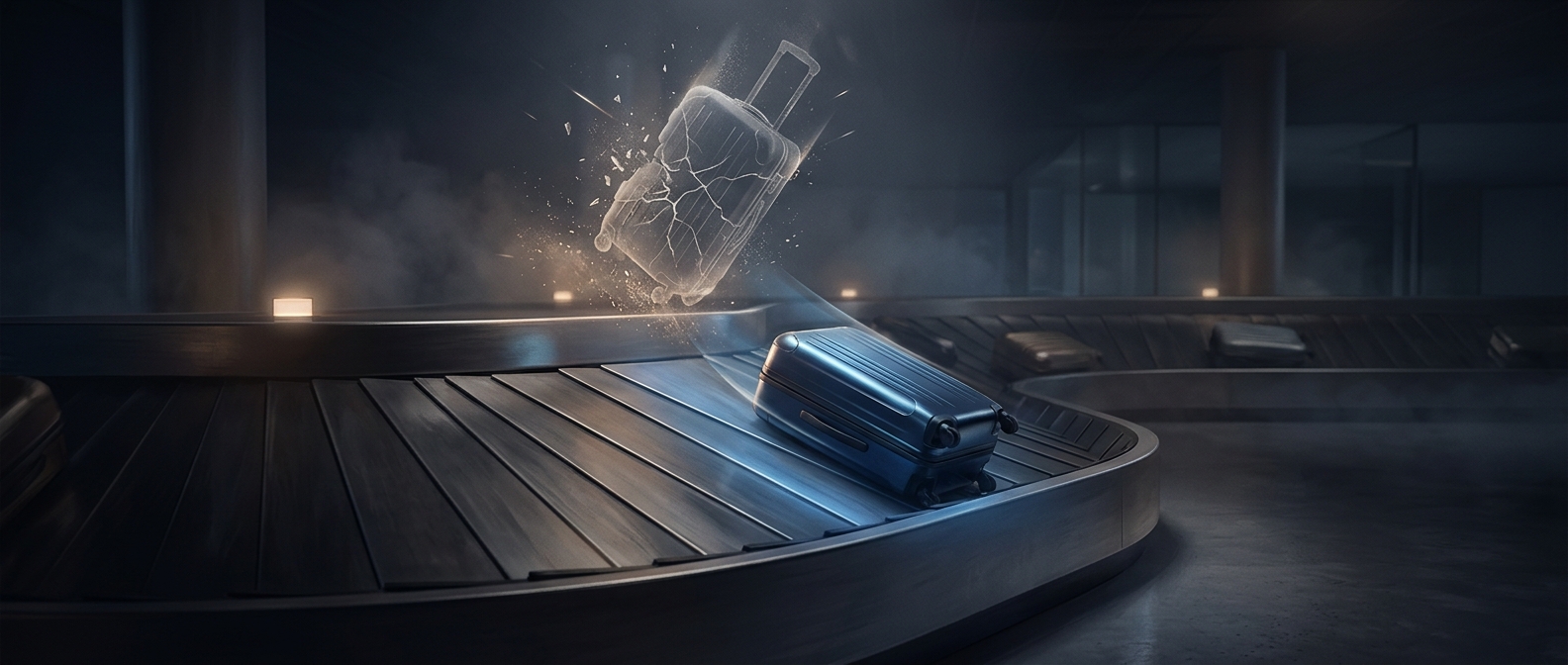
A controlled descent for each bag
A baggage system is a chain of moving surfaces, not one continuous conveyor. At points where a bag changes height, a sloped belt can bridge the gap: instead of leaving an edge and falling onto a lower flat belt, the bag stays supported as it moves downhill.
That changes how the bag’s downward motion is handled. In a free fall, the bag gains speed before it hits the receiving surface, concentrating the stop into a brief impact. On a slope, the belt supports the bag along the way, so the change in height happens over a longer distance rather than all at once.
Why the angle matters
The incline must be steep enough for the belt to carry bags onward, but not so abrupt that bags slide or tumble uncontrollably. The moving surface helps guide them through the transition; the belt’s angle and motion determine how smoothly a bag reaches the next section.
This is useful because luggage is awkward cargo. A suitcase may land on a corner, while a duffel can shift shape as it moves. A gentler transfer reduces the sharp jolts that can strain handles, knock bags into one another, or send loose items bouncing inside.
The slope does not eliminate every bump in baggage handling. It replaces one especially abrupt event—a drop onto a flat surface—with a supported descent, giving bags a less punishing route between levels.