Why early printers needed punctuation
Before printing, a handwritten text could vary from copy to copy. Scribes might use spacing, symbols, or their own habits to show where one thought ended and another began. Printing changed the problem: one page could be reproduced many times, but readers still needed reliable cues to make sense of its lines.
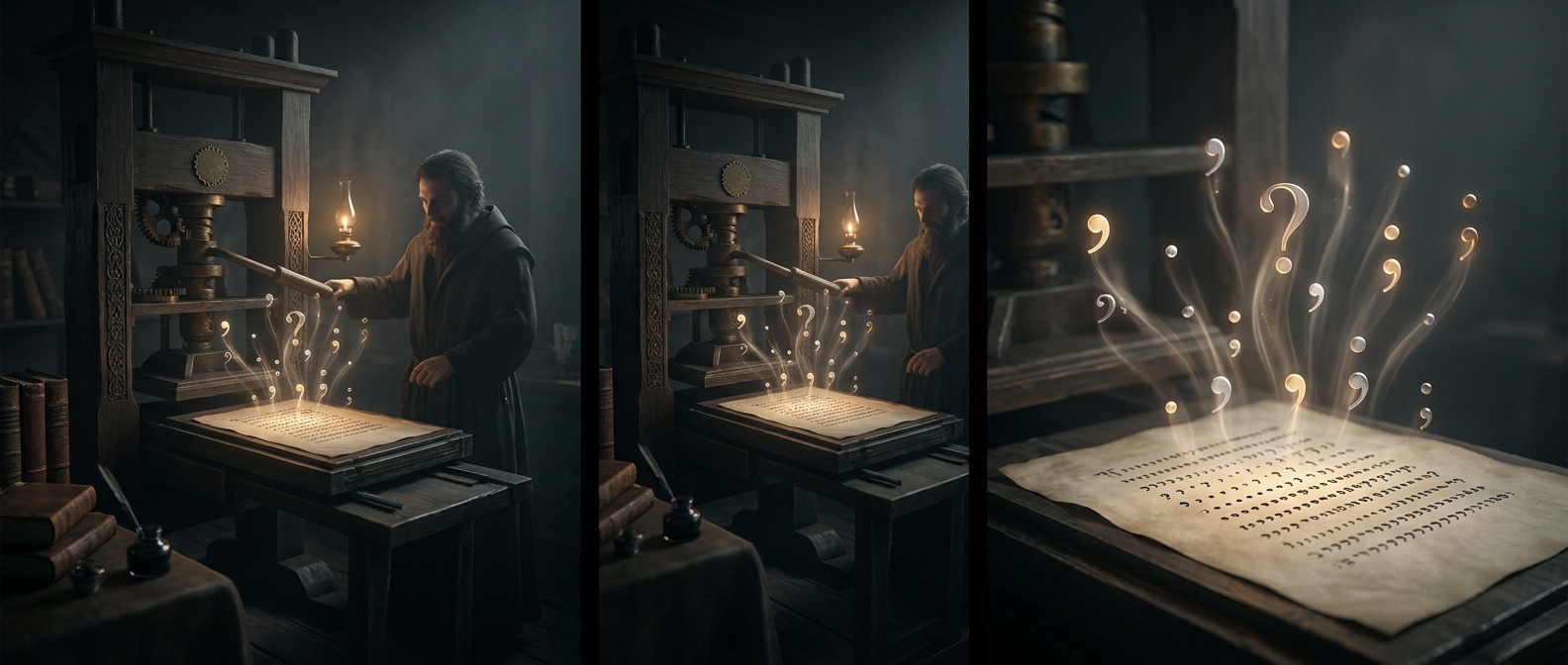
In dense type, words could run together visually, and a long sentence offered few obvious places to pause. A period, comma, or other mark gave the eye a quick signal about how to group the words—and gave a reader a hint about how to read them aloud.
From workshop choices to shared conventions
Early printers did not invent punctuation from nothing. They drew on marks already used in manuscripts and on the needs of reading and speech. But each printing shop had to decide which marks to use and how to set them. As printed books circulated, familiar choices became easier for readers to recognize, and printers had reason to follow conventions that made texts easier to use across editions.
That process was gradual, not a single act of standardization. The marks and rules familiar today developed over time; early printed pages could use punctuation differently from modern ones. Still, repeatable type helped make a repeatable visual system possible.
A reading aid built into the page
Punctuation does more than divide sentences. It helps readers infer structure before they have understood every word: a comma signals a smaller break, while a period marks a stronger stop. In print, those tiny shapes became shared navigational cues—so a reader opening an unfamiliar book could find the sentence’s boundaries without relying on the writer’s voice or a scribe’s personal habits.