How a dog changes the household microbial mix
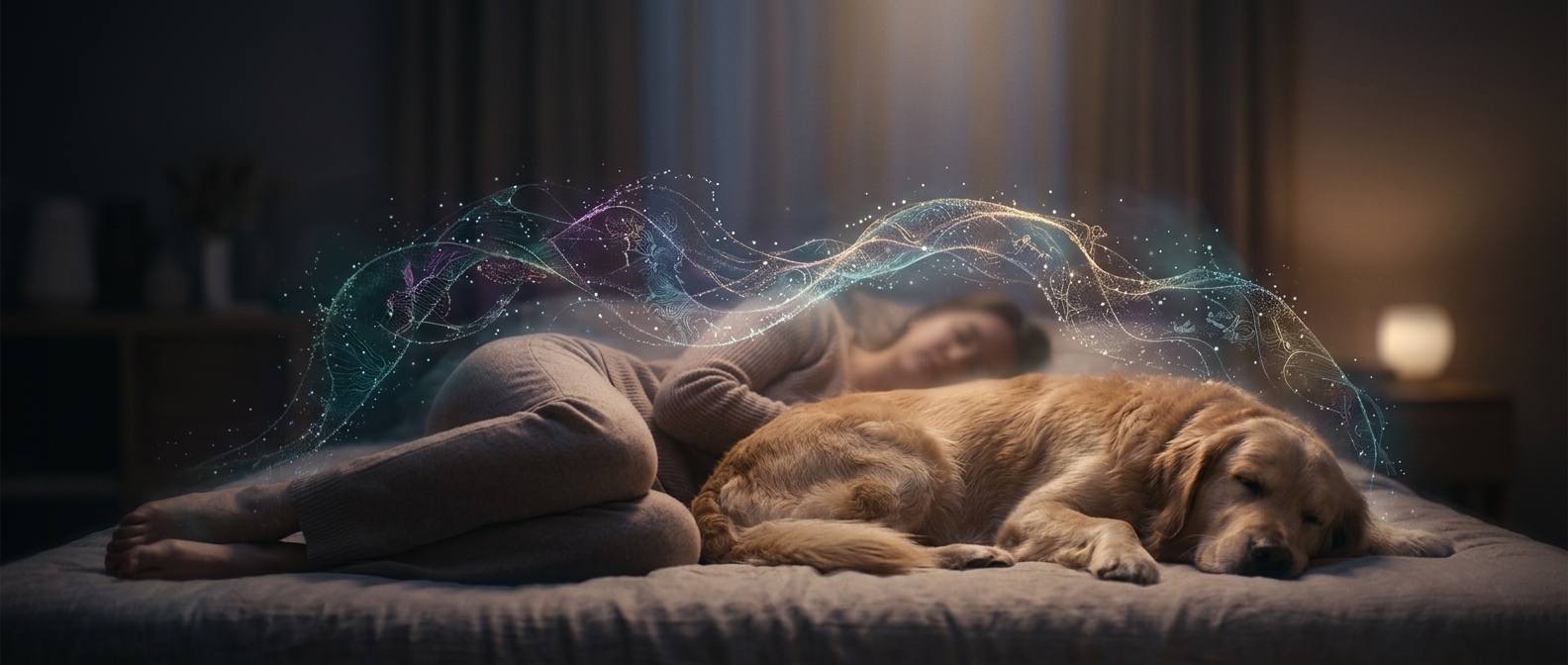
Microbes travel through ordinary contact: a hand on fur, a dog on the couch, or soil carried indoors on paws. They can move between a dog, a person, and shared surfaces, then be picked up again. The home becomes a small microbial exchange network rather than a collection of separate environments.
A microbiome is the community of microbes living in a particular place. On skin, many of those microbes encounter new arrivals directly. In the gut, the route is less direct: microbes must be swallowed, survive passage through the digestive system, and find conditions that allow them to persist. A trace of a dog-associated microbe in a person does not necessarily mean it has become a lasting resident.
Similarity is not the same as sameness
People who share a home with dogs may develop microbial communities that resemble their pets’ more than those of people without pets. But the overlap is partial. Each person’s microbes are also shaped by diet, age, other household members, surroundings, and daily routines. Close contact changes the mix of microbes encountered; it does not make a person’s microbiome identical to a dog’s.
That distinction matters when interpreting the health implications. Microbes are not simply “good” or “bad” as a group, and greater similarity alone does not establish a health benefit or harm. The concrete change is that living with a dog adds regular contact with a different microbial environment—through fur, paws, and shared rooms—and gives those microbes repeated opportunities to reach human skin and, less directly, the gut.