A Small Signal That the Day Is Over
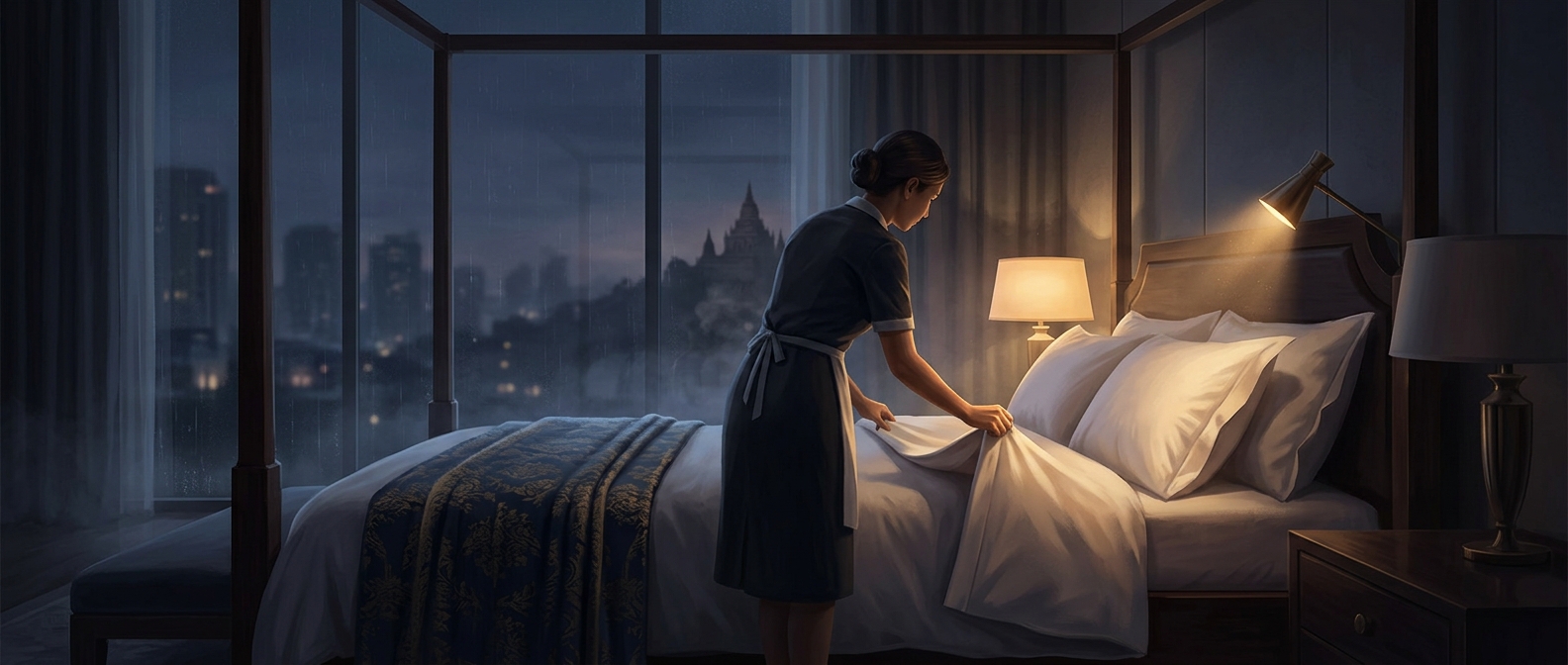
Turn-down service is less about changing the bed than changing how the room feels. A bed left smooth and untouched can look as though it is still waiting for its occupant; a corner folded back makes the next step obvious. The room is subtly arranged for sleep rather than simply left as it was after cleaning.
That small cue matters in a hotel, where a guest may arrive tired, unfamiliar with the room, and unsure whether anything else needs doing. The open edge offers an easy place to slip into bed, while the gesture itself suggests that someone has prepared the space for the evening.
Hospitality in a Second Visit
The service also reflects a different rhythm from daytime housekeeping. An attendant may return later to refresh the room and make a few bedtime-oriented adjustments. What those include varies by hotel; the folded blanket is the recognizable centerpiece, not a guarantee of a particular set of extras.
Its effect comes from restraint. The room does not need to be transformed: one visible change makes it feel newly attended to without demanding the guest’s attention. The memorable part is that the bed looks ready before the guest has to make it so.