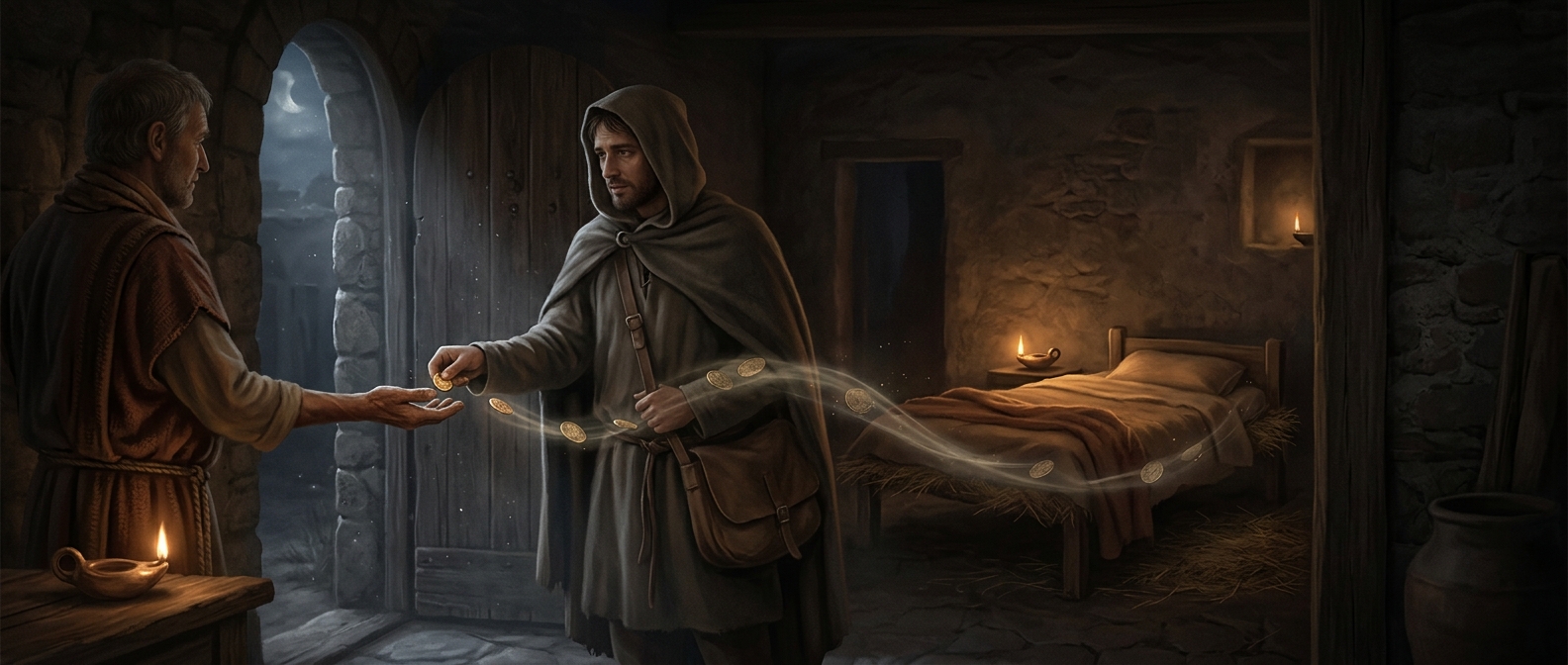
A spare room could be part of the travel network
For much of history, a journey did not come with a dependable chain of purpose-built hotels. A traveler reaching a town or village needed a place to sleep, and local households could fill that gap by taking in paying guests. The arrangement turned an ordinary domestic resource—a bed or room not in use—into temporary lodging.
This was especially useful where formal inns were scarce or where a traveler’s route led beyond the larger settlements that could support them. Rather than relying on a uniform building and service, guests depended on what a household could offer. The stay might bring a traveler into closer contact with local routines, but it also meant that comfort, privacy, and provisions could vary from one home to the next.
Lodging built on local relationships
The exchange was practical for both sides: visitors gained a place to stop, while hosts earned income from space they already had. In places where strangers could not simply choose among many advertised rooms, finding a bed could also depend on local knowledge or someone’s introduction. A household’s reputation and willingness to receive guests therefore mattered alongside the room itself.
Modern hotels made lodging more standardized and concentrated it in businesses devoted to hosting. Home-based stays followed a different logic: travel was accommodated through the buildings and people already present along the way. That is why the old arrangement feels familiar today—yet a guest in a private home was entering someone’s household, not just renting a room.