Why Hoia Baciu’s trees twist
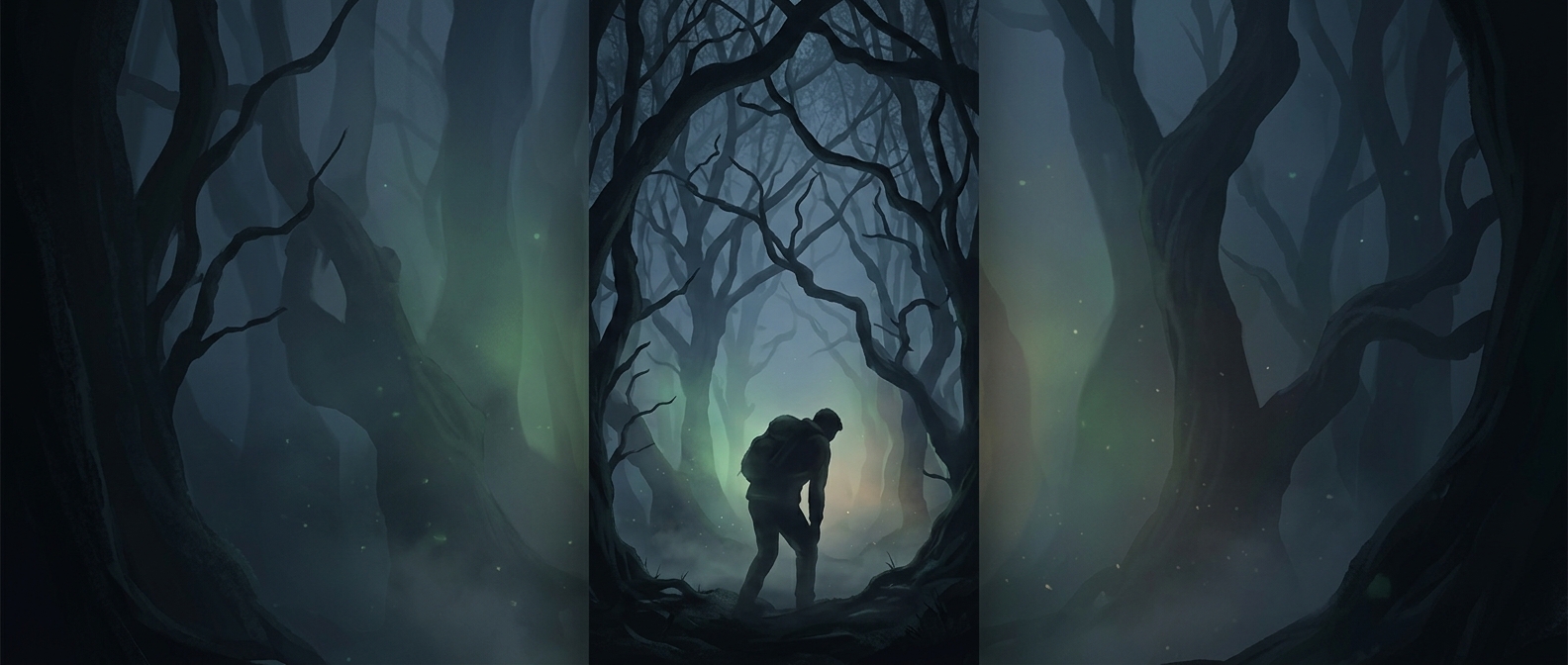
In Hoia Baciu, near the Romanian city of Cluj-Napoca, some trees curve sharply or seem to corkscrew as they rise. The shapes are real, but a tree’s trunk does not usually twist like a rope in a single event. It grows a new layer of wood each year, and its direction can change as it responds to light, wind, damage, or pressure from nearby trees. A bent young trunk may keep growing upward, leaving an enduring kink; repeated changes in direction can make the result look spiral-shaped.
There is no single confirmed explanation for every unusual tree in the forest. Their forms may reflect different growing histories rather than one mysterious force. That variety is part of what makes the paths feel so striking: a stand of ordinary woodland can suddenly give way to trunks that seem to lean, curl, or reach sideways.
The landscape shapes the legend
Hoia Baciu’s reputation as a haunted forest gives those shapes an extra charge. Visitors have reported unease among the twisted trees, and the forest’s unusual appearance readily invites stories. But the experience has a physical setting: uneven trunks, shifting sightlines between trees, and patches of dense growth can make a walk feel less predictable than a straight path through evenly planted woods.
The memorable detail is not that the trees prove anything supernatural. It is that their forms make the forest itself feel like an active presence—one built, slowly and unevenly, from the way trees grow around changing conditions.