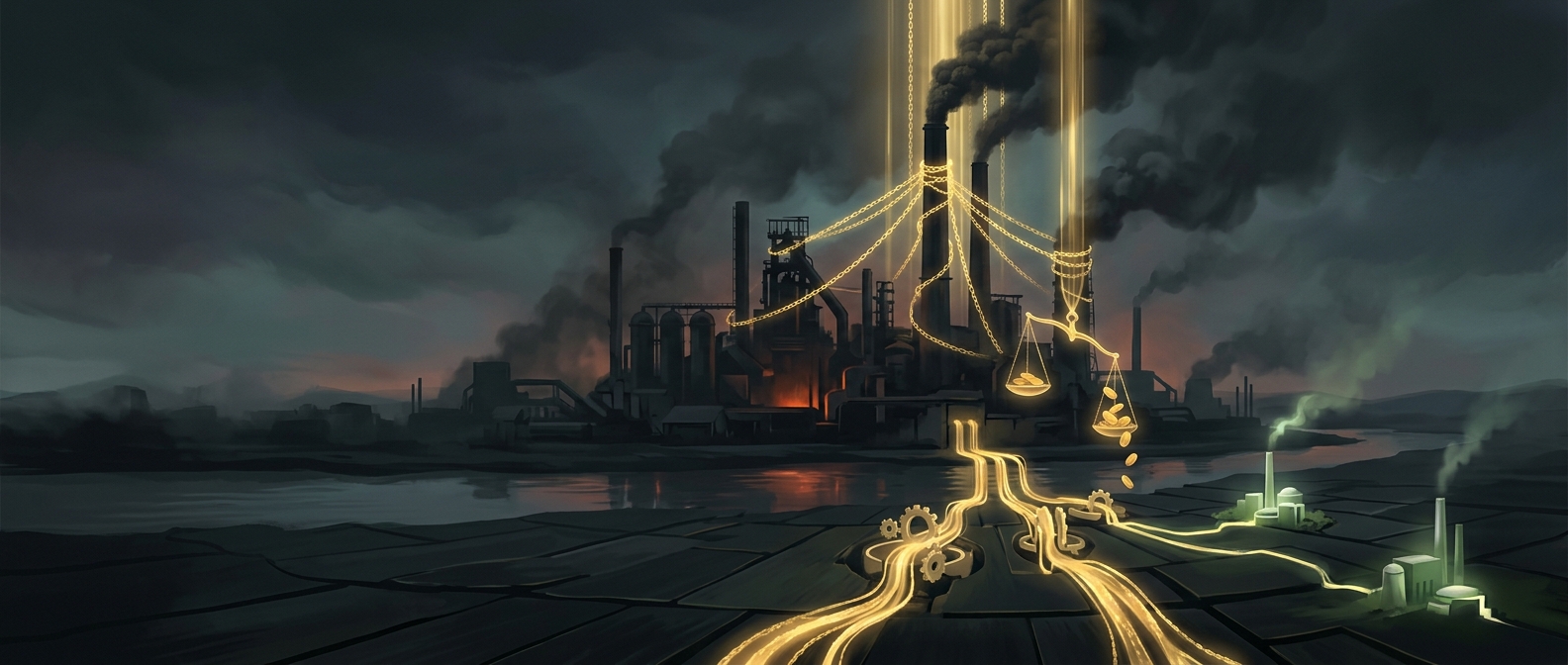
How a Carbon Price Changes a Business Decision
A carbon tax matters because it makes emissions part of the cost of producing something. A factory deciding whether to burn fuel, improve equipment, or switch energy sources can compare the tax it would owe with the cost of each alternative. If cutting a ton of emissions costs less than paying the tax, reducing pollution makes financial sense; if it costs more, paying may be the cheaper choice.
That flexibility is central to the policy. Rather than requiring every company to use the same technology, a tax lets businesses choose where and how to cut emissions. The tax rate shapes the incentive: a small fee may not outweigh the cost of changing equipment, while a larger one can make efficiency upgrades or cleaner energy more attractive.
The Cost Can Travel Through the Supply Chain
The company that sends the tax payment is not always the only one affected. A fuel producer or utility may pass some of the added cost to customers, and businesses that use energy-intensive materials may face higher bills too. How much reaches households depends on competition, contracts, and whether customers can switch to alternatives.
Governments can return the revenue to households, reduce other taxes, or fund public programs. Those choices affect who ultimately bears the cost and who benefits. A rebate, for example, can offset higher energy expenses for some households without removing the incentive to use less carbon-intensive energy.
The tax also depends on a practical question: how emissions are measured and which sources are covered. When the price applies consistently across fuels and industries, businesses have a clearer reason to account for carbon throughout their decisions. The result is a quiet but consequential change in the ledger: pollution becomes a cost a company must weigh, rather than an impact its balance sheet can ignore.