A landmark that makes distance visible
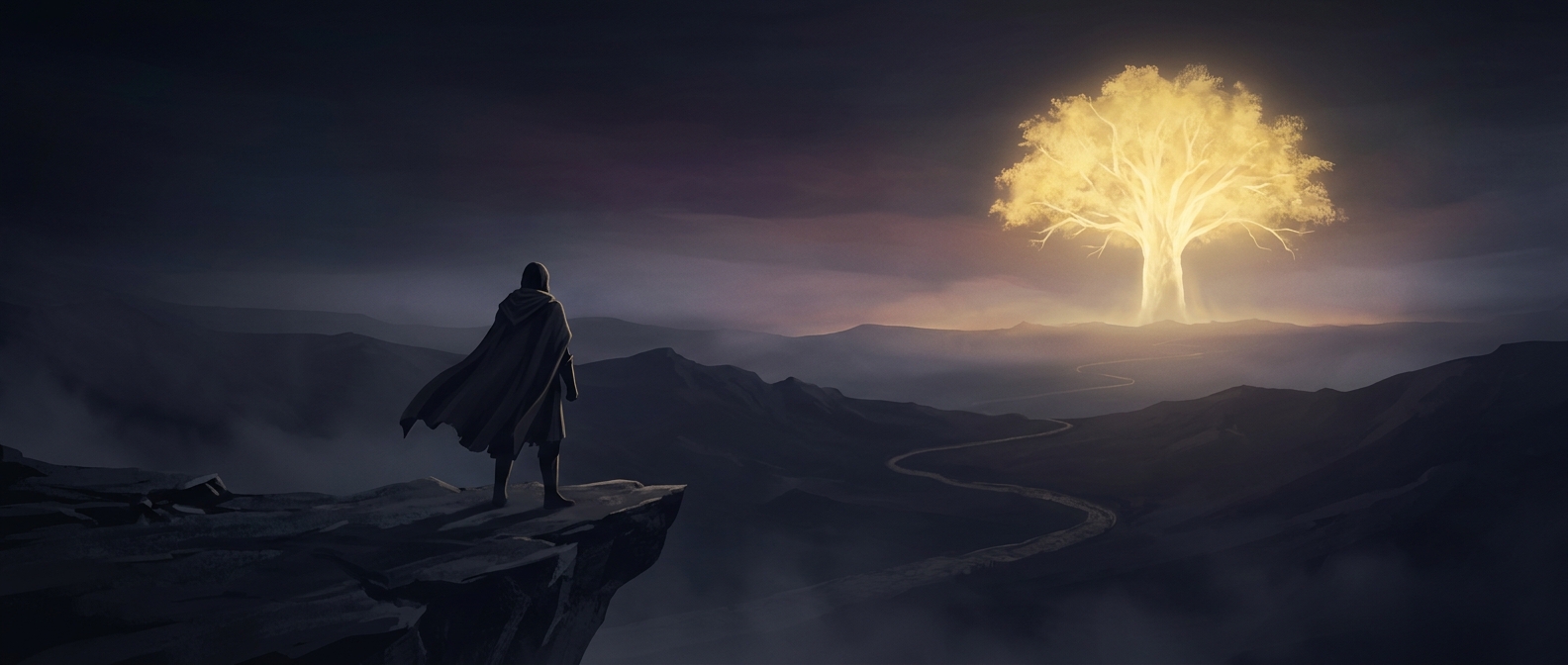
The Erdtree does more than decorate the horizon. Because it is a world object rather than a painted backdrop, it belongs to the same landscape the player is crossing. Its apparent size and position shift as the view changes, tying the distant glow to the terrain instead of leaving it fixed like scenery behind the world.
That gives Elden Ring a powerful way to communicate geography without a constant stream of directions. A player can look up, pick out the tree, and understand that the journey is still oriented around a place ahead—even when the route bends or the destination is not yet reachable. The landmark offers a sense of direction, not a shortcut: seeing it does not mean the intervening ground is easy to cross.
A promise that keeps its distance
The Erdtree’s visibility also makes the game’s scale emotional. From a nearby ridge, it can feel like an attainable destination; from another region, the same glow becomes a reminder of how much unexplored country lies between the player and the center. The goal stays present in the mind while remaining physically distant.
That tension suits the game’s structure. Exploration repeatedly pulls the player off the most direct path, toward roads, ruins, and dangers encountered along the way. The tree remains a steady point of reference through those detours—a destination the player can see long before the journey has made it feel close.