A Ladder Becomes a Change of Pace
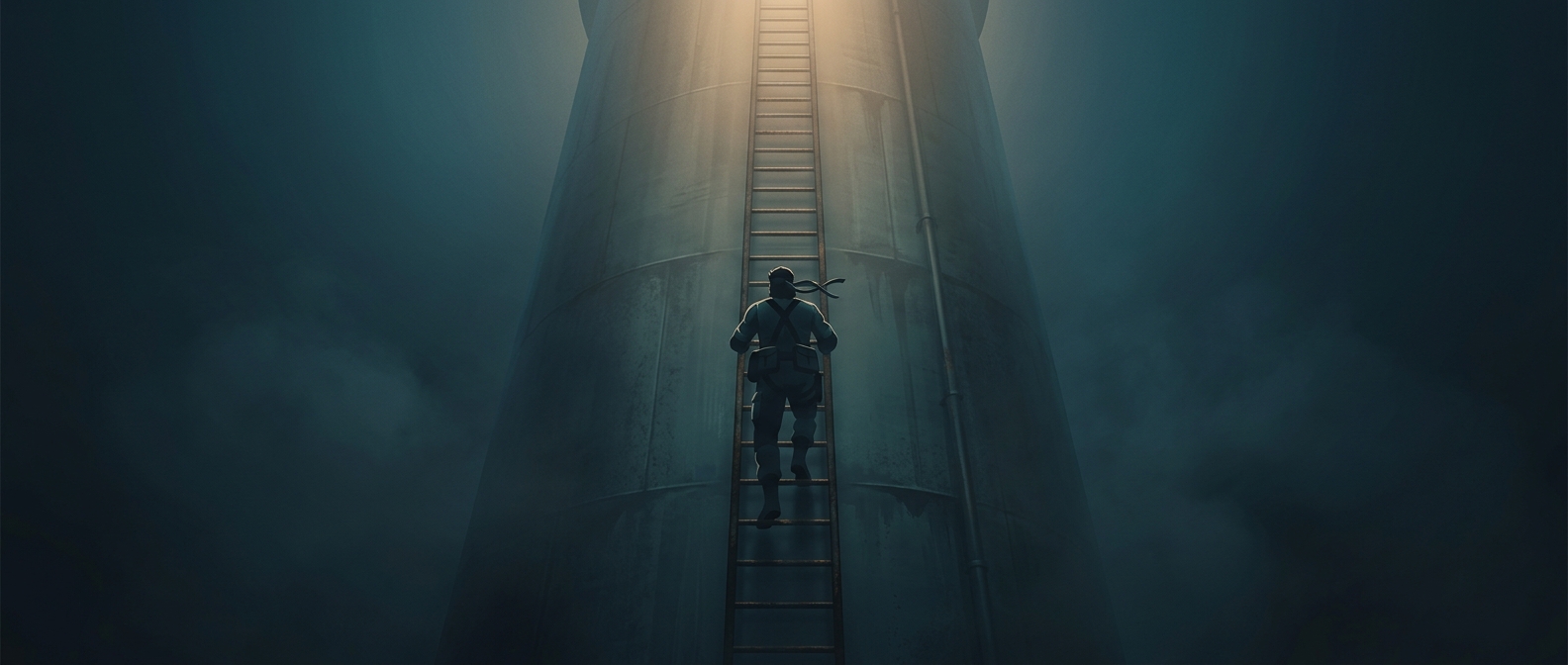
Metal Gear Solid 3: Snake Eater spends much of its time asking players to watch, listen, and make careful choices. Sneaking past guards means managing sightlines, noise, camouflage, and risk. The famous ladder climb temporarily strips those decisions away: the route is fixed, and progress comes from continuing to climb.
That simplicity is the point. After the demands of stealth and combat, the player gets a stretch in which there is almost nothing to optimize. The climb takes long enough for the game’s vocal theme, “Snake Eater,” to take center stage, turning an ordinary movement action into a sustained musical scene.
Control Without Much Choice
The player still has to hold forward, so the sequence is not a conventional cutscene. But the control offers little tactical freedom: Snake cannot choose a shortcut or meaningfully change the route. That small obligation keeps the player physically involved while the song and the slow ascent do the dramatic work.
The design makes time itself noticeable. Instead of cutting past the climb, the game asks players to experience its duration, building a pause between more active sections. A ladder—a familiar, unremarkable piece of level design—becomes memorable because the game commits to making the player stay with it.