A shop interface dressed as print
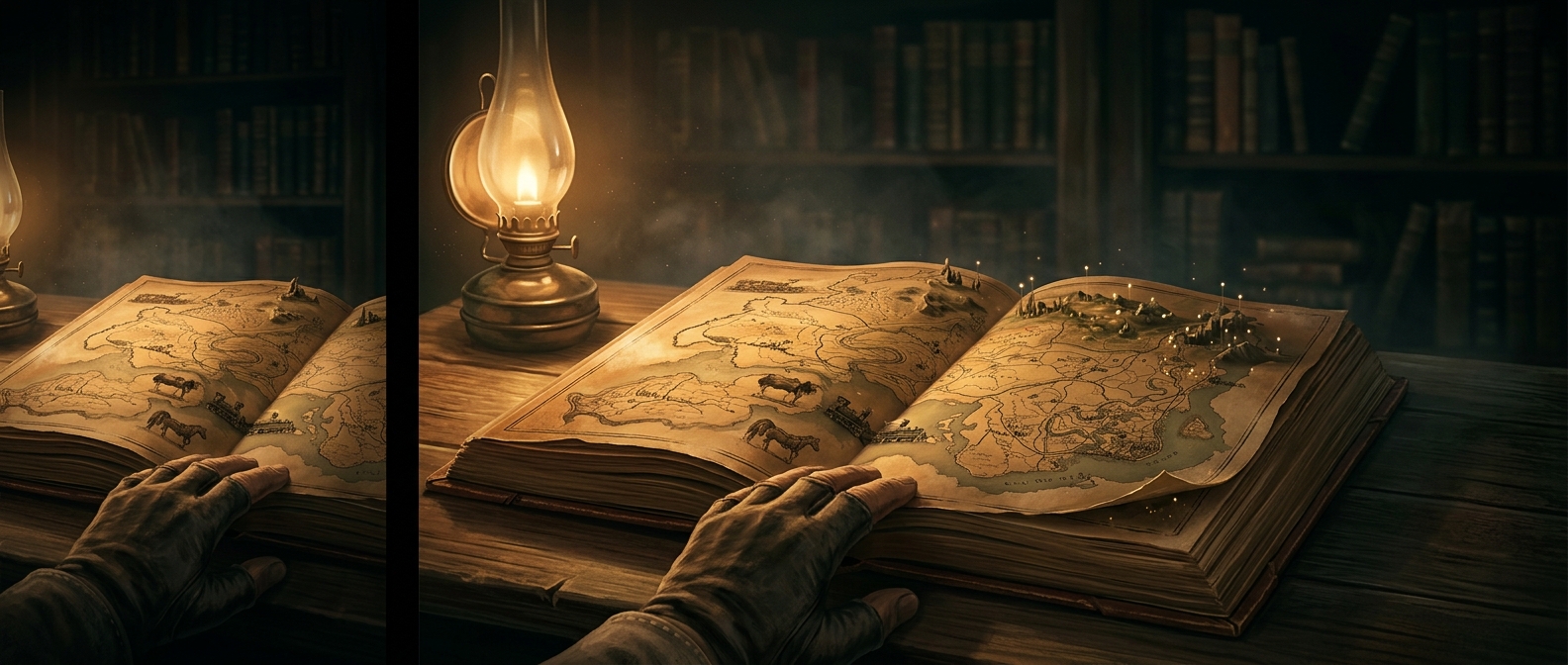
In Red Dead Redemption 2, shopping can mean opening an in-world mail-order catalog rather than scrolling through a conventional game menu. Its pages present goods with vintage-style illustrations and descriptions, making the act of browsing feel like handling a printed sales book from the period. Even a small purchase is framed as part of the world, not just a selection from a list.
That choice changes the pace of shopping. A compact menu is built for quick decisions; a catalog invites the eye to wander across its pages. Suspenders become more than a stat-free wardrobe option when they appear as one entry among the practical wares of a working shop. The format also gives the game a way to make ordinary consumer goods feel like artifacts of its setting, using the visual language of print rather than explaining the era in a separate tutorial.
The useful distraction
The catalog’s appeal comes from a tension familiar to players: it is functional, but it also rewards looking around. You may open it with a specific purchase in mind and end up inspecting items you do not need. That detour is not a new mission or a hidden mechanic; it is a bit of everyday texture built into the route between wanting something and getting it. In a game centered on travel and action, even shopping can briefly turn into browsing.