Why Drawing Made a Strong Party-Game Rule
Pictionary’s basic challenge is a translation problem: one player sees a word, but must communicate it with pictures while teammates try to name it. The artist cannot simply define the word aloud. That restriction turns an ordinary guessing game into a test of how quickly a group can recognize shapes, clues, and shared associations.
A word like “bicycle,” for example, can be reduced to circles, a frame, and handlebars. More abstract words are harder: the drawer has to find a visual hint that points teammates in the right direction without spelling out the answer. The fun comes from the gap between what the artist intends and what the team actually sees.
From Improvised Play to a Repeatable Game
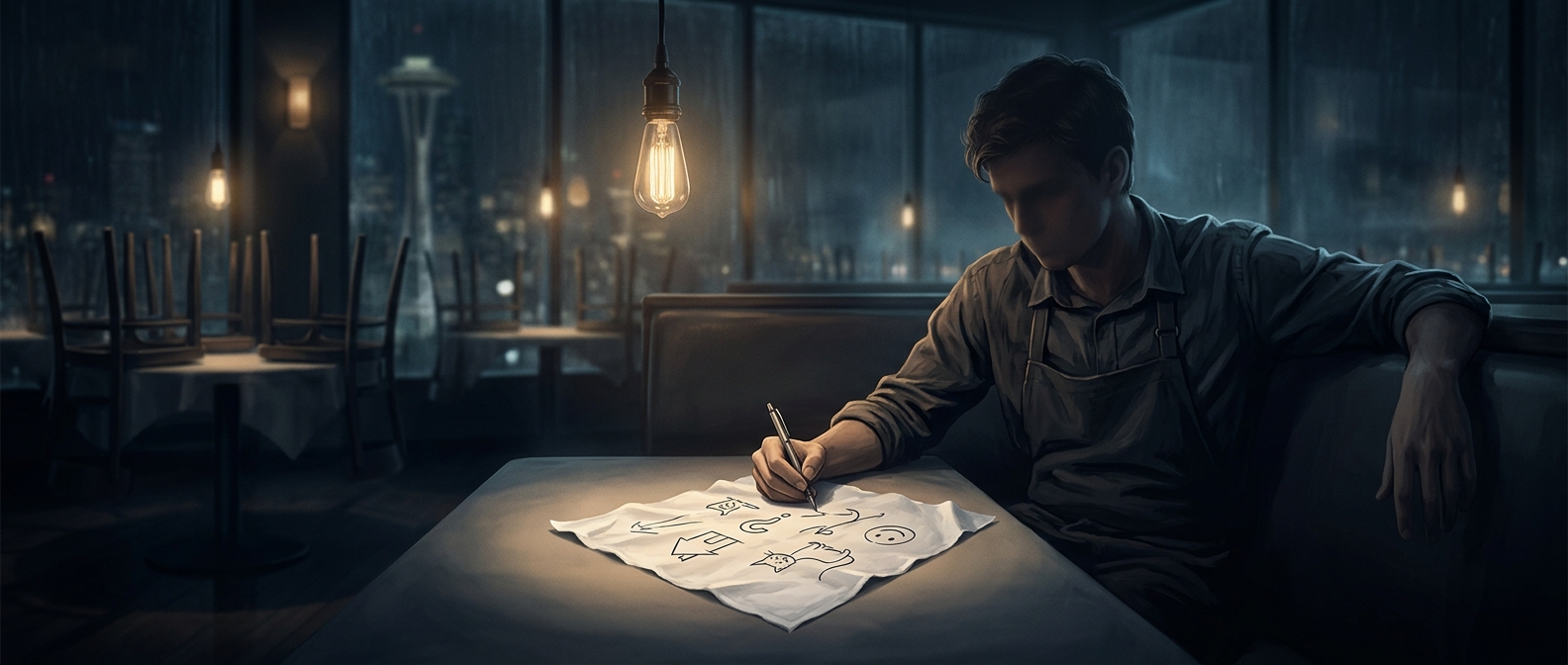
Napkins made convenient drawing surfaces for a casual gathering, but a packaged game needed a more dependable structure. A set of words gives players a common pool of prompts; rules can organize turns and determine what counts as a successful guess. That structure makes the activity repeatable among people who were not part of the original circle of friends.
The design also gives everyone a job: draw, interpret, or wait for a turn. No artistic skill is required for the joke to work—often, an awkward sketch is exactly what makes the clue memorable. The central idea is simple enough to travel from a party napkin to a game box: turn a word into a picture, then see whether other people can make the same leap.