A magazine made by cutting to the point
DeWitt and Lila Wallace’s proposal was unusual: instead of commissioning a full lineup of original articles, they wanted to gather material from existing magazines and make shorter versions of it. The aim was not simply to summarize each piece, but to preserve its most useful ideas in a form readers could finish quickly.
That format turned editing into the product. Every selection had to survive two tests: Was the subject worth a reader’s time, and could the article be shortened without losing the point? The result promised variety in a compact package—an alternative to buying or working through many separate periodicals.
Rejection moved the idea out of publishers’ hands
Publishers’ refusals left the Wallaces with a practical choice: abandon the concept or try producing it themselves. Renting a basement gave them a place to work, but the more consequential decision was to test the idea as an independent publication rather than wait for an established magazine to adopt it.
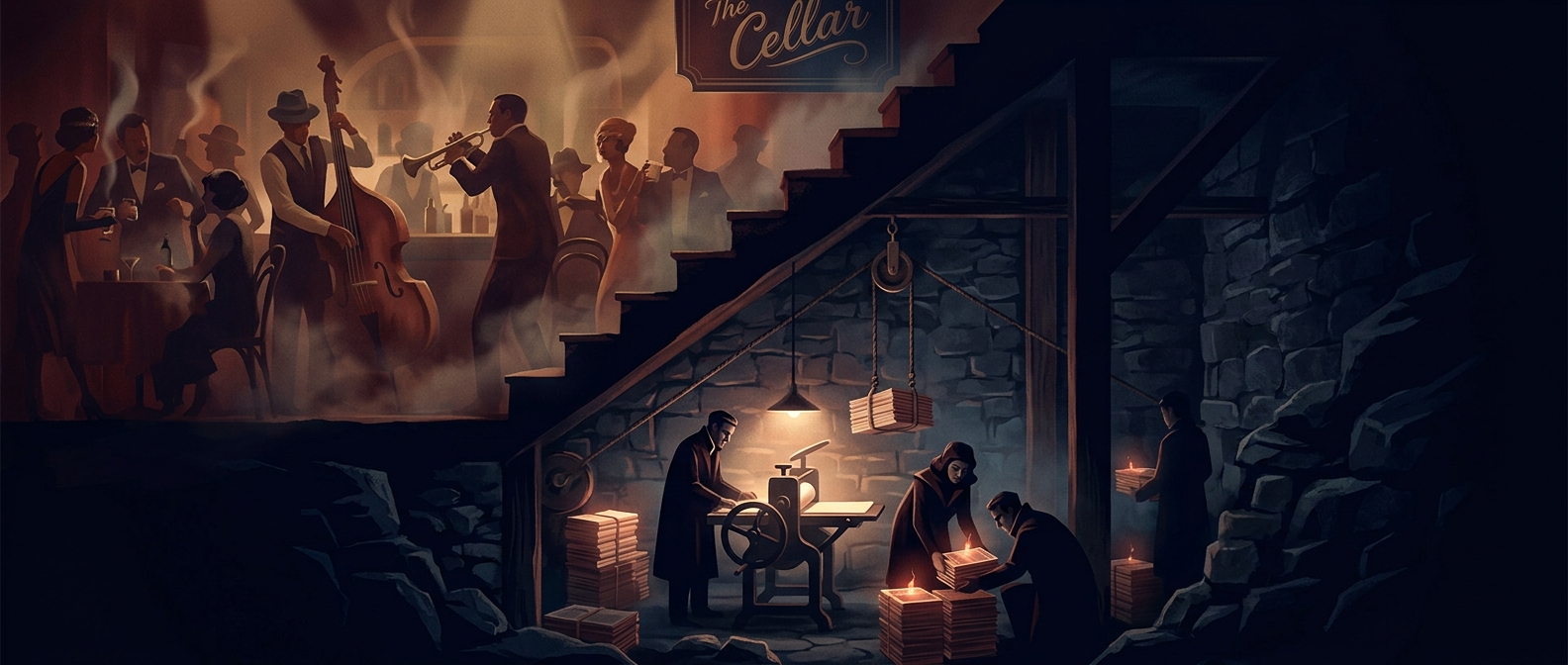
The speakeasy above was part of the unlikely setting, not the reason the venture worked. What mattered was the editorial proposition beneath it: readers might value a carefully chosen collection of condensed articles enough to support a publication built around that service.
That proposition became Reader’s Digest. Its origin is a reminder that a rejected publishing idea can become a new format when its creators take responsibility for proving that readers want it.