Why Disney Reused Animation
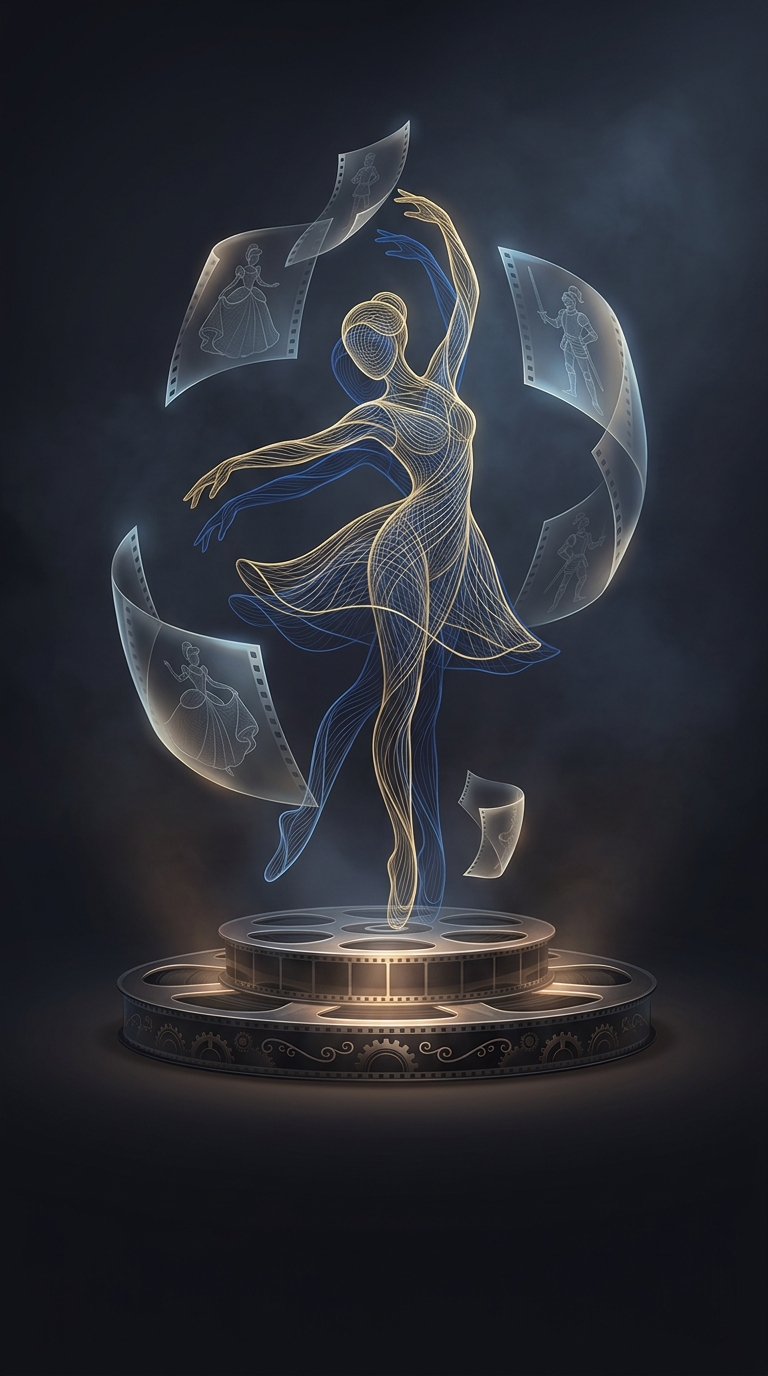
A dance scene can look newly animated even when much of its motion has appeared on screen before. In hand-drawn production, studios could reuse an older sequence as a guide, tracing its drawings and replacing the figures with new character designs. The characters changed; the underlying choreography and timing did not have to be invented again.
That shortcut saved labor at a time when every moving image was built from many individual drawings. Artists had to make poses flow smoothly from one frame to the next, then coordinate those drawings with the scene’s timing. Reusing an established sequence supplied a working blueprint for movement, reducing the amount of drawing and planning needed for a new film.
What Carries Over—and What Changes
The method is often called rotoscoping when artists trace existing filmed or animated movement. In a recycled animated sequence, the old drawings could serve as the frame-by-frame template. Artists then adapted the figures to fit the new scene, so clothing, faces, and silhouettes might be different even as the bodies followed familiar paths.
That distinction matters: the scene was not simply copied and pasted as finished footage. The new characters still had to be drawn into the action. But the hardest-to-rebuild element—the precise rhythm of a partnered dance—was already mapped out.
A Familiar Motion in a New Story
Belle and the Beast’s ballroom dance draws on the earlier dance between Aurora and Prince Phillip in Sleeping Beauty. The reuse gave the newer scene a tested pattern of turns and graceful movement while allowing it to be staged around different characters and a different story.
The result shows how an old production asset could become a practical tool rather than a visible repeat. Viewers encountered a new pair of dancers; behind the scenes, artists could start from motion Disney had already worked out.