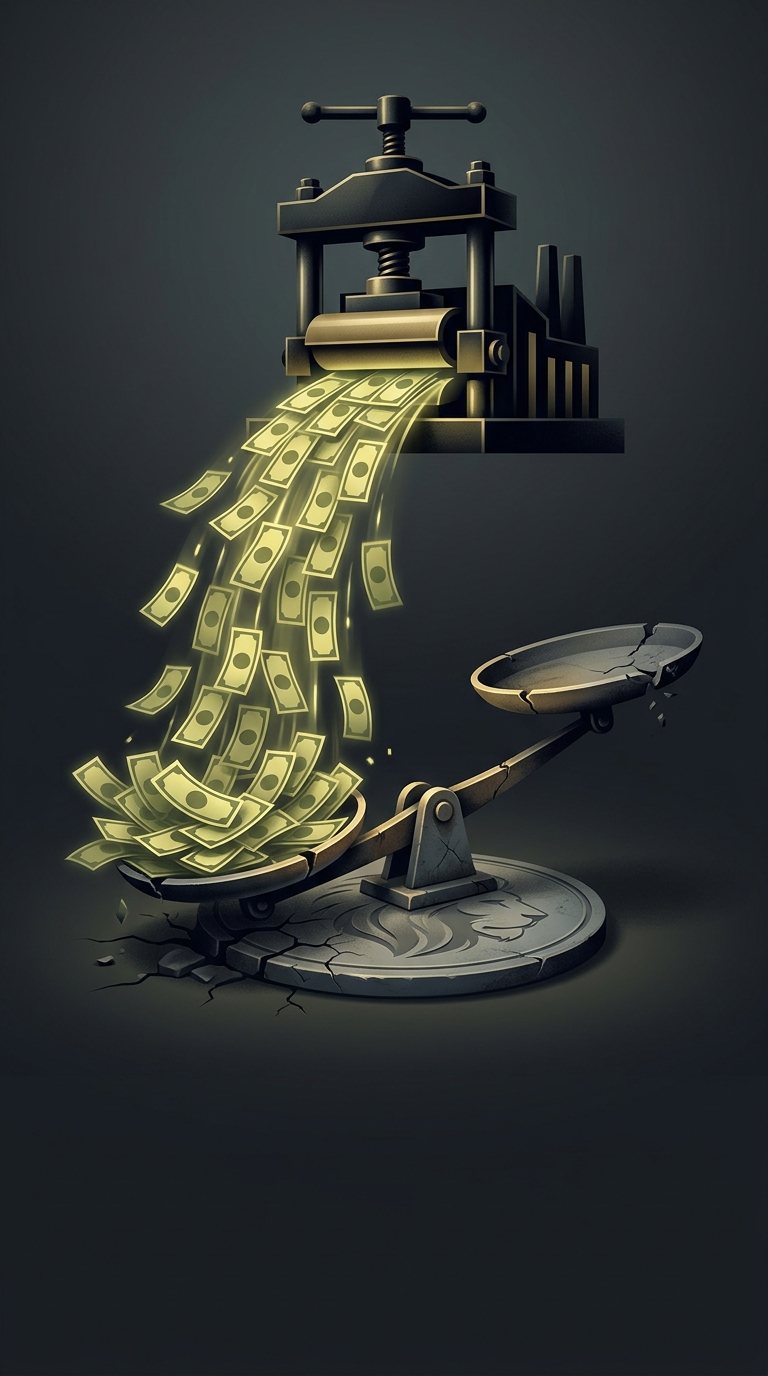
How a counterfeit note could threaten an economy
A banknote works because people expect the next person to accept it. If forged notes became common enough, shops and banks might refuse cash, demand payment in another currency, or spend time checking every bill. That loss of confidence—not simply the extra paper in circulation—was the danger behind Operation Bernhard.
The operation relied on details that ordinary users rarely inspect but financial systems depend on: the paper’s feel, the watermark visible in transmitted light, and the logic of its serial numbers. Prisoners forced to make the notes studied genuine currency closely and reproduced these features with unusual skill. The closer a counterfeit came to passing routine checks, the harder it was for cash handlers to separate it from legitimate money.
A plan with more than one use
The scheme is often described as an attempt to overwhelm Britain with forged pounds. But making notes and getting them into everyday British commerce were different problems. Rather than risk a conspicuous mass release, German authorities used counterfeit currency chiefly to finance overseas operations and purchases, where large sums could change hands with less public scrutiny.
That use still exploited the same vulnerability: a forged note was valuable only if the people receiving it trusted it. The operation turned the British pound’s international standing into an asset for its enemies, while keeping the most destabilizing version of the plan difficult to carry out.
The cost of making money trustworthy
After the war, the Bank of England withdrew higher-denomination notes, including those above £5, and changed its currency. Such steps helped limit the circulation of suspect notes and reduce the chance that old counterfeits would remain usable. They also imposed a cost on ordinary holders and businesses: familiar money had to be checked, exchanged, or replaced.
The episode’s lasting lesson was practical. A forged note did not need to fool everyone forever; it needed to circulate long enough to make people question whether the cash in their hands was genuine.