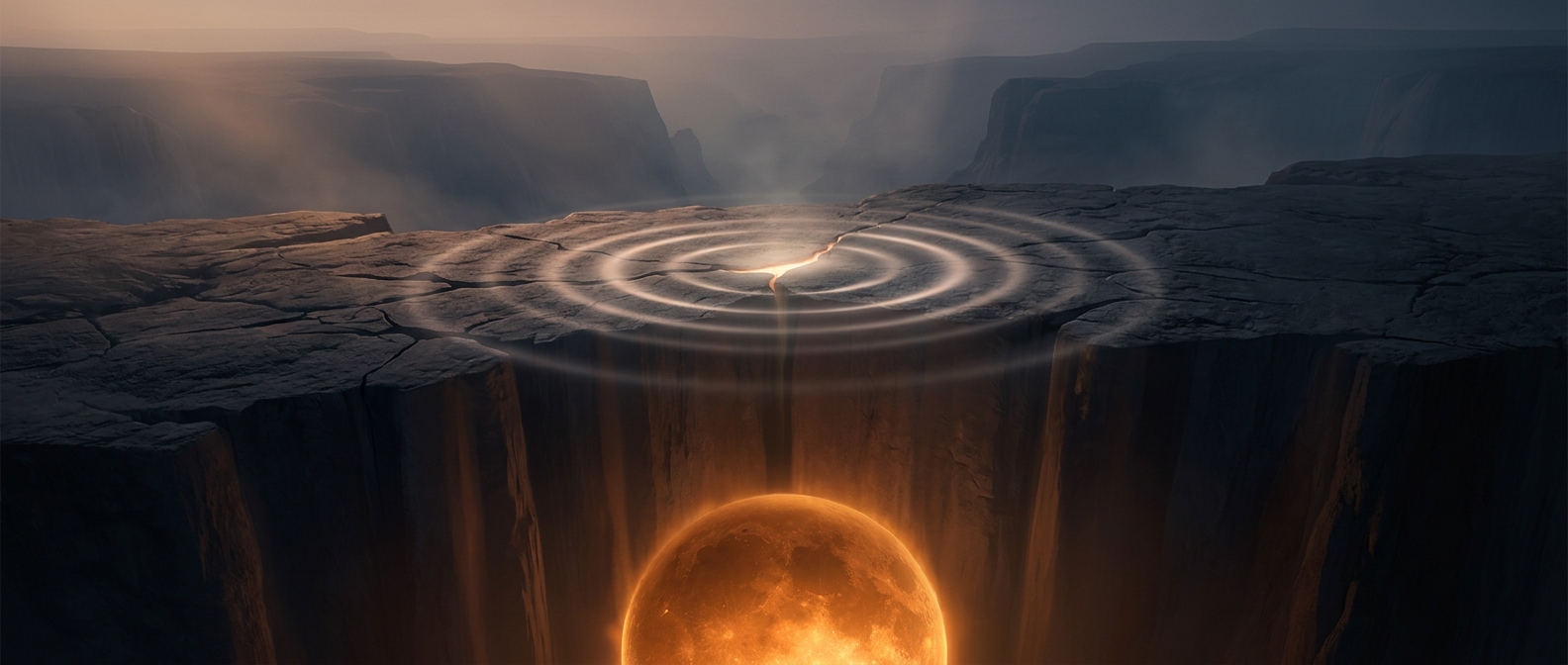
Why S waves stop at Earth’s outer core
Earthquakes send out several kinds of seismic waves. S waves, also called shear waves, move by shaking material sideways—perpendicular to the direction the wave travels. For that motion to continue, the material must resist a change in shape, much as a solid spring or rock does.
A liquid can flow instead of holding that sideways distortion. When an S wave reaches the boundary between the solid mantle and the liquid outer core, it cannot keep traveling through the liquid. The wave is reflected or converted into other kinds of motion at the boundary, leaving no direct S wave passing through the outer core.
How a missing wave reveals what lies inside
Seismologists detect earthquake waves at stations around the world. By comparing which waves arrive, where they arrive, and where they are absent, they can infer what the waves encountered underground. Regions on the far side of Earth from an earthquake receive no direct S waves that would have had to cross the outer core. This broad area is called an S-wave shadow zone.
The shadow is not simply a quiet patch on the surface: it is a pattern in the routes waves can take through the planet. S waves can still travel through the solid mantle, so stations positioned to receive waves that remain in that layer can record them. The gap appears where the liquid outer core blocks a direct path.
That contrast—solid rock transmitting sideways shaking, liquid metal not doing so—lets scientists map a boundary thousands of kilometers below the surface without drilling to it. Each earthquake sends out a natural test pulse, and the missing S waves mark where Earth’s interior stops behaving like solid rock.