A closer look
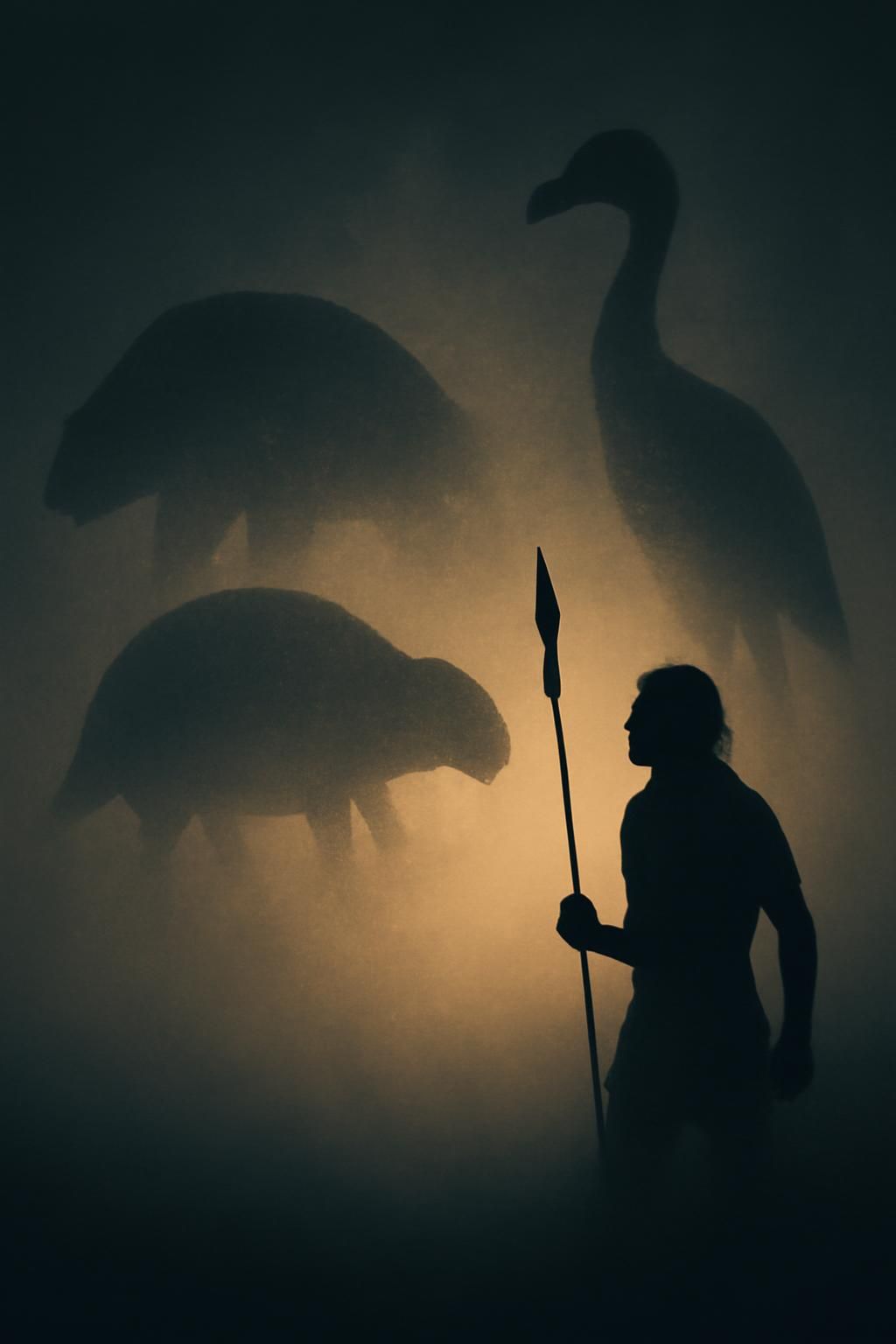
Humans once walked among giant wombats, car-sized armadillos, and birds taller than basketball hoops – then they vanished. Across Australia, the Americas, and many islands, most large animals over about 45 kilograms disappeared soon after humans arrived. Climate change played a role, but the timing is suspiciously close to our spread. Early hunters likely targeted the biggest, slowest-moving sources of meat first, and those species often had few young and no fear of bipeds with spears. Once they were gone, entire ecosystems reshuffled. Grasslands changed without heavy grazers, forests evolved differently without giant seed dispersers, and predators lost prey. Our species has been editing the planet's cast list for tens of thousands of years, long before bulldozers and plastic. The comfortable idea that 'nature' was stable until recent industry is mostly myth; we've been disruptive super-predators since we first stepped into new continents with sharp tools and hungry tribes.