A glue with the wrong kind of grip
In the late 1960s, 3M chemist Spencer Silver was trying to develop a strong adhesive. Instead, he made one that stuck lightly: it could hold two surfaces together, then come away without tearing paper or leaving much residue. The glue formed tiny particles that touched a surface at scattered points rather than spreading into the firm, continuous bond a conventional adhesive makes.
That made it a poor fit for the job Silver had been pursuing. But it gave the adhesive an unusual advantage: it could be used again after peeling away.
A bookmark problem gives the glue a purpose
Silver kept presenting the material to colleagues inside 3M, hoping someone would find a practical use for it. Years later, fellow employee Art Fry found one in a familiar annoyance. The paper slips he used to mark hymnal pages tended to fall out; ordinary glue would hold a bookmark too firmly or damage the page when removed.
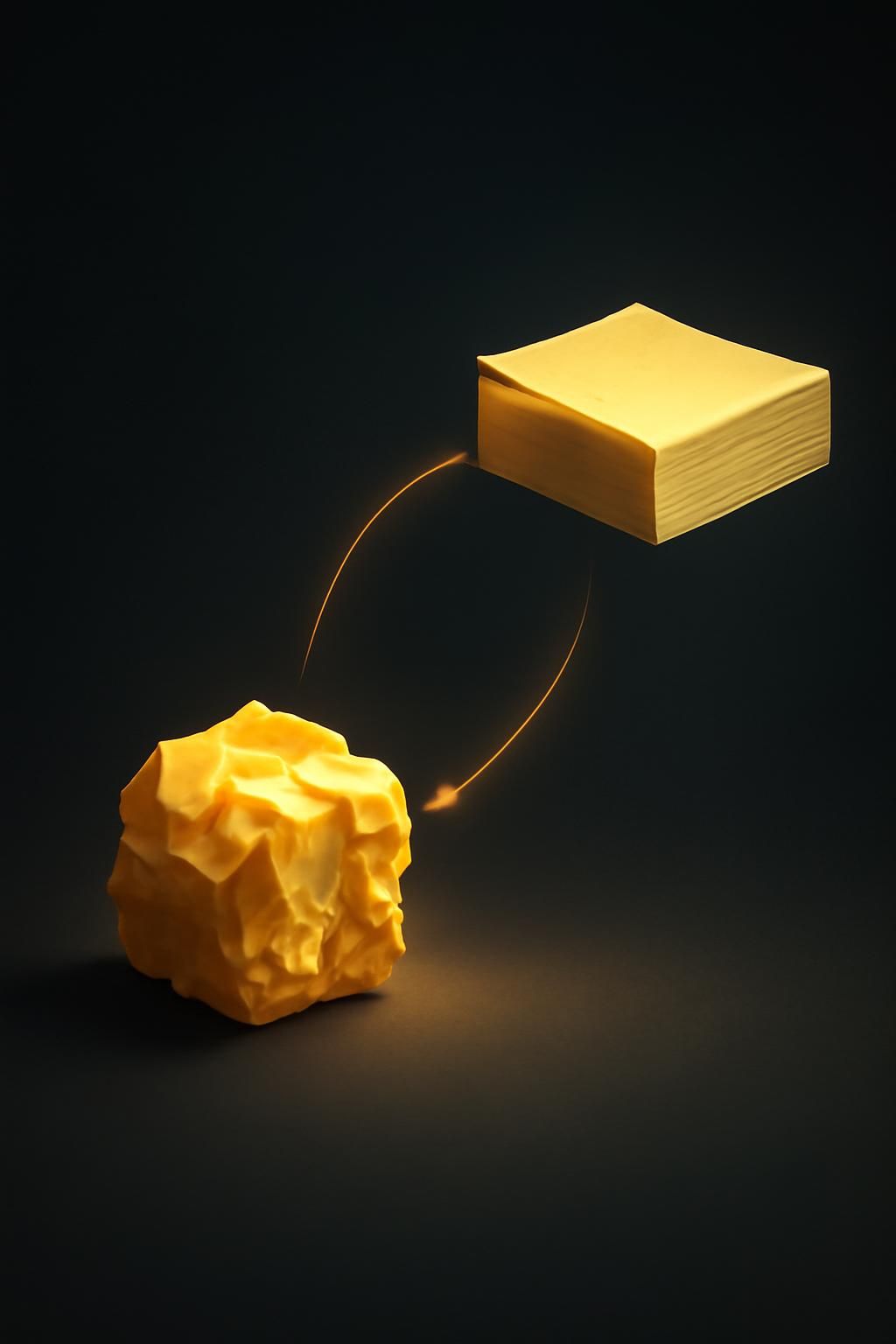
Fry put Silver’s adhesive on paper slips. The light grip held each marker in place, while the scattered contact points let him lift it cleanly and reposition it. The glue had not become stronger; the right product needed it to be weak in exactly the right way.
From office experiment to everyday tool
Turning the idea into a product required more than coating paper with glue. The adhesive had to stay attached to the note rather than transfer to the page, and the notes had to be easy to write on, peel off, and use again. 3M developed and tested versions before introducing the product that became known as Post-it Notes in 1980.
The note’s success rested on a reversal of the usual adhesive goal. A permanent bond is valuable when two things must stay joined; for a bookmark, reminder, or temporary label, clean release is the useful feature. A failed attempt at stronger glue gave 3M a material whose limitations turned out to define a new job.