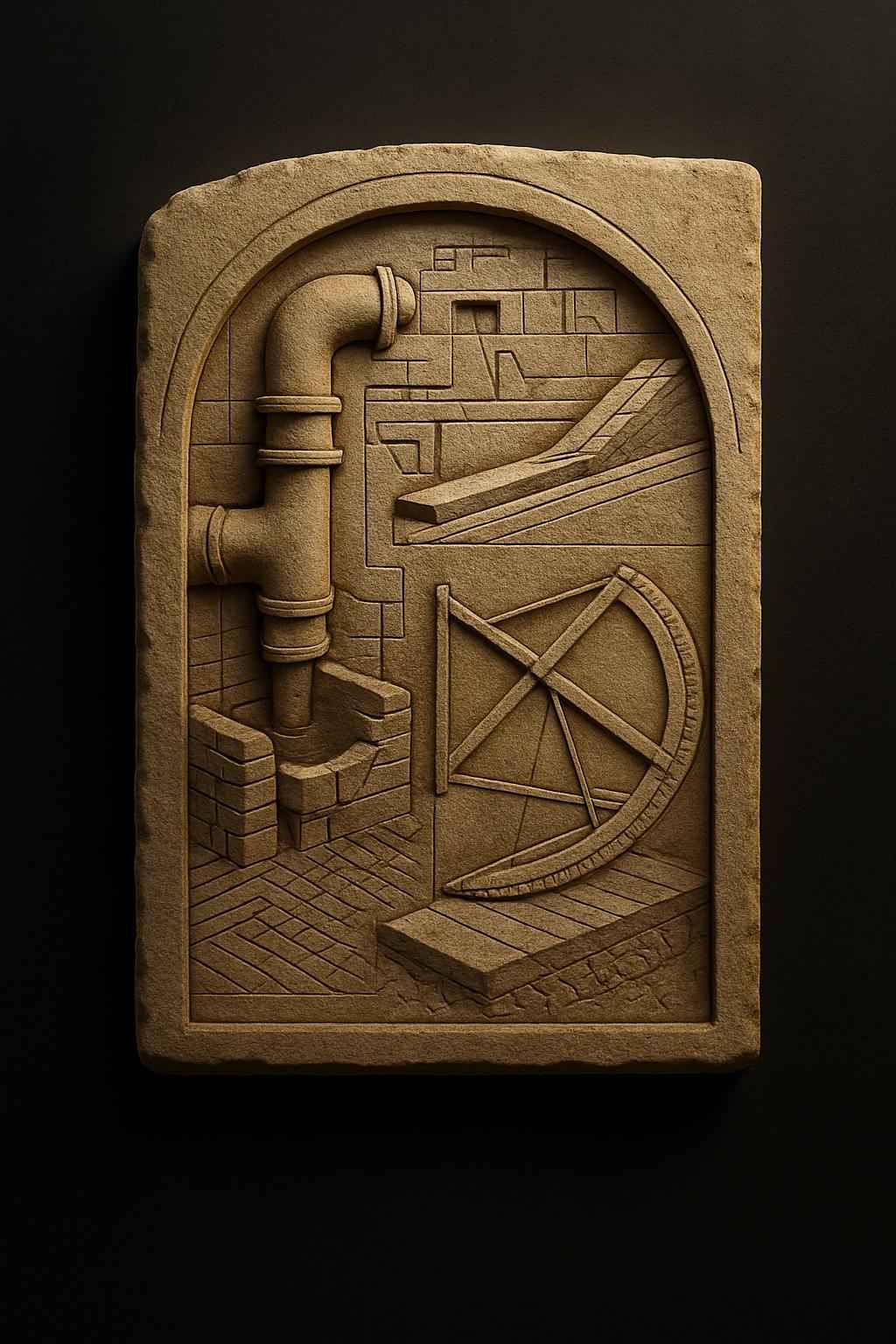
Stone as a maintenance manual
A repair instruction is useful only if the person who needs it can find and understand it. In Roman infrastructure, public, carved guidance offered a durable alternative to knowledge kept in a private notebook or passed only from one specialist to another. A worker could consult information at the site where a system had to be maintained, without first locating a scholar or written manual.
Diagrams were especially suited to practical tasks. A picture can show how parts relate or which direction a line should run; short labels can identify what the image alone cannot. That makes a technical idea easier to grasp for someone who may not have formal training in engineering or access to lengthy technical texts.
Making know-how available—and durable
The value was not simply that stone lasts. Public placement made the instructions findable, while a visual format lowered the reading burden. Together, those choices helped turn specialized knowledge into a shared resource. They could not make every repair simple or eliminate the need for experienced workers, but they reduced dependence on a single person carrying the relevant information in memory.
That mattered because roads and water systems were not finished once construction ended. They needed continued attention. If a repairer could check a diagram on site, a small piece of practical knowledge was less likely to disappear when a worker moved on or a private record was lost. The striking idea is that Roman engineering depended not only on building infrastructure, but also on making instructions for keeping it working hard to misplace.