How Thimphu directs traffic without signals
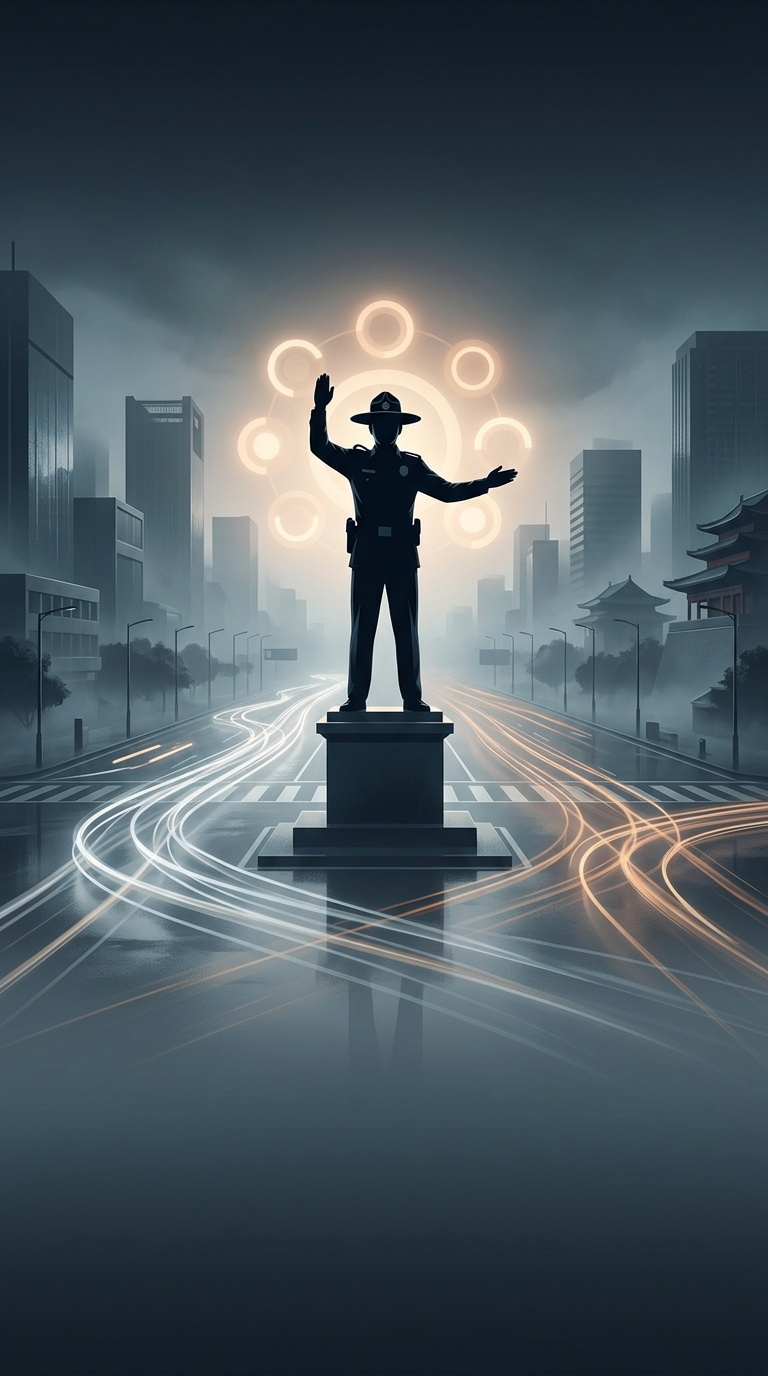
At busy junctions in Bhutan’s capital, the flow of cars depends on a traffic officer’s gestures rather than a timed light. Drivers watch the officer to see when to stop, turn, or move through the intersection. The arrangement puts a person in the middle of the decision that an automated signal would make: assigning turns to streams of traffic and preventing conflicting movements.
That human control can respond to what is happening right now. An officer can hold one direction while a queue clears, or adjust the sequence when a vehicle or pedestrian changes the flow. A traffic light follows a preset cycle; a person can make a judgment in the moment.
The tradeoff at the intersection
The system also concentrates responsibility. Drivers must pay attention to the officer, and traffic depends on someone being present to manage it. It is not a way to make congestion disappear; it is a different way to coordinate vehicles where traffic needs active direction.
The result is a strikingly personal urban scene: at a major junction in a national capital, the authority to stop and release traffic is visible, embodied in an officer’s raised hand rather than a changing signal overhead.