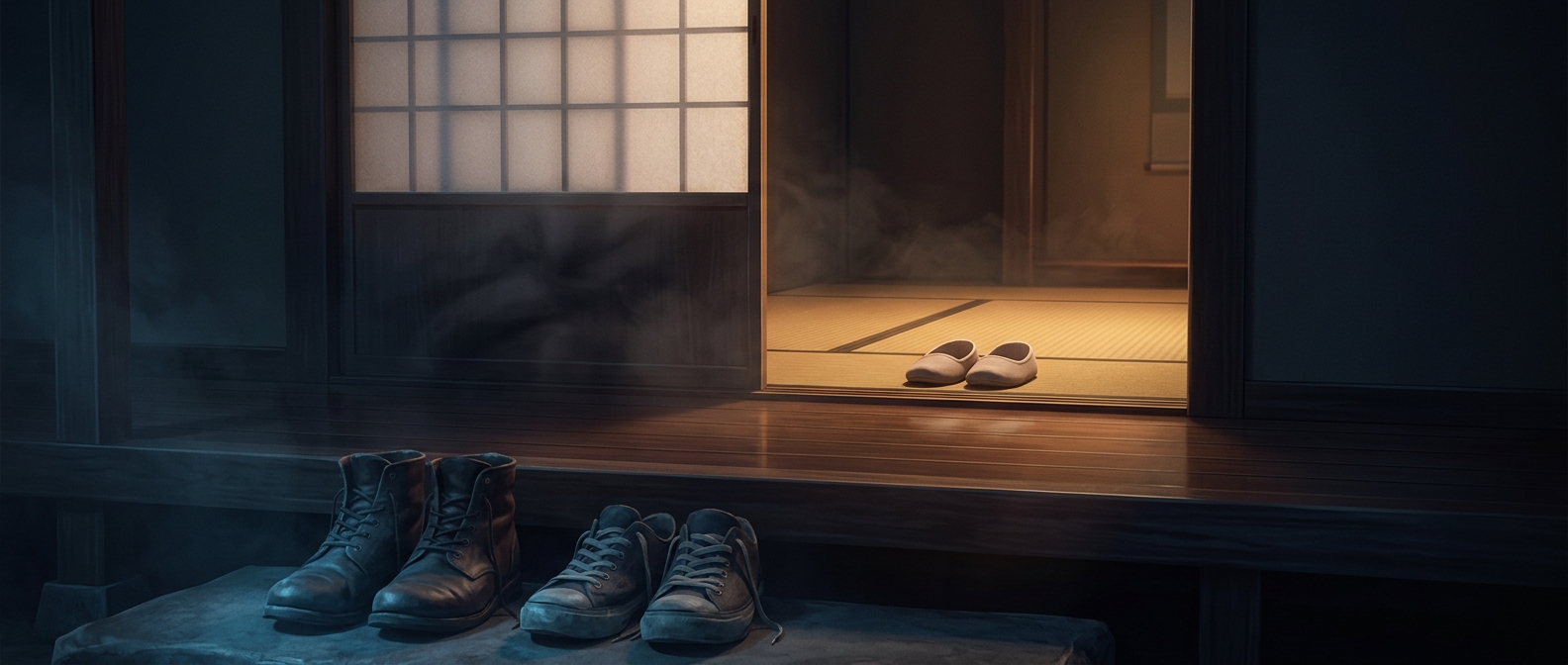
The entryway marks a change of floor
In many Japanese homes, the entrance is designed as a small transition zone called a genkan. The floor just inside the front door is typically lower than the main living area; people leave shoes there before stepping up. That change in height makes the boundary between outside and inside visible and gives shoes a place to stay without carrying street dirt farther into the home.
The custom also fits homes where people sit or sleep close to the floor, sometimes on tatami mats. Keeping outdoor grit off indoor surfaces is practical as well as orderly: dirt that might be unremarkable on a hallway floor is more noticeable where people sit, kneel, or place bedding.
Slippers keep the boundary going
Indoor slippers offer a clean layer between bare feet or socks and floors used throughout the home. A separate pair for the restroom extends the same logic one room further: restroom floors are treated as a distinct zone, so those slippers are put on at the doorway and left there when someone exits.
The arrangement is a household convention, not a rule followed identically everywhere. But its small, repeated transitions—from street shoes to indoor footwear, then sometimes to restroom slippers—make cleanliness a shared routine rather than a chore saved for later.