How a Thai wai signals respect
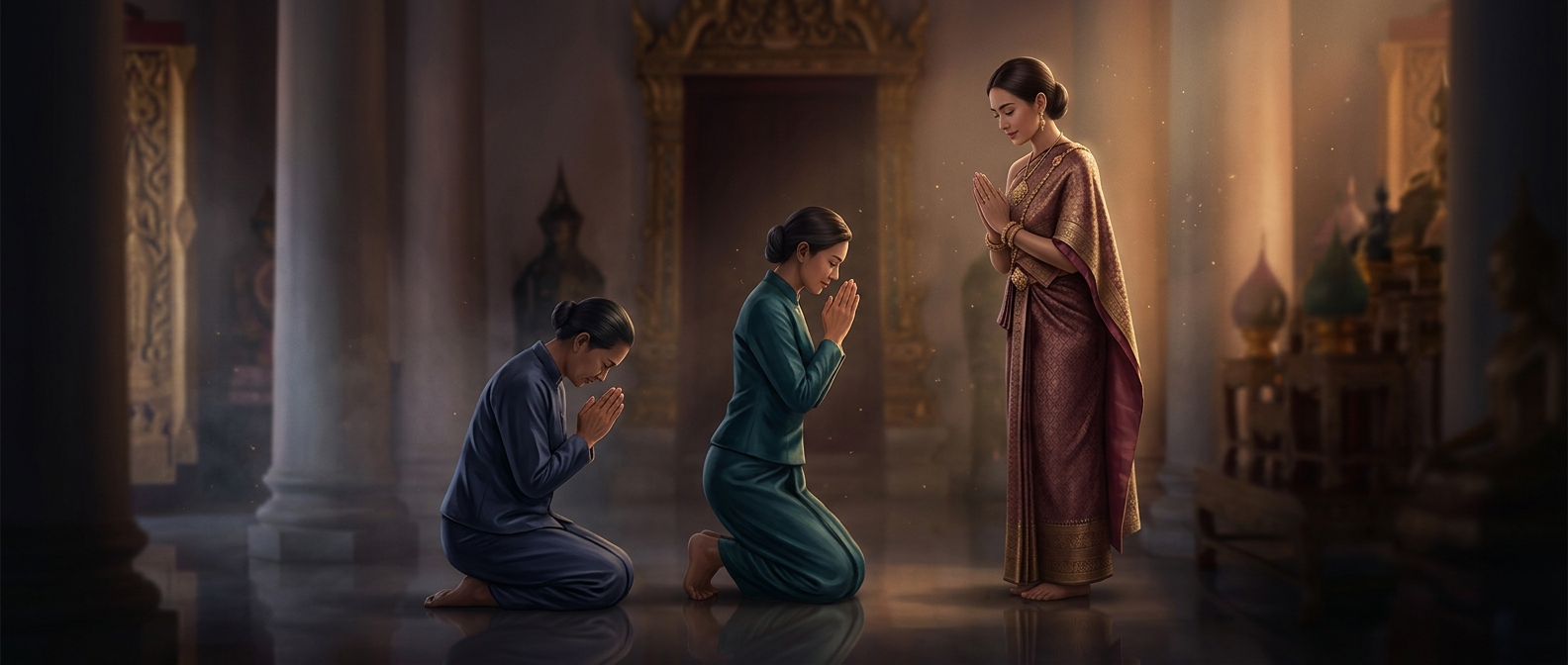
In Thailand, the height of a wai—the greeting made by bringing the palms together—can communicate how much deference a person intends to show. With the thumbs near the chest, the gesture is suited to greeting someone on equal footing. Raising the hands toward the nose marks greater respect, such as when greeting an elder or a monk. A slight bow often accompanies the gesture, making the movement feel less like a handshake and more like a visible acknowledgment of the other person’s standing.
A greeting shaped by the relationship
The wai is not simply a hand signal with one fixed meaning. Its height helps express the relationship between the people greeting each other: the more elevated gesture recognizes greater seniority or religious respect. That makes the greeting adaptable without requiring a spoken explanation. A visitor can use the same basic movement in different encounters while adjusting its level to the person being greeted.
The detail worth noticing is small but deliberate: moving the thumbs from chest to nose changes the tone of the greeting. In a brief exchange, that extra lift turns a familiar sign of welcome into a clearer mark of deference.