What a Bow’s Angle Communicates
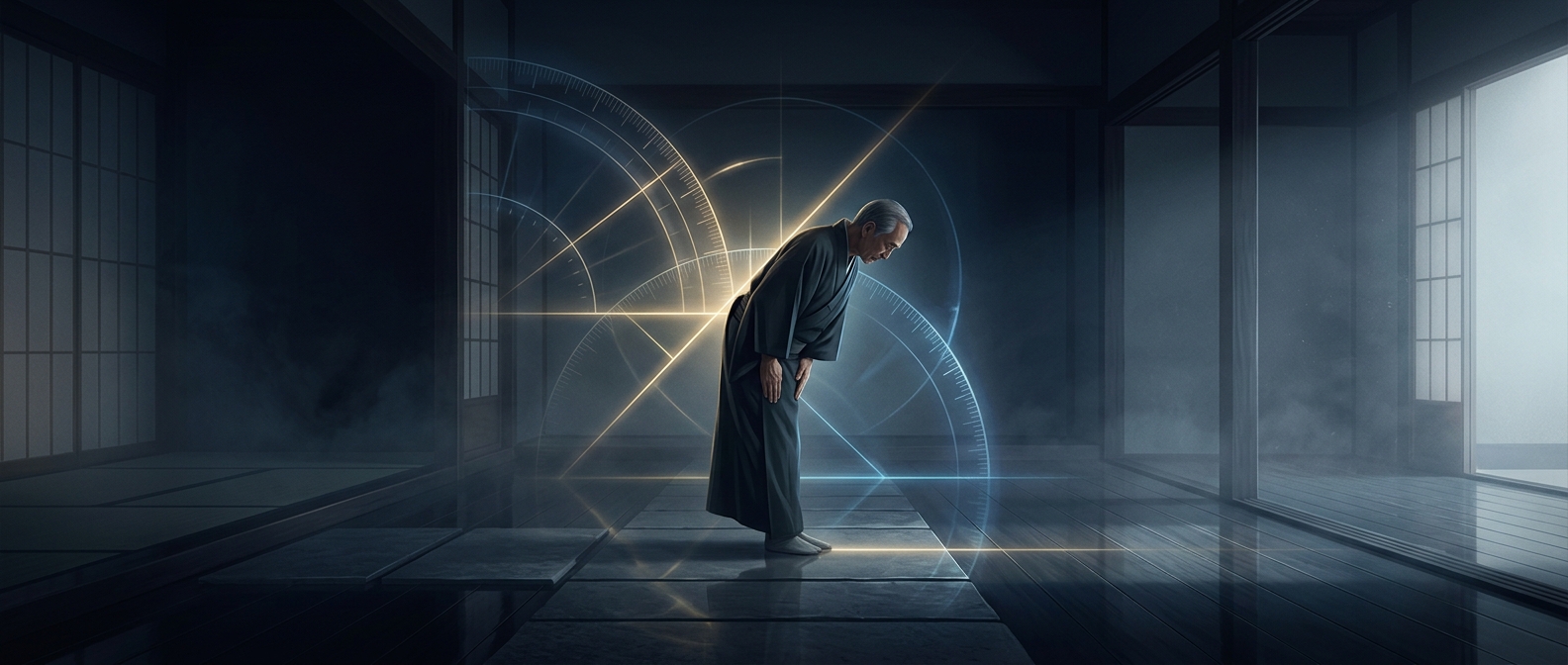
A bow is not simply a greeting with a prescribed depth. In Japanese etiquette, its form can help signal how formal an encounter is and how much respect or remorse the person intends to convey. A shallow inclination suits many everyday exchanges; a deeper one can mark a more formal acknowledgment, a serious apology, or pronounced deference.
The angle is only one part of the message. How long someone holds the bow, how quickly they rise, and the setting all affect how it comes across. A bow offered during a business introduction, for example, carries a different social weight from a quick acknowledgment between acquaintances. These conventions are guides, not a universal code in which every degree has an exact meaning.
Reading the Gesture in Context
For visitors, the practical lesson is to notice the situation rather than try to calculate an angle. A small bow in return is often a courteous response, especially when someone bows to greet or thank you. In a more formal setting, following the other person’s lead is usually more natural than attempting an especially deep bow without knowing the custom.
The gesture makes respect visible without requiring a spoken explanation. Its changing depth lets people adjust the formality of an encounter in a small, immediate way—and the same movement can feel routine or deeply serious depending on when it is used.