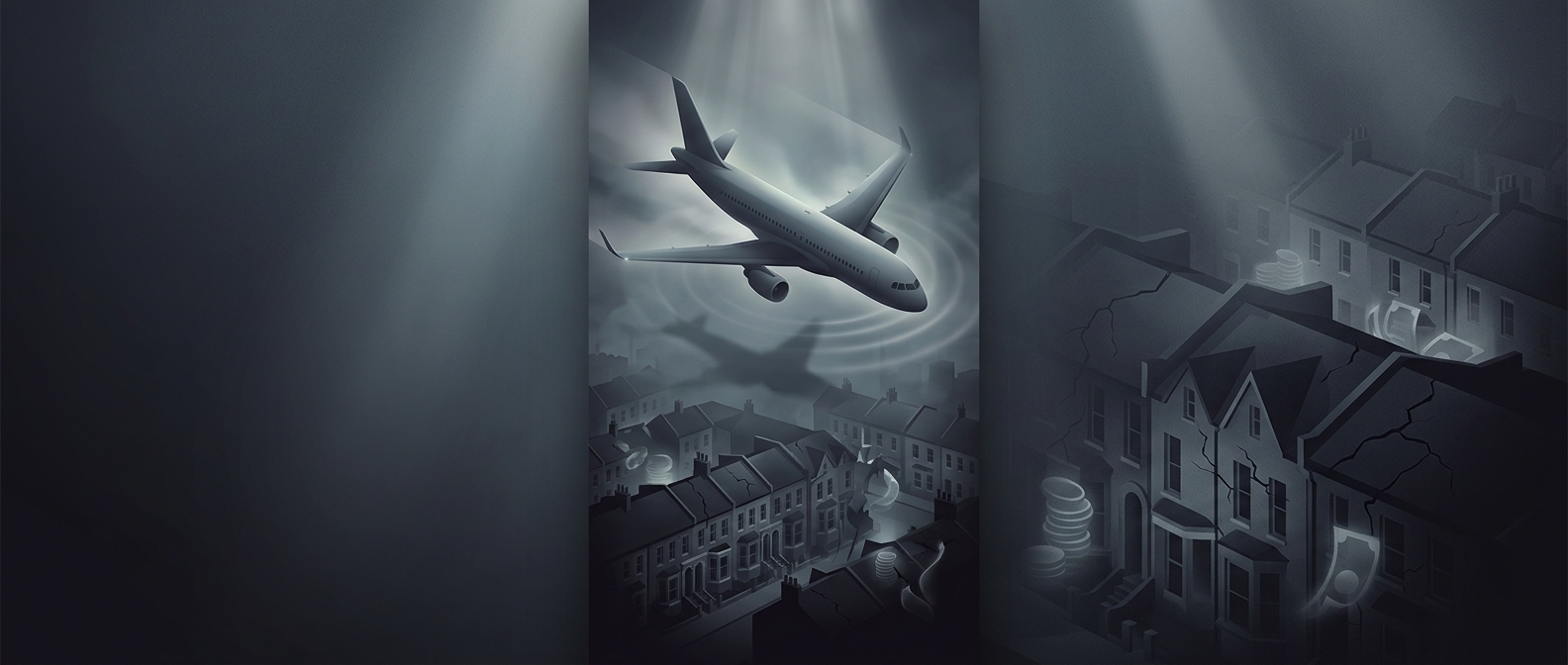
How Heathrow noise gets priced into nearby homes
A house beside a busy flight path can look much like one farther away: similar size, age, and access to shops or transport. Yet if aircraft regularly interrupt conversations, disturb sleep, or make a garden less pleasant to use, buyers may be willing to pay less for it. That difference can show up in the sale price even though the noise itself never appears on a bill.
The comparison economists make
Economists can estimate the effect by comparing sale prices of otherwise similar homes exposed to different levels of aircraft noise. This approach is called hedonic pricing: it treats a home’s price as a bundle of features, including its location and surroundings. If homes in noisier areas consistently sell for less after other important differences are accounted for, the price gap offers a way to value the burden of noise.
The comparison is not a simple matter of drawing a circle around an airport. Flight paths, how often aircraft pass, and local housing conditions all matter. Researchers must separate the influence of noise from other reasons homes in one neighborhood might cost more or less.
Why small discounts can become a large loss
A lower price affects the owner selling a home, but the estimate can be extended across many properties. If a modest reduction applies to a large number of homes, the combined loss in market value can reach billions. The figure represents value that homeowners may not receive when they sell—not money collected in a fund or a direct charge paid by an airline.
That makes property prices a way to reveal a cost that is otherwise easy to overlook. The noise is experienced at particular moments, but its financial effect can persist in the price buyers are prepared to offer.