A jukebox turned speed into a timed run
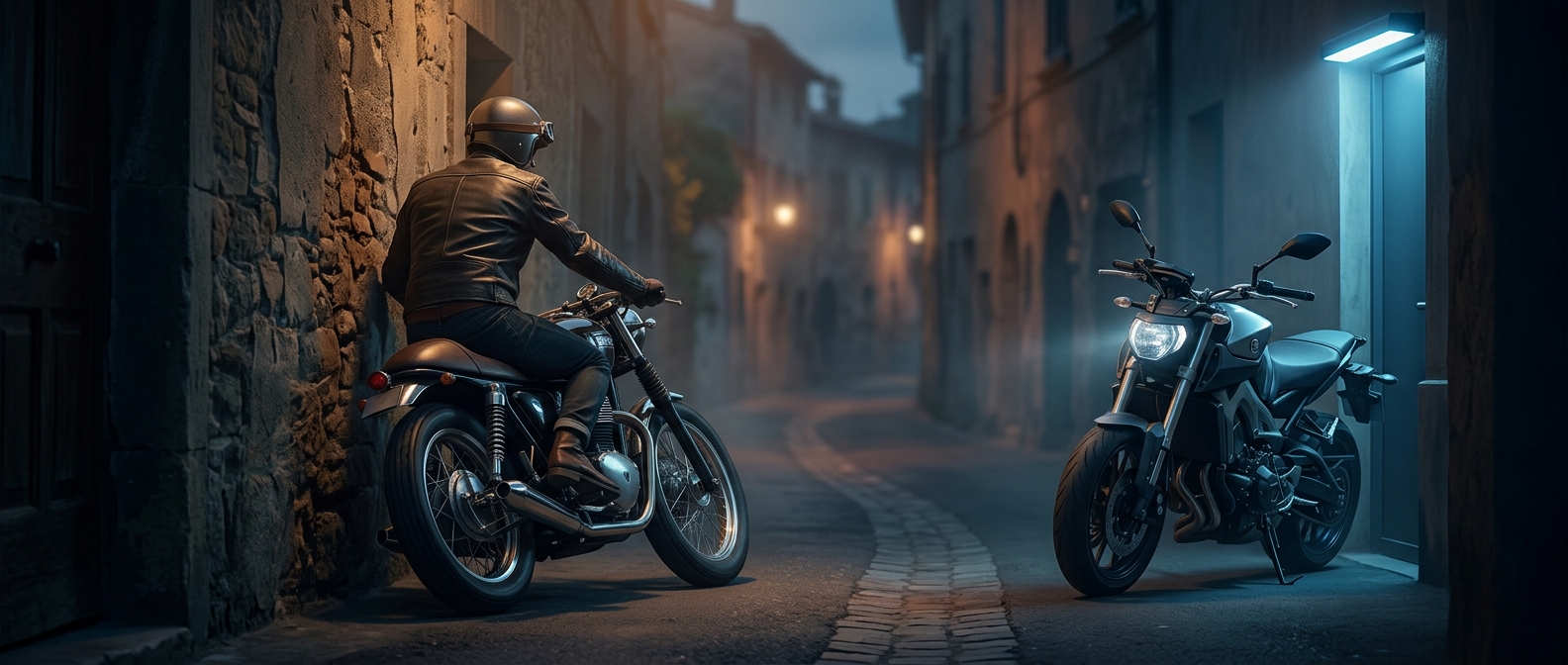
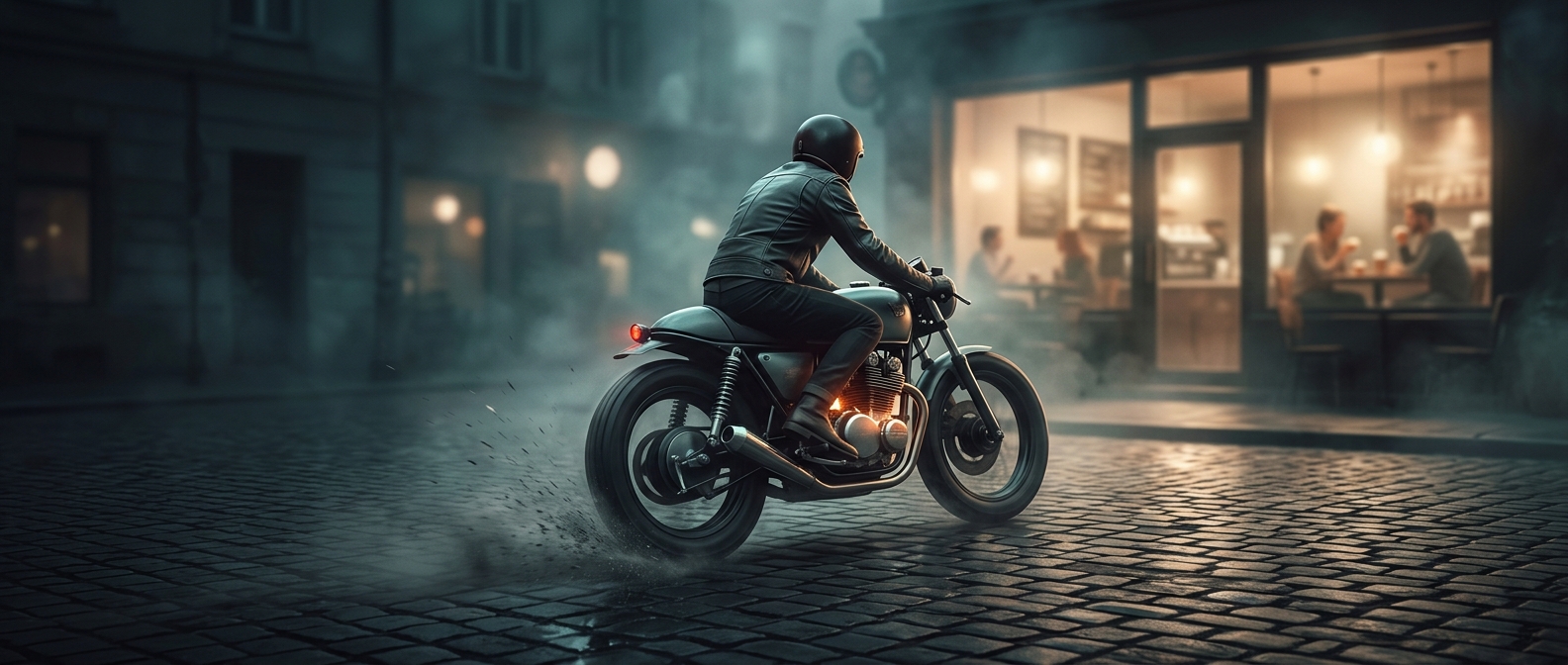
In postwar British café culture, a motorcycle could be judged by more than how it looked parked outside. The jukebox offered a rough, public clock: a rider chose a record, made a run to a nearby turning point, and tried to get back before the music stopped. The challenge made speed something friends could witness and talk about, without a stopwatch or formal racecourse.
The timing was deliberately imperfect. Songs varied in length, and traffic, road conditions, and the rider’s route could change the result. That uncertainty was part of the test: the aim was not a laboratory measurement, but a thrilling demonstration of how quickly a bike and rider could cover familiar ground.
Why the motorcycle had to be quick—and manageable
A café racer was generally a road motorcycle modified for speed and a more purposeful riding position. Owners might reduce unnecessary weight, fit lower handlebars, or move the foot controls farther back. Those changes helped a rider tuck in and stay steady at speed, though they could make the machine less comfortable for everyday riding.
The jukebox challenge favored acceleration and a responsive bike, but it also demanded control. A fast return through ordinary streets was not the same as a straight-line test on a closed track. The machine had to be quick enough to make the deadline and compact enough to handle the route.
From a stunt to a style
Whether treated as a real challenge or a tale retold among riders, the song-and-return run captures the café racer ideal: a motorcycle built around a short, immediate test of speed. Its stopwatch was a record spinning in a café, and its finish line was simply the point at which the rider made it back.