Why a trike stays upright but feels different in a turn
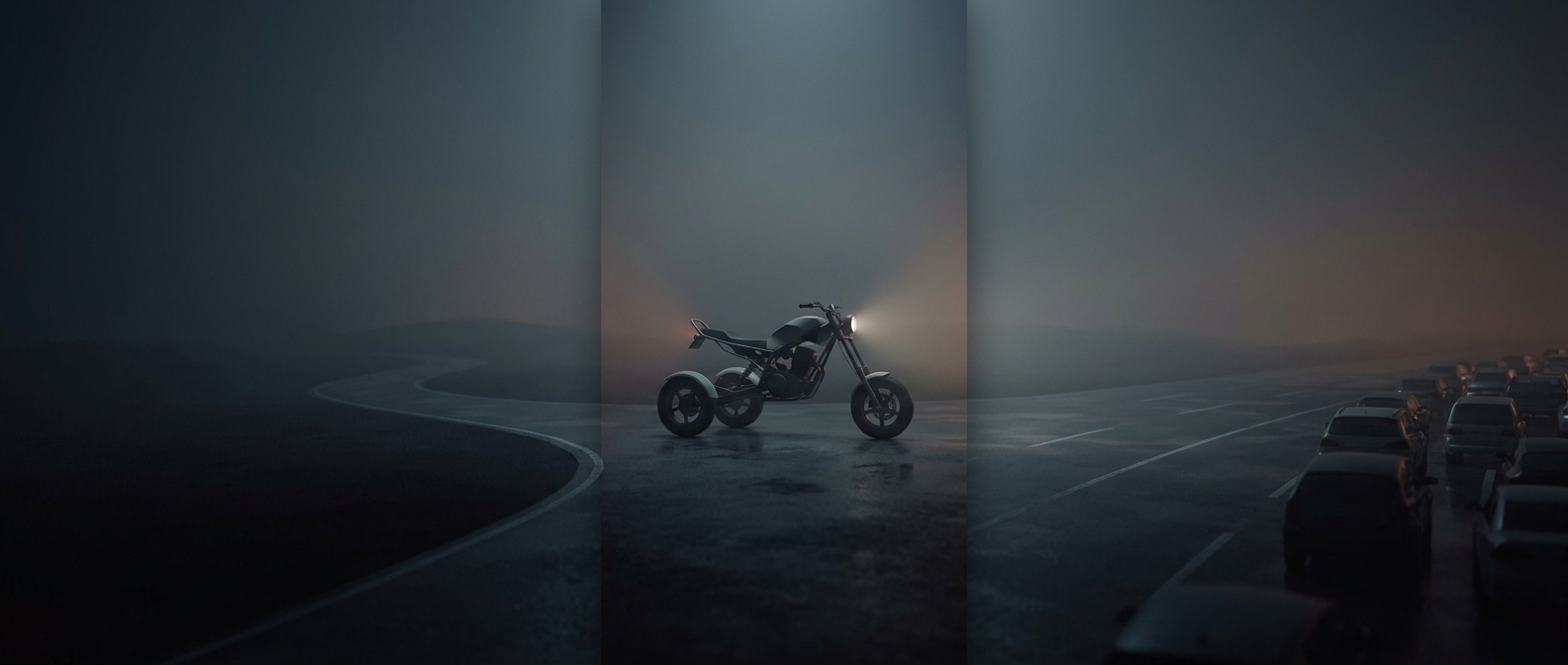
A conventional three-wheeled motorcycle gains a simple advantage from its third contact patch: it can stand without the rider balancing it, even when stopped. But that same fixed, upright stance changes what happens in a corner. The chassis steers around the bend without banking inward, so the rider’s body does not tilt to align with the turn as it does on a two-wheeler.
As the trike changes direction, its momentum carries the rider outward relative to the turning path. The tires and suspension must generate the sideways force that redirects the vehicle, while the rider feels that force across the seat and handlebars. On a motorcycle, leaning inward helps balance the turning force; on a non-leaning trike, the rider stays comparatively upright while the vehicle turns beneath them.
The third wheel changes the bargain
A trike’s layout also affects how it takes up space and responds to steering. Two wheels at the front or rear create a wider stance than a motorcycle’s single track, and the extra wheel, structure, and tire add mass. Those differences can make the vehicle feel less nimble and more substantial in tight turns, even though it is easier to keep upright at a stop.
The tradeoff is not simply “more stable” or “less stable.” The third wheel removes the balancing task at rest, but it does not make cornering feel like driving a car—or like leaning a motorcycle. The rider gets the benefit most clearly at a stop; in a bend, the vehicle’s refusal to lean is exactly what makes its handling feel distinctive.