High grips change the rider’s leverage
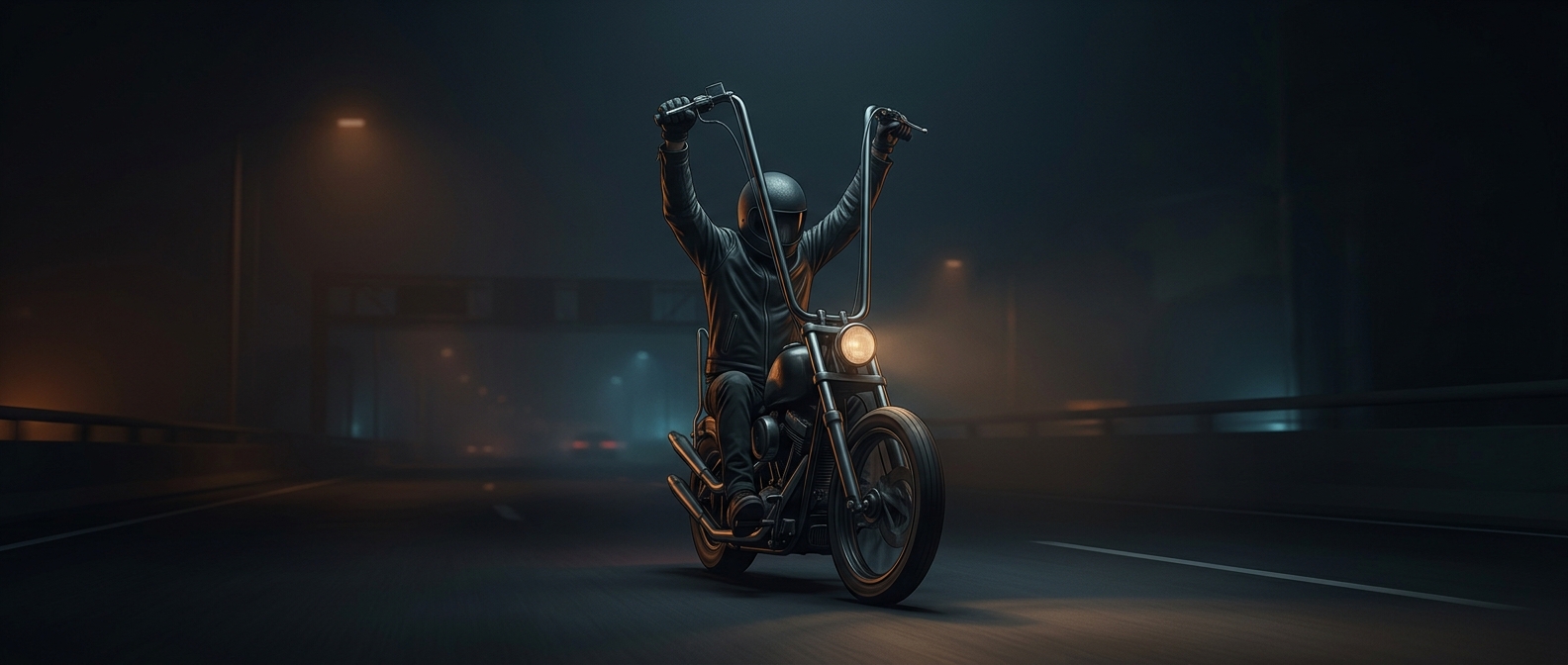
Ape-hanger handlebars raise the grips well above the seat, so the rider must lift their hands and arms to reach them. That changes more than posture: it changes where the rider can comfortably apply force. With the shoulders raised and arms extended, it can be harder to make a quick, strong push or pull at the bars than with the hands lower and elbows comfortably bent.
The handlebars turn the front wheel through the steering assembly. To make a motorcycle lean into a turn at road speed, riders usually begin by briefly steering opposite the turn—a technique called countersteering. It takes a deliberate push or pull at a grip. A high hand position can make that input less natural or tiring, especially if the rider has to hold the arms up for long stretches.
Fatigue can make control less precise
The difficulty is not that tall bars automatically change the motorcycle’s steering geometry. Rather, they can put the rider in a position that limits comfortable movement and makes sustained control more demanding. As the arms tire, a rider may find it harder to make small corrections smoothly or respond quickly to a sudden change in traffic or road conditions.
The effect depends on the rider, the bar height and width, and the motorcycle’s setup. Bars that are reachable without locking the elbows or straining the shoulders may be manageable; bars that force an awkward reach can make a short maneuver feel less responsive and a long ride more taxing. The tradeoff is visible in the posture: the higher the grips climb, the more the rider may have to hold their arms aloft just to keep a hand on the controls.