How a Foot Tap Selects the Next Gear
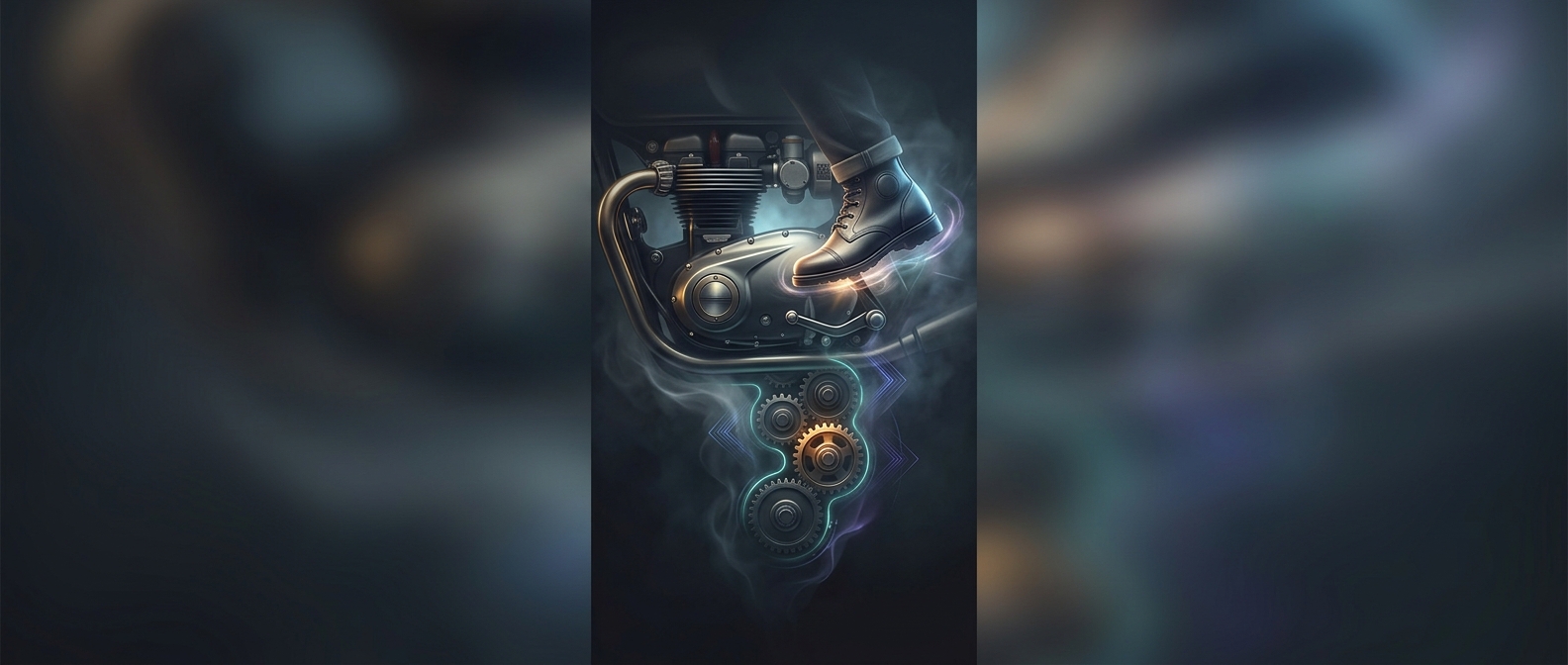
Inside a typical motorcycle gearbox, gear pairs are already meshed with one another. Shifting does not slide one gear out and another into place as though choosing from a menu. Instead, the foot lever turns a small indexing mechanism that rotates a shift drum—a cylinder with grooves that guide parts called shift forks. The forks move locking pieces into position, coupling the selected gear to the shaft that drives the rear wheel.
Each press turns the drum by a set increment. Press down, and the mechanism advances one way; lift the lever, and it advances the other. A spring resets the lever after each press, so the rider can tap it again without moving a long lever back by hand. The fixed steps are what make the gearbox sequential: to go from second to fourth, the rider must pass through third.
Why the Pattern Puts Neutral Near First
Many motorcycles use a pattern with first gear below neutral and the higher gears above it. Neutral sits between first and second, rather than at the end, so a rider can shift up from first into second without passing through neutral. A partial lift can stop in neutral; a firmer, full movement selects second. The exact arrangement can vary, but the familiar pattern is designed to make the transition from starting off to riding easier to manage.
The rider’s foot handles gear selection while both hands stay on the handlebars. On many motorcycles, the left-hand clutch lever briefly disconnects engine power from the gearbox during a shift, easing the change; some motorcycles use systems that reduce or eliminate the need to operate the clutch for every shift.
The tradeoff is simple: the rider cannot jump directly to a chosen gear, but each shift has a clear, repeatable motion. A quick series of taps can still move through several gears—the gearbox just makes the rider pass each step along the way.