A full-size fit on a smaller footprint
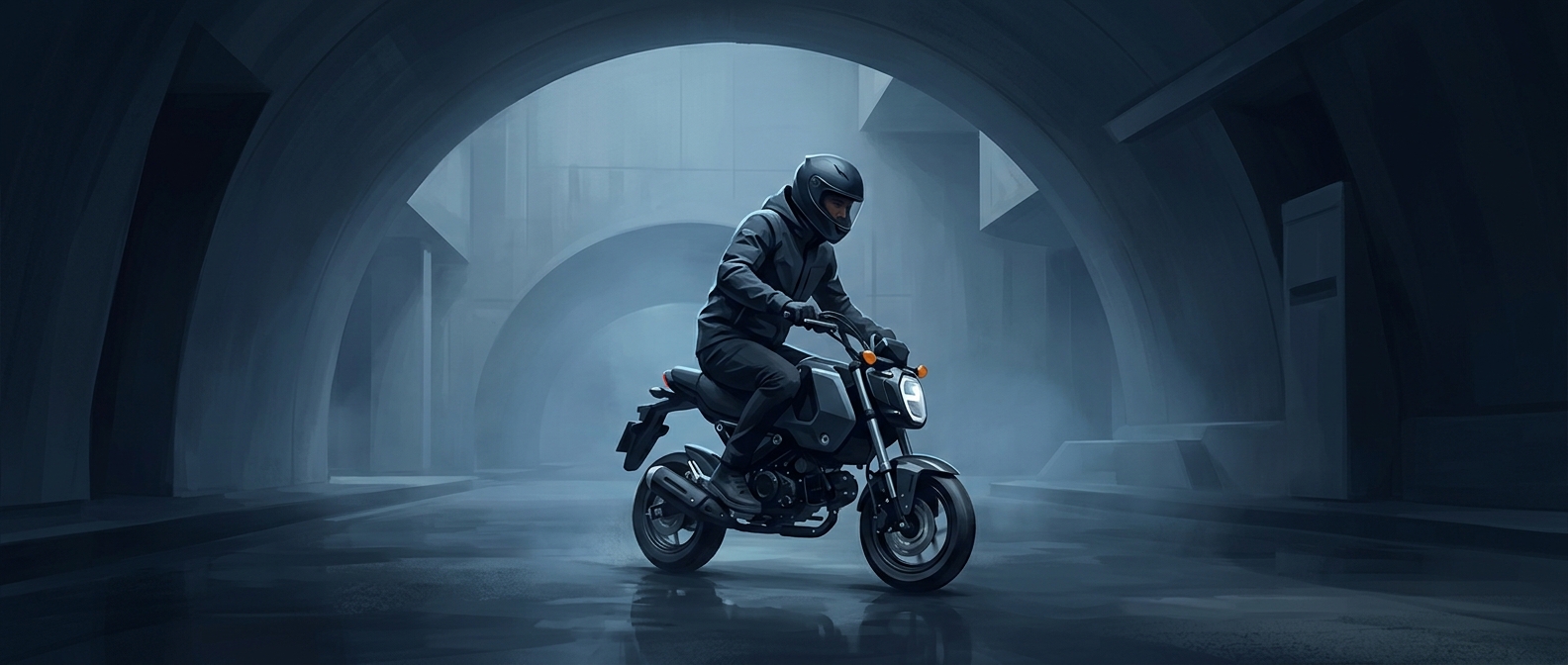
These bikes are not simply children’s bikes scaled up. Their frames and riding position are meant to accommodate adults, while wheels with a smaller diameter reduce the bike’s overall height and length. That can make it easier to tuck one into a narrow hallway, park among other bikes, or maneuver through crowded spaces. The frame still has to fit the rider; small wheels alone do not make a bike comfortable for every adult.
Why pavement feels rougher
A wheel rolls over bumps by lifting the bike and rider as it passes. A larger wheel approaches a pothole or curb at a shallower angle and is generally better able to roll across it. With a smaller wheel, the same obstacle takes up more of the wheel’s diameter, so the bike can drop farther or jolt more sharply. That is why a crack that barely registers on one bike may feel like a hard interruption on another.
Designers can adjust the frame and gearing so a compact-wheel bike still has a useful riding position and pedal range. But those choices cannot erase the basic geometry: smaller wheels trade some ability to smooth out rough pavement for a bike that occupies less space. On a well-maintained city route, that can be a worthwhile exchange; on broken streets, riders may need to slow down and pay closer attention to the surface. A doorway becomes easier to navigate, but a pothole becomes harder to ignore.