Why a box can travel without wings
On Earth, wings and streamlined shapes help an aircraft move through air: wings generate lift, while a narrow nose reduces drag. In orbit, there is almost no air to provide lift or create meaningful aerodynamic resistance. A box does not need to cut through the atmosphere to keep moving, so its blunt shape is no obstacle to staying on course.
Orbit is a continuous fall
A spacecraft in orbit is still being pulled toward Earth by gravity. Its sideways speed carries it forward at the same time, however, so as it falls, Earth’s curved surface drops away beneath it. It keeps missing the ground and follows a curved path around the planet. This is why orbit is not an escape from gravity; it is a particular balance of falling and forward motion.
Small pushes make large changes
Thrusters provide brief nudges rather than the sustained push of an aircraft engine. A nudge can change the box’s speed or direction, adjusting its orbit or helping it turn. Between those corrections, the spacecraft coasts: in the vacuum of space, there is little drag to slow it down.
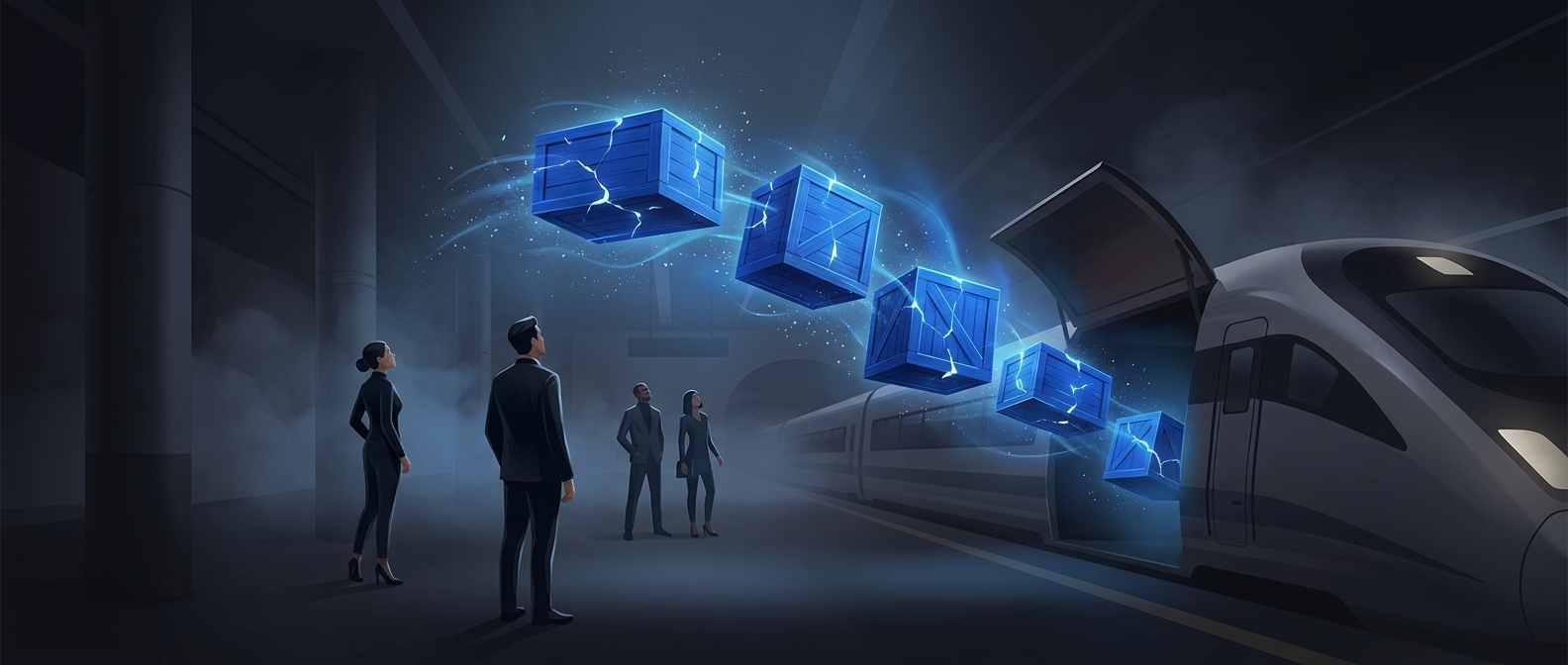
“Down” still has a local meaning—it points roughly toward Earth—but there is no universal floor beneath an orbiting box. The blue box can travel without wings because its journey depends on gravity and motion, not on staying aloft in air.