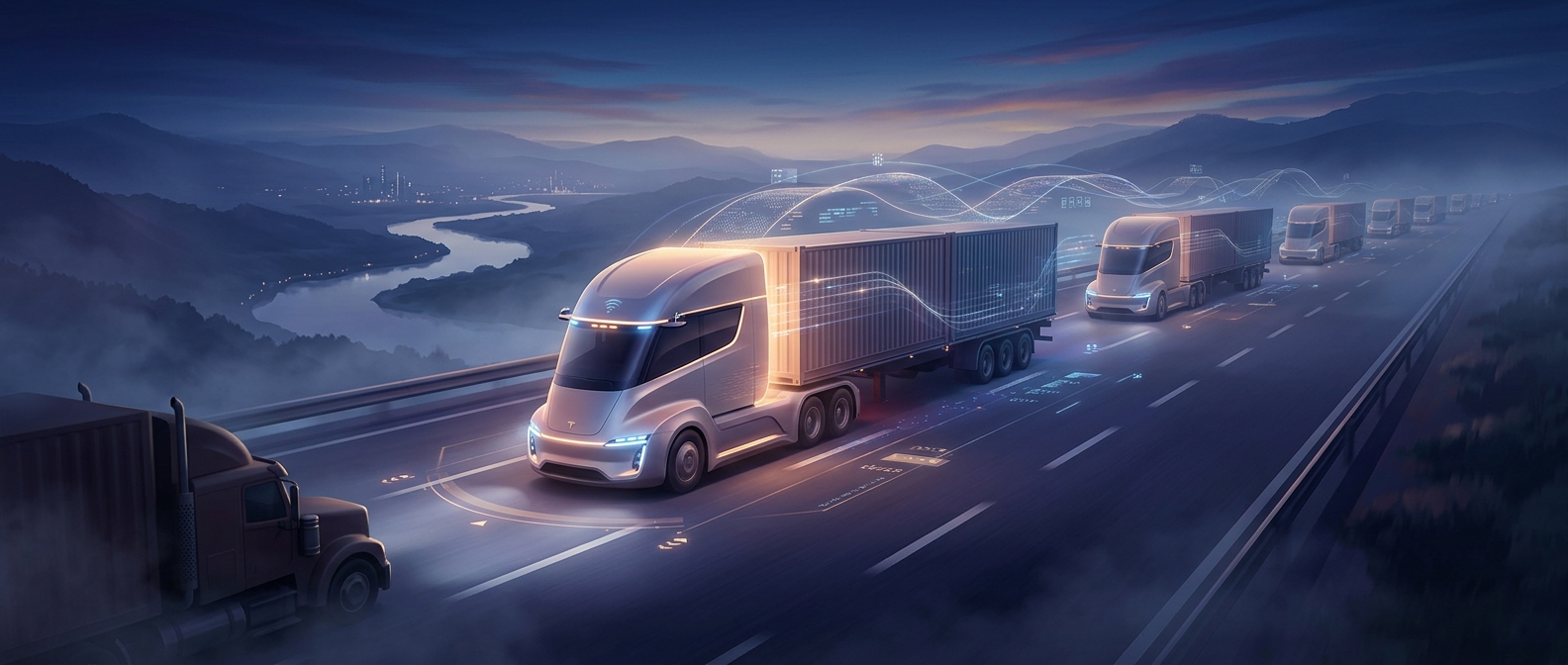
Why the highway is the first stretch to automate
A freight truck’s route may look like one continuous trip, but its hardest decisions often cluster at the edges: finding a loading dock, navigating a crowded yard, yielding to pedestrians, or making a turn on a narrow city street. Highways are comparatively predictable. Lanes and signs are standardized, traffic generally moves in the same direction, and there are fewer unexpected interactions with people on foot.
That difference makes hub-to-hub freight a practical starting point for autonomous driving. The truck can be assigned a defined stretch between logistics facilities, where its driving system handles the road while people manage the more variable parts of the journey.
A relay, not a driverless door-to-door trip
In this model, freight moves through a handoff. A human driver may bring a trailer from a local pickup or distribution center to a highway hub; an autonomous truck then carries it along the long-distance corridor; another driver or local operation handles the final delivery. The cargo keeps moving even though responsibility for driving changes along the way.
The arrangement also narrows what the automated system must handle. It still has to detect vehicles and obstacles, interpret road conditions, and respond safely, but it can operate within a more constrained setting than a system expected to negotiate every driveway and delivery entrance. Hubs provide a place to connect that highway capability to the existing network of local roads and facilities.
What changes—and what does not
The most immediate shift is in the division of labor: automation is aimed at repetitive highway miles, while people remain important at transfer points and on complex local routes. That could make long-haul operations less dependent on a person continuously driving the entire distance, but it does not remove the need for drivers, yards, dispatching, or carefully planned handoffs.
In practical terms, the autonomous truck is not yet the whole delivery system. It is one leg of a relay—and the hubs are what let that leg fit into freight’s door-to-door chain.