A Vehicle Built Around the Journey
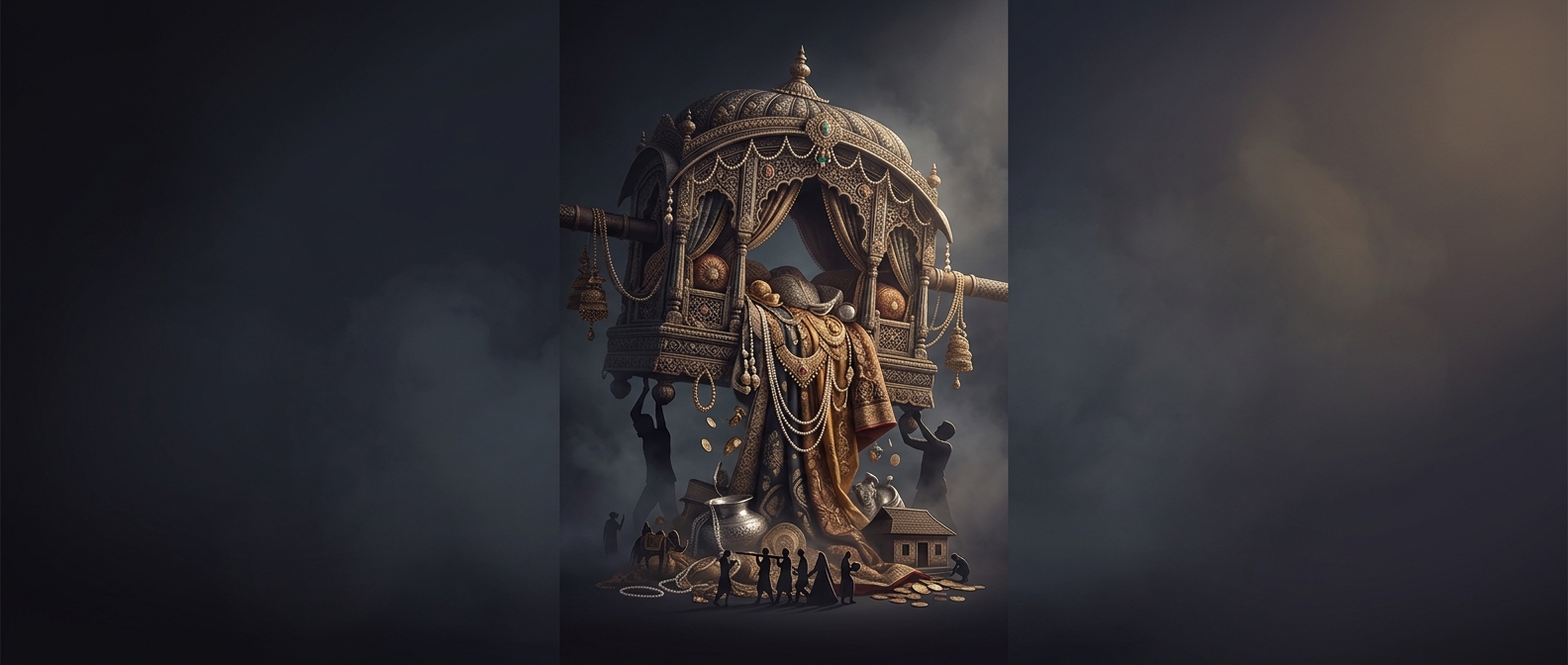
A palanquin turned a difficult stretch of travel into a load that people could carry. The passenger sat inside a small enclosed cabin while bearers took the weight through long poles. Unlike a wheeled vehicle, it did not need a smooth, continuous track: people could adjust their footing over uneven ground and lift the cabin across obstacles. Its limits were human, though. The load had to be manageable, and bearers needed to move in coordination to keep the passenger’s ride steady.
That made the palanquin useful for more than getting from one place to another. For a bride, it could make a journey possible where a cart was impractical, while also giving the trip a formal, deliberate character. The cabin separated its passenger from the bustle around her, and the visible procession made the arrival an event.
The Dowry Made the Vehicle a Display
As a dowry item, a palanquin was both usable property and a public statement. A family’s choice of materials, finish, and ornament could make its resources visible to everyone who saw the vehicle. Its value therefore did not depend only on how comfortably it carried a bride; the object could display status even before it moved.
That dual purpose shaped what the palanquin meant. It had to function as transport, but it also represented the family that provided it. A rough route tested its practical design; a ceremonial journey put its appearance on view. The same set of poles and cabin could answer both demands, carrying a passenger while carrying a message about wealth and standing.