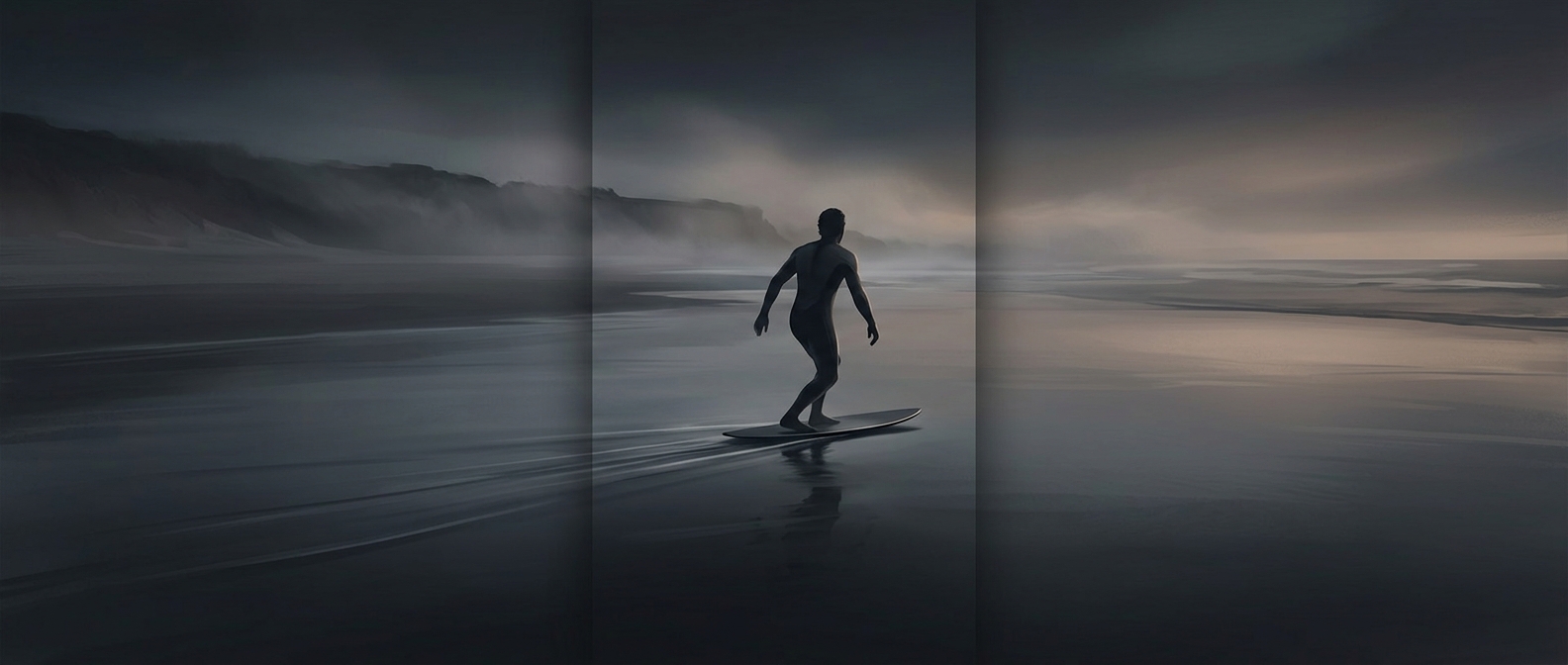
Why a Flat Board Can Glide Over the Shore
A skimboard works because the rider arrives with speed already built up. The board is dropped onto a thin sheet of water over smooth, firm sand, and its broad, flat underside spreads the rider’s weight across that surface. Rather than sinking immediately into wet sand, the board pushes water aside and glides over it.
The water layer is shallow, but it still matters: it reduces direct contact and friction between board and sand. The board’s forward motion also helps it ride up over small irregularities instead of catching on each one. If the rider slows too much, or the sand is soft and the water too thin, the board loses that support and drags to a stop.
The Run Is Part of the Ride
Unlike a surfboard, which is carried by a breaking wave, a skimboard gets its initial momentum from the rider’s sprint. The timing is crucial: the board must land flat and keep moving as the rider steps onto it. A steep landing can make its edge dig in; a mistimed step can rob it of speed or send it sliding away.
Once moving, the board may continue across the shallows or meet an incoming wave, which can carry it back toward shore. That combination of a running launch and a brief, low-friction glide is what makes skimboarding possible—and why a stretch of smooth, wet sand can matter more than a large wave.