Why the Moving Map Can’t Show Rough Air
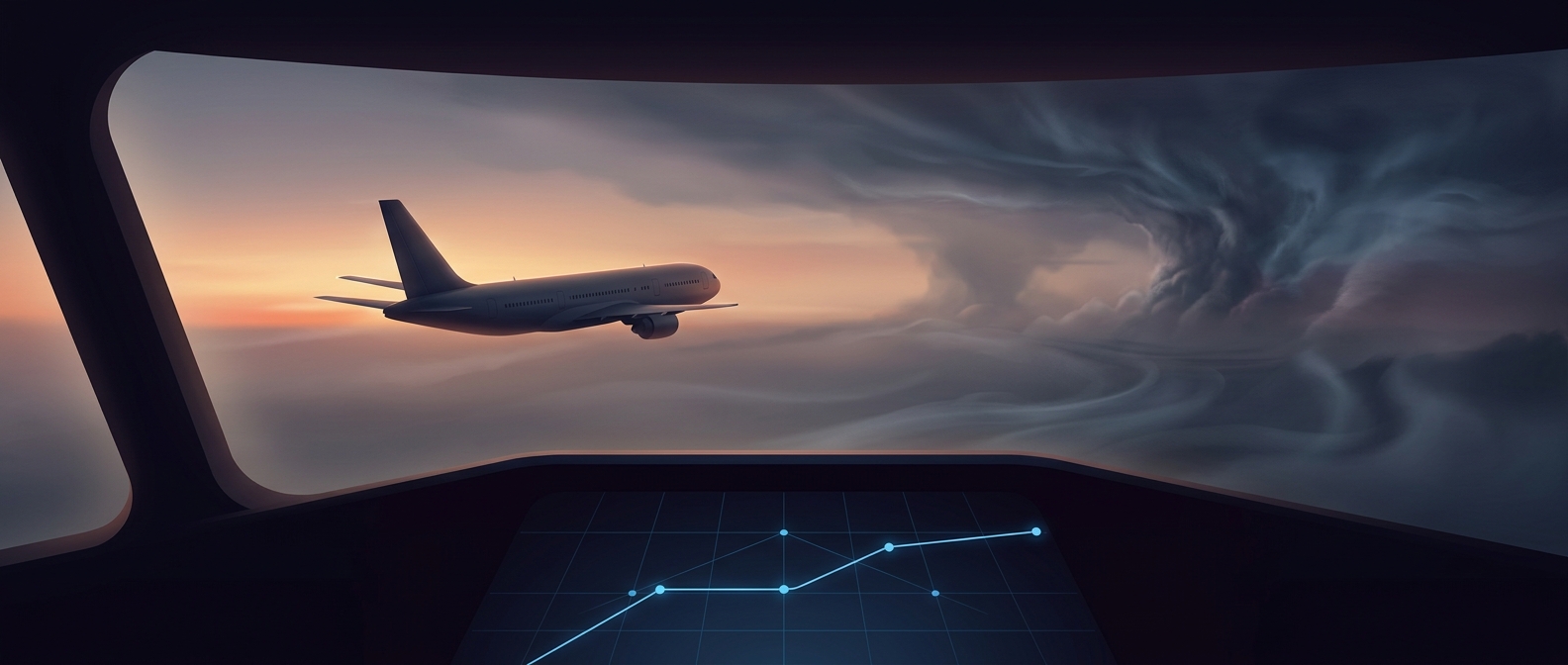
A seatback map is built to answer a simple question: where is the aircraft, and where is it headed? It usually combines the plane’s position with a route display. Turbulence is different: it is a changing condition in the air around the aircraft, not a fixed feature along the route. A map that tracks the flight therefore may show the plane crossing a region without indicating whether that stretch will feel bumpy.
How Crews Anticipate Bumps
Pilots piece together clues from weather forecasts, reports from other aircraft, air-traffic controllers, and onboard instruments. The aircraft’s weather radar can reveal areas of precipitation, which may help crews avoid some storm-related turbulence. But it does not provide a complete picture: turbulence can occur in clear air, where there are no visible clouds or rain for radar to detect.
Conditions can also change as the plane approaches. A forecast or another pilot’s report is useful, but it is not a promise that a particular patch of air will be rough—or smooth. Crews may adjust altitude or route when conditions and traffic allow, though those options are not always available.
What Passengers Can Take From That
A route line on the screen is not a turbulence forecast, and a blank-looking map is no guarantee of a smooth ride. When rough air is expected, the crew may turn on the seat-belt sign or pause cabin service; that practical warning is more relevant to passengers than the map’s position marker. Keeping your belt fastened while seated helps protect you if the aircraft encounters an unexpected jolt.