The booster has to turn before it can brake
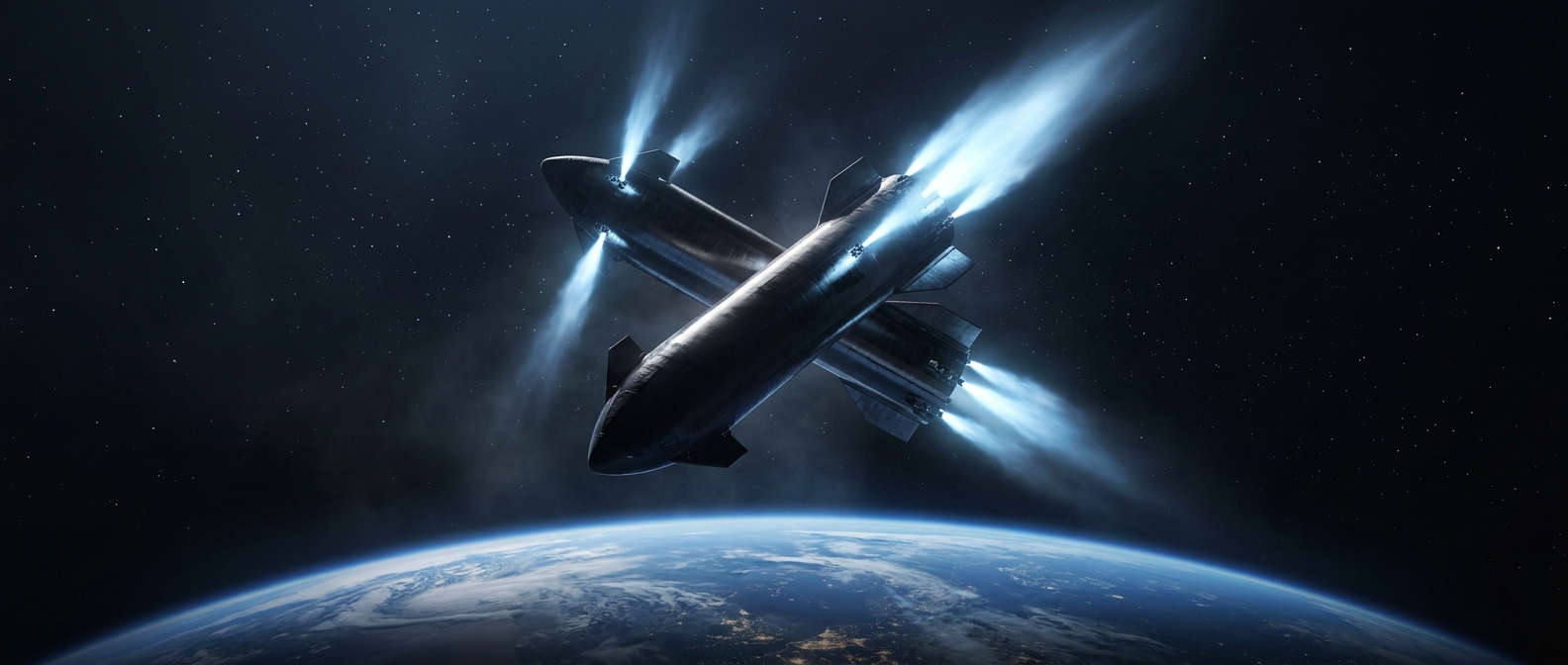
At stage separation, the Falcon 9’s first-stage booster is still climbing, with its engines pointing away from Earth. To land engines-first, it must rotate around in midair—a maneuver called a flip. Small nitrogen-gas thrusters near the top of the booster push it around; they steer the vehicle without using the main engines.
The flip is a change in orientation, not an instant reversal of the booster’s flight. It continues moving along its trajectory while the thrusters turn it, and onboard guidance keeps track of its position and motion. Once the engines face back toward Earth, the main engines can fire in the direction needed to change that motion.
Several burns do different jobs
Depending on the mission and where the booster is headed, it may first make a boostback burn to alter its course toward a landing site. Later, a reentry burn helps manage its speed and heating as it falls through the atmosphere. These are controlled engine firings: hot gas pushes downward, producing an upward force that slows the booster.
Near the ground, a final landing burn reduces its speed enough for touchdown. The booster must also stay upright and on course, using its grid fins—small, movable aerodynamic surfaces—to steer through the air. The engines provide the braking force; the fins help guide the descent.
That separation of jobs is what makes the midair turn useful. The thrusters orient the vehicle, the main engines reshape its motion, and the fins help keep it aligned. A skyscraper-sized booster does not simply fall back onto its launch site: it has to arrive at the right place, facing the right way, and moving slowly enough to land.