Why a Kangaroo’s Hop Challenges a Car’s Predictions
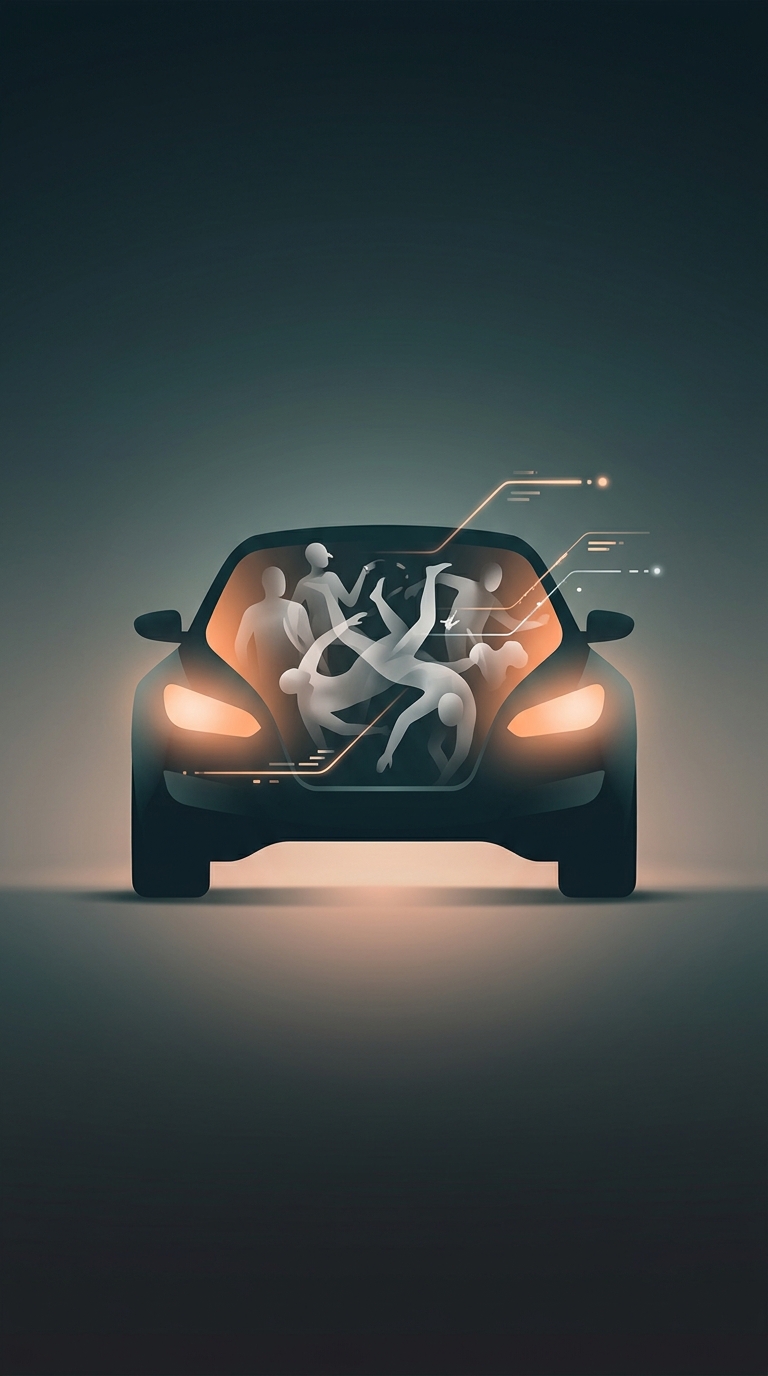
A self-driving car does not merely detect an animal; it has to estimate where that animal will be by the time the vehicle reaches it. Cameras and other sensors measure position repeatedly, while software uses those observations to predict a likely path and decide whether to brake or steer.
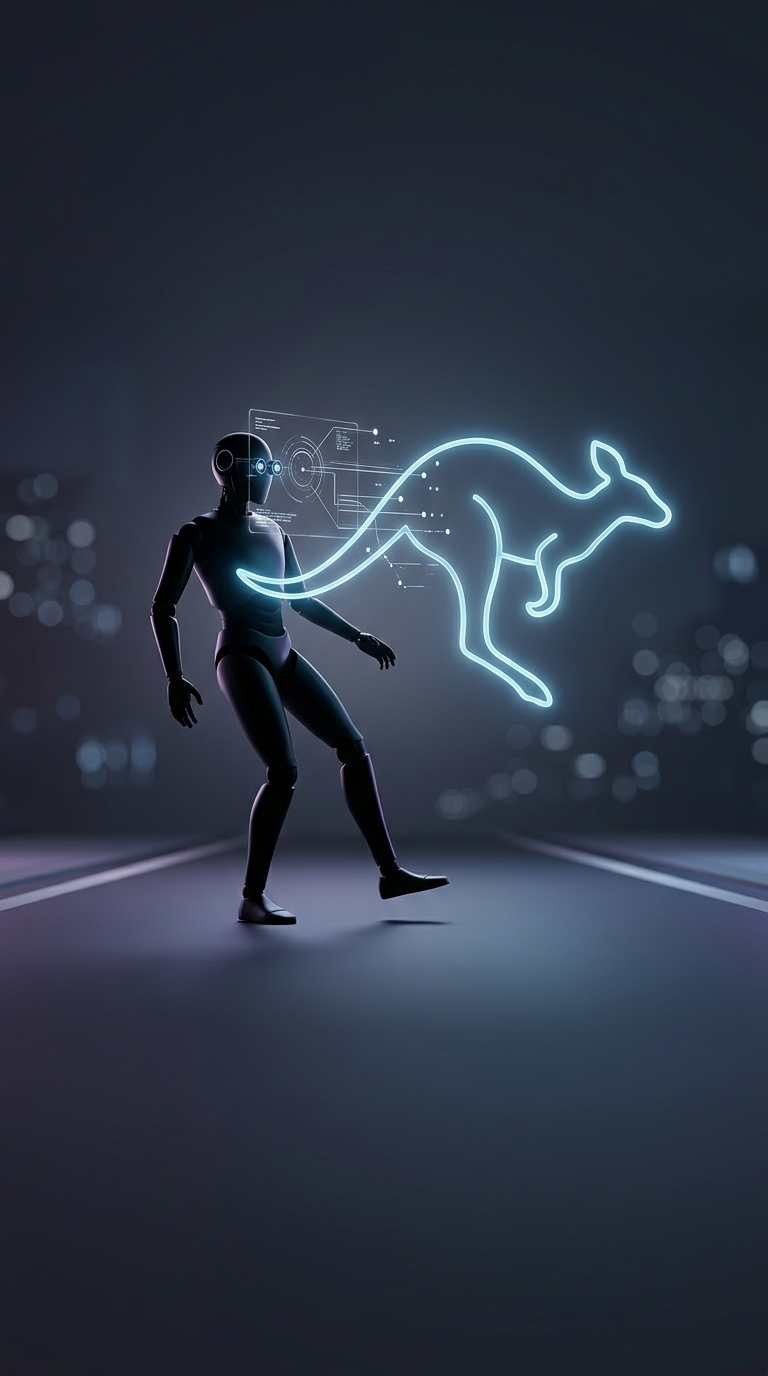
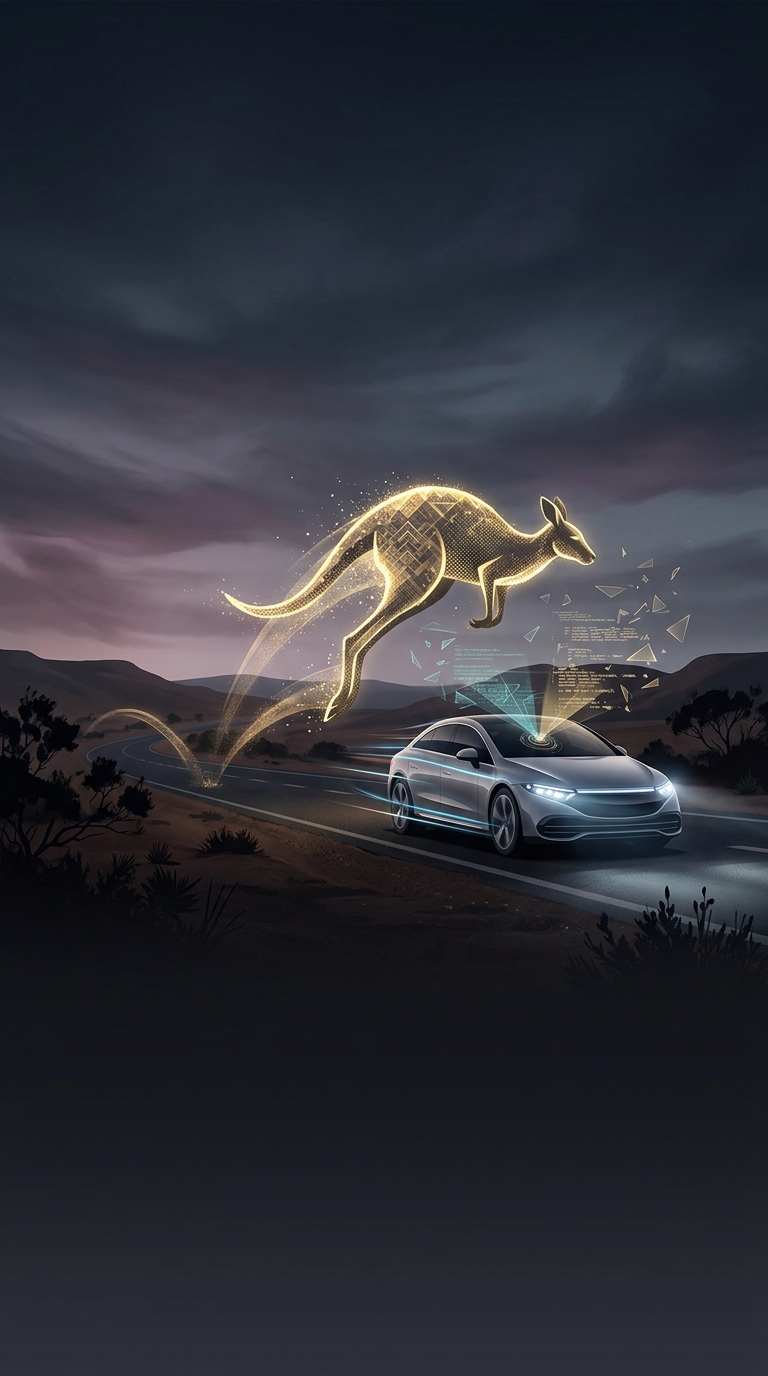
A kangaroo’s leap makes that estimate harder. While it is airborne, it can travel forward and appear to be clear of the car’s path. But its next movement may be a landing close to the road—or directly in front of the vehicle. A prediction based too heavily on the animal’s latest position could therefore mistake a brief moment in the air for a safe gap.
From Seeing to Anticipating
The difficulty is not that a computer cannot recognize a kangaroo. Recognition answers “What is that?”; motion prediction asks “Where will it be next?” Those are different tasks. A system trained on familiar road situations may be less reliable when an animal’s movement differs from the patterns its models expect.
That distinction matters because a car must act before a collision is imminent. It needs to leave enough time and distance to slow down, even when the animal’s next landing is uncertain. In Australia, kangaroo behavior is a reminder that autonomous driving systems have to learn from the animals and conditions they will actually encounter—not just from more familiar traffic scenarios.
A kangaroo can look safely airborne for an instant; the car still has to plan for where it will land.